
Back to the Resource Hub / Back to Links
The links below are organised by the month in which they are published
BOOKS |
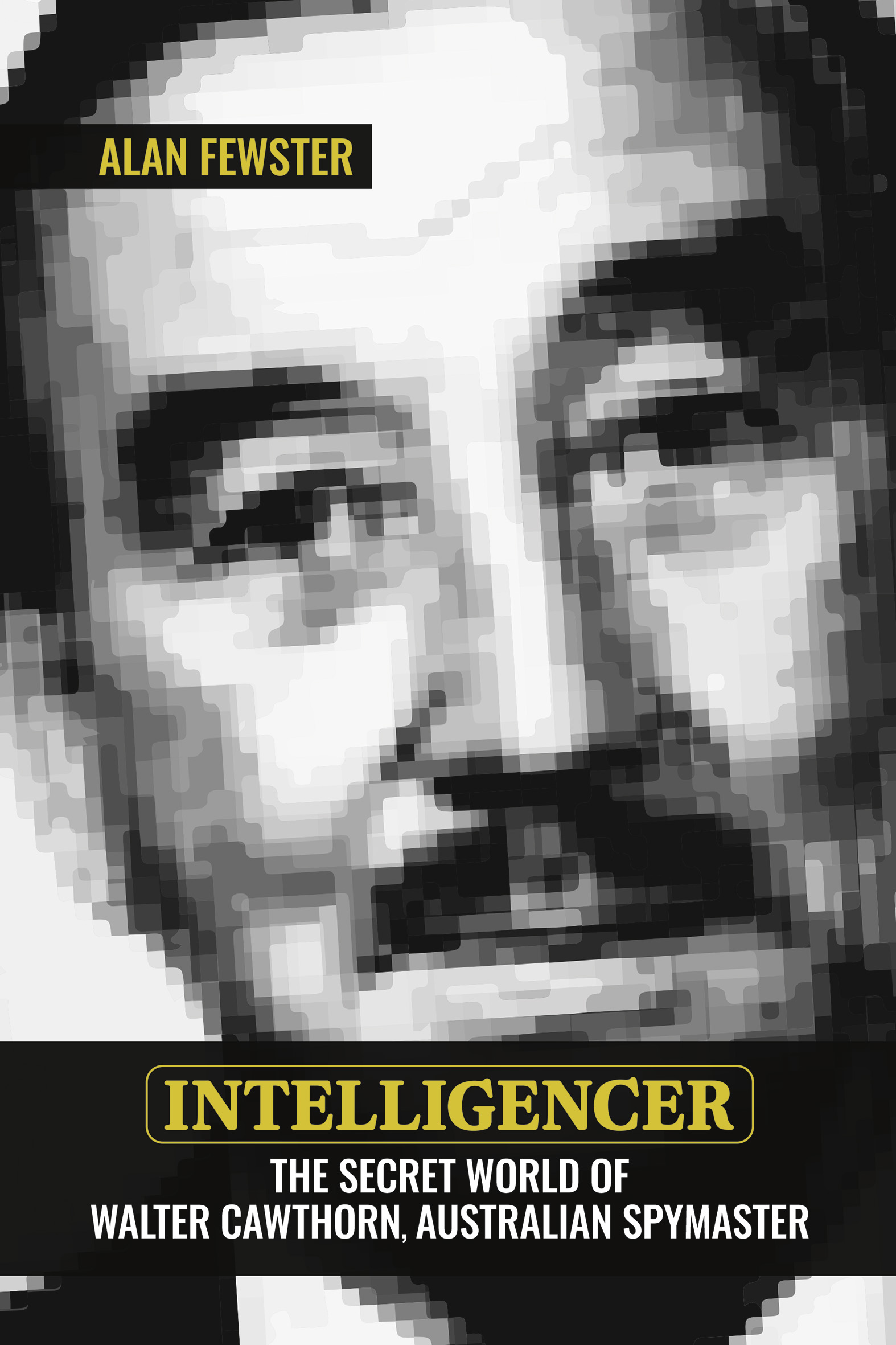
'The idea of the “Australian Briton” was central to the nation’s identity for nearly 200 years, joining Australian life to a love of Britain and its empire. That Anglophile Scot, Sir Robert Menzies, proclaimed he was “British to the bootstraps,” and many Australians of his generation walked proudly in the same boots. The feeling was especially strong among the “good chaps,” those men who knew the world for all its dangers but could be relied on to “do the right thing,” no matter how dirty the job.'
Notably, he played a pivotal role in creating Pakistan's Inter-Services Intelligence (ISI) bureau, served as a High Commissioner twice, and spent eight years as the Director of the Australian Secret Intelligence Service (ASIS). His career highlights his transition from a private soldier to a Major General, showcasing his significant influence in intelligence and diplomacy.
Intelligencer tells the extraordinary story of Australia’s greatest spymaster, Walter Cawthorn. Trained as a teacher in Melbourne, he served at Gallipoli before joining the British Indian Army on the Western Front. From the Middle East to Vietnam, Cawthorn spied for four countries: Britain, India, Pakistan and Australia. In a career that took him from private soldier to Major General, Cawthorn created Pakistan’s ruthless Inter-Services Intelligence bureau; was appointed twice as a High Commissioner; and spent eight years as Director of the Australian Secret Intelligence Service, (ASIS).
In the nineteenth and twentieth centuries, anarchist and socialist political movements spurred the expansion of nascent US federal surveillance capabilities. But it was the ensuing, decades-long persistent exaggerations of domestic political threats that drove an exponential increase in the size and scope of unlawful government surveillance and related political repression, which continue to the present.
Eddington draws on declassified government documents and primary sources, many obtained through Freedom of Information Act lawsuits, to uncover the extent of these surveillance programs. The book highlights key events, such as the prosecution of Americans for "disloyal utterances" during the Wilson era and the FBI's early interference in political matters, including its persecution of Martin Luther King Jr. It's a compelling read for anyone interested in the intersection of civil liberties and government power.
The Triumph of Fear is a history of the rise and expansion of surveillance-enabled political repression in the United States from the 1890s to 1961. Drawing on declassified government documents and other primary sources, many obtained via dozens of Freedom of Information Act lawsuits and analyzed for the first time, Eddington offers historians, legal scholars, and general readers surprising new revelations about the depths of government surveillance programs and how this domestic spying helped fuel federal assaults on free speech and association.
'This book offers a new framework and set of standards for intelligence analysis, drawing from a variety of academic disciplines, such as philosophy, historiography, literary theory and semiotics.
The U.S. Intelligence Community is guided by a conviction that its practitioners are engaged in the scientific pursuit of fact-based evidence and its institutions uphold a set of tradecraft skills based on objectivity, timeliness and non-politicization that serve to define professionalism. That approach is counterintuitive to the way analysts actually seek to use language and rhetoric to convince and persuade readers, and counterproductive to the future recruitment and retention of subject matter experts. This book re-examines the assumptions and biases that underlie the intelligence profession in America and its increasing turn toward Artificial Intelligence, with case studies of declassified analytical products on Argentina, China, Iraq, Italy and South Africa.
This book will be of much interest to students of intelligence, national security, philosophy, US politics and foreign policy.
Systematically develops a new concept of intelligence as a cognitive activity that needs to be understood holistically. This introduces intelligence professionals, decision makers and academics to the potential of intelligence as the art of knowing beyond classic analysis. It provides an innovative understanding and persuasive critique of the problems inherent in using inductive reasoning to undertake intelligence analysis and demonstrates the importance of creativity and imagination in intelligence production.
What is intelligence – why is it so hard to define, and why is there no systematic theory of intelligence? Classic intelligence analysis is based on an inference between history and the future – and this has led to a restriction in how we can perceive new threats, and new variations of threats. Now, Kjetil Anders Hatlebrekke rethinks intelligence analysis, arguing that good intelligence is based on understanding the threats that appear beyond our experience, and are therefore the most dangerous to society.
NEWS |
The president of Germany's Foreign Intelligence Service (BND) told DW that he is confident that intelligence sharing with the United States will continue, despite a change of foreign policy course in Washington. In his first public statement since President Donald Trump took office, Bruno Kahl said protecting Ukraine from Russia was something that the West "must achieve together"
"We very much hope that the Americans will soon be at our side again to help protect Ukraine from the aggression coming from the east," he said.
The need to be better prepared for a regional crisis or conflict is now an important focus of national security planning and policy making, an intelligence report reveals.
And Australia’s intelligence community needs to be prepared for a broader range of crises – including another major pandemic, says the 2024 Independent Intelligence Review released by the government last week.
“New security threats are prominent, many amplified by technological change,” warns the report. “Australia faces both a more dangerous international environment and a growing need to defend itself against threats to its democracy, social cohesion and essential infrastructure.”
The prospect of a major crisis or conflict “demand a focused and committed approach to preparedness”. Scenario planning and exercising needs to be done on a regular basis. “This will stress-test current systems, clarify requirements and allow the Office of National Intelligence to identify any shortfalls that can be remedied,” says the report.
A proposal to build a National Spy Museum in Canberra has received the support of politicians, intelligence agencies and, crucially, spies themselves.
"I would like to walk in there with my grandchildren and for them to have a degree of understanding," a former senior intelligence officer told the ABC. Secrecy laws prevent his real identity from being revealed, but 'Will' said he liked the idea.
"I think for too long, the contribution of the intelligence professionals in Australia has gone unrecognised," Will said.
Those behind the museum idea are asking for $2.9 million in the federal budget for initial feasibility and planning work. David Fricker is a former director of the National Archives of Australia and former deputy director-general of the Australian Security Intelligence Organisation (ASIO).
"Everybody loves a spy story, and so this will also be a really fun place to come along and immerse yourself in some of the trade craft of espionage," he said.
Mr Fricker is on the voluntary board of National Spy Museum Ltd, a not-for-profit organisation formed to progress the idea of a new cultural institution. The vision for the museum is to portray Australia's history of espionage and pay tribute to those who have spied.
As China's National Security Education Day looms, the Ministry of State Security (MSS) launched a special video feature series on major national security cases, starting with one titled "overseas returnee who applied for a job with ulterior motives."
The episode reveals the case of a student surnamed Hao, who, under the direction of a foreign espionage agency, infiltrated critical and sensitive positions in China and remained undercover for an extended period. Hao was later convicted of espionage and sentenced to life imprisonment, with lifelong deprivation of political rights.
China's national security authorities have recently uncovered a major espionage case involving a foreign spy who had long been embedded in a core and sensitive government institution, according to a video posted on the WeChat account of the MSS.
ARTICLES |
Secret surveillance of Britain’s notorious double agent, Kim Philby, made public for the first time in archived documents, reveals how keenly the Security Service wanted to confirm or disprove early suspicions of his high-level treachery. In daily bulletins submitted to MI5 in November 1951, undercover operatives describe how Philby, codenamed Peach, moved about London.
They said he gave “no outward sign of being either nervous or on the alert, but your well-trained man should not do so; every movement is natural – again as it should be”.
The notes, from official “watchers” who were tailing Philby and bugging his phone, raise a key question about how the arch-traitor eventually escaped justice: did the British establishment deliberately protect him, or simply hope to avoid a public scandal? Mark Dunton, of the National Archives, believes the documents, which go on display in the exhibition, MI5: Official Secrets, next week at Kew, west London, shed light on one of the most shady periods of British espionage.
Working with the Home Office, National Crime Agency (NCA), HM Revenue and Customs (HMRC) and other government departments and law enforcement agencies, we help them discover and disrupt criminal activity taking place in the real world or online. Our work also helps to bring these criminals to justice, with many successful prosecutions from operations we have supported.
We also provide strategic understanding of criminal threats, drawing on our technological expertise to assist policymakers setting government strategy and legislative solutions. These insights also help us work with public, private and voluntary sector organisations to help inform and design interventions that make the UK public safer online.
For much of last year, about 2,500 US service members from the 15th Marine Expeditionary Unit sailed aboard three ships throughout the Pacific, conducting training exercises in the waters off South Korea, the Philippines, India, and Indonesia. At the same time, onboard the ships, an experiment was unfolding: The Marines in the unit responsible for sorting through foreign intelligence and making their superiors aware of possible local threats were for the first time using generative AI to do it, testing a leading AI tool the Pentagon has been funding.
Two officers tell us that they used the new system to help scour thousands of pieces of open-source intelligence—nonclassified articles, reports, images, videos—collected in the various countries where they operated, and that it did so far faster than was possible with the old method of analyzing them manually. Captain Kristin Enzenauer, for instance, says she used large language models to translate and summarize foreign news sources, while Captain Will Lowdon used AI to help write the daily and weekly intelligence reports he provided to his commanders.
Secret surveillance of Britain’s notorious double agent, Kim Philby, made public for the first time in archived documents, reveals how keenly the Security Service wanted to confirm or disprove early suspicions of his high-level treachery.
In daily bulletins submitted to MI5 in November 1951, undercover operatives describe how Philby, codenamed Peach, moved about London.
They said he gave “no outward sign of being either nervous or on the alert, but your well trained man should not do so; every movement is natural – again as it should be”.
The notes, from official “watchers” who were tailing Philby and bugging his phone, raise a key question about how the arch-traitor eventually escaped justice: did the British establishment deliberately protect him, or simply hope to avoid a public scandal? Mark Dunton, of the National Archives, believes the documents, which go on display in the exhibition, MI5: Official Secrets, next week at Kew, west London, shed light on one of the most shady periods of British espionage.
REPORT |
On 21 March 2025 the Prime Minister, the Hon Anthony Albanese MP, released the unclassified report of the 2024 Independent Intelligence Review. The review was announced in September 2023 to ensure our intelligence agencies are best positioned to continue to serve the Australian national interest. The review found agencies have been successful in protecting Australia’s national interest. It recommends investing in further capability to ensure the intelligence community maintains its high performance.
The work of the National Intelligence Community underpins Australia’s national security objectives, including safeguarding Australia’s sovereignty in an increasingly uncertain security environment. The National Intelligence Community is required to respond in complex and changing circumstances to protect Australia’s security, prosperity and values. Ongoing independent reviews of this nature ensure that our intelligence agencies remain ready to fulfil this mandate, and are aligned to Australia’s national security priorities.
The Indo-Pacific region is particularly exposed to climate impacts, and Indonesia, like many countries, will be severely affected by climate impacts in the decade to come. The effects of climate-amplified disasters, combined with the political, social and economic consequences of climate impacts originating from within and across the region, will strain Indonesia’s economic and national-security interests.
This report presents the findings of a narrative-driven scenario to stress-test Indonesia’s climate risks emerging by 2035. Its objective is to identify opportunities for Indonesia and its economic and strategic partners to prepare for and mitigate the risks.
While Australian policymakers have devoted significant attention to the existential risks that Pacific island countries face, Southeast Asian countries are also highly exposed and often face similar risks. Within Southeast Asia, Indonesia’s climate risks have received very limited attention despite its high exposure to climate hazards, its very large population (over 10 times larger than all Pacific island countries combined) which is densely concentrated in vulnerable coastal areas and small islands, and its history of political unrest associated with disruptions to food and energy security. It’s also one of the closest neighbouring countries to Australia. Figure 1 on page 5 provides a visual summary of the interacting hazards, risks and consequences highlighted in this report.
This annual report of worldwide threats to the national security of the United States responds to Section 617 of the FY21 Intelligence Authorization Act (Pub. L. No. 116-260). This report reflects the collective insights of the Intelligence Community (IC), which is committed to providing the nuanced, independent, and unvarnished intelligence that policymakers, warfighters, and domestic law enforcement personnel need to protect American lives and America’s interests anywhere in the world. This assessment focuses on the most direct, serious threats to the United States primarily during the next year. All these threats require a robust intelligence response, including those where a near-term focus may help head off greater threats in the future. Information available as of 18 March was used in the preparation of this assessment.
OPINION |
The 5 Eyes intelligence partnership between Australia, the US, Canada, New Zealand and the UK is uniquely deep. It has operated for decades, including as governments of various political hues and persuasions ruled in each of the five nations. The power of the pooled technical, geographic and human resources of the combined grouping has given its members unique ‘insight advantages’ when engaging with the wider world. It’s success has been built on deep trust – both between the five members and within each of the member nations’ governments.
Each nation runs its own intelligence agencies, clears it people its own way, and sets its own priorities for its spy agencies. Of course, priorities overlap – China as a rising and aggressive technological and military power, conducting far reaching cyber and human intelligence operations in each of the 5 Eyes nations would be an obvious example.
Putin’s Russia would have been another obvious example of shared priorities, but that will have shifted significantly with the arrival of the Trump Administration and Mr Trump’s key appointees in the Pentagon and across the US intelligence community, leavened heavily by the US President’s own personal views and assessments of Russia and Mr Putin.
With the report of the recent intelligence review by Heather Smith and Richard Maude finally released, critics could look on and wonder: why all the fuss? After all, while the list of recommendations is substantial, the review overall recommends only incremental change. To understand what’s happened here, it helps to reflect on the historical context. This article provides a review of previous intelligence reviews that predated this one and what they mean for today.
Two things to note upfront. First is the incremental and spasmodic shift for intelligence organisations from operating under often secretive prime ministerial executive edicts last century to operating today under formalised and publicly available legislation that can be scrutinised by practitioners, pundits and critics alike.
Second is the expansion in the number of intelligence organisations and the number and consequence of the various oversight mechanisms that have accrued over the years. These mechanisms include a range of parliamentary, executive and independent accountability oversight mechanisms as captured in the below diagram of the NIC Structure and Accountability Arrangements (compiled by the author). The end result is a range of government instrumentalities intended to provide accurate reliable and timely intelligence support to government decision makers coupled with parliamentary, executive and independent accountability mechanisms that are unmatched internationally. But first, let’s review how we got there.
TALKS, WEBINARS & PRESENTATIONS |
In this episode of The Alpha Human Podcast, host Lawrence Rosenberg sits down with Michele Rigby Assad, a former undercover CIA intelligence officer, counterterrorism expert, and bestselling author of "Breaking Cover: My Secret Life in the CIA and What It Taught Me about What's Worth Fighting For." The conversation covers powerful insights from Michele's latest book, "Get Off the X: CIA Secrets for Conquering Obstacles and Achieving Your Life’s Mission," revealing the high-stakes lessons she learned in the CIA and how they apply to overcoming fear, uncertainty, and life’s biggest obstacles. From navigating war zones and interrogating terrorists to embracing the unknown and pushing past self-doubt, Michele provides a roadmap for taking decisive action and achieving your full potential. She explains what it truly means to "Get Off the X" and how this principle extends beyond battlefield tactics into everyday challenges. She discusses how to break free from fear, indecision, and self-limiting beliefs while sharing the power of tradecraft techniques like probes, power moves, and controlled detonations in personal growth. Michele also explores how emotional contagion and the 'elevation effect play a role in helping us become agents of positive influence in the lives of others. This episode is packed with real-world wisdom, life-changing strategies, and firsthand CIA tradecraft for anyone looking to break free from what’s holding them back. Michele Rigby Assad’s latest book, Get Off the X: CIA Secrets for Conquering Obstacles and Achieving Your Life’s Mission, is available now on Amazon.
60 Minutes Australia have been telling the world’s greatest stories for over 40 years. Reporters Tara Brown, Amelia Adams, Adam Hegarty, Dimity Clancey and Nick McKenzie look past the headlines to show the bigger picture. ASIO boss Mike Burgess has revealed that Australian defence personnel have been targeted by overseas spies by planting listening devices in gifts. In an interview with 60 Minutes, Mr Burgess said he was becoming increasingly worried about Australian kids as young as 12 being radicalised and links between foreign powers and outlaw motorcycle gangs. He said that overseas actors were in particular interested in Australia’s nuclear submarine program as part of the AUKUS partnership. Mr Burgess said that Australian defence officials were being targeted in a “number of ways”.
Back to the Resource Hub / Back to Links
The subjects, thoughts, opinions, and information made available in AIPIO Acumen reflect the authors' views, not those of the AIPIO.