
Back to the Resource Hub / Back to Links
The links below are organised by the month in which they are published
BOOKS |

What is intelligence-led policing? Who came up with the idea? Where did it come from? How does it relate to other policing paradigms? What distinguishes an intelligence-led approach to crime reduction? How is it designed to have an impact on crime? Does it prevent crime? These are just a few of the questions that this book seeks to answer.
This revised and updated second edition includes new case studies and viewpoints, a revised crime funnel based on new data, and a new chapter examining the expanding role of technology and big data in intelligence-led policing. Most importantly, the author builds upon an updated definition of intelligence-led policing as it has evolved into a framework capable of encompassing more operational police activity than simply organized crime and recidivist offenders.
Written by an expert in the field, this book offers a comprehensive and engaging introduction to intelligence-led policing for students, practitioners and scholars of policing, criminal intelligence and crime analysis. This book will be of particular interest to professionals within the law enforcement environment; senior officers, middle management, analysts and operational staff. A companion website offers a range of resources for students and instructors, including slides, chapter headings with supporting notes, key terms and names, critical-thinking questions, and quizzes.
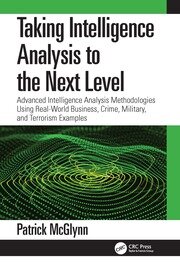
Taking Intelligence to the Next Level: Advanced Intelligence Analysis Methodologies Using Real-World Business, Crime, Military, and Terrorism Examples examines intelligence gathering and analysis and the significance of these programs. Coverage assumes a basic understanding of the intelligence cycle and processes, and the book builds upon the author’s previous text, Intelligence Analysis Fundamentals—also published by CRC Press—to further address various types of intelligence, the function and increasing usage of intelligence in both the private and public sectors, and the consumption of intelligence products to inform strategic decision-making.
Developed for a classroom environment, chapters are packed with multiple examples, visuals, and practical exercises tailored for the intelligence community (IC), military intelligence analyst, criminal, or business analyst alike. The text begins with a chapter on analytical ethics, an important topic that sets the tone for those to come that cover intelligence gathering analytical techniques. The author utilizes multiple instructive learning approaches to build on the student’s existing analytical skills gained from other training resources, their experience, or some other combination.
While topics covered are germane to all intelligence analysis fields—including military, national, political, criminal, and business—specific chapters and sections and most instructional examples, scenarios, exercises, and learning activities focus on the Homeland Security Mission and the associated problem sets. The training presentation methods and instructional approaches are the product of much thought, research, and discussion, and a variety of US government and commercial analytical training methodologies are presented. The book closes with a final chapter looking at future trends in intelligence analysis.
An accompany Instructor’s Guide, for use in the classroom, contains the same practical exercises as those found in the student text, as well as facilitator’s guides, practical exercise solutions, discussion points, sample test questions, and answer keys, to include other websites that can provide additional instructional content. Taking Intelligence to the Next Level serves as an essential course textbook for programs in intelligence, terrorism, and Homeland Security in addition to serving a useful reference for practicing professionals.
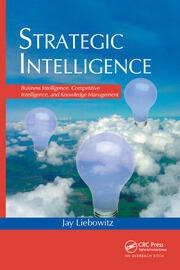 Strategic Intelligence Business Intelligence, Competitive Intelligence, and Knowledge Management by Jay Liebowitz
 Strategic intelligence (SI) has mostly been used in military settings, but its worth goes well beyond that limited role. It has become invaluable for improving any organization's strategic decision making process. The author of Strategic Intelligence: Business Intelligence, Competitive Intelligence, and Knowledge Management recognizes synergies among component pieces of strategic intelligence, and demonstrates how executives can best use this internal and external information toward making better decisions.
Divided into two major parts, the book first discusses the convergence of knowledge management (KM), business intelligence (BI), and competitive intelligence (CI) into what the author defines as strategic intelligence. The second part of the volume describes case studies written by recognized experts in the fields of KM, BI, and CI. The case studies include strategic scenarios at Motorola, AARP, Northrop Grumman, and other market leaders.
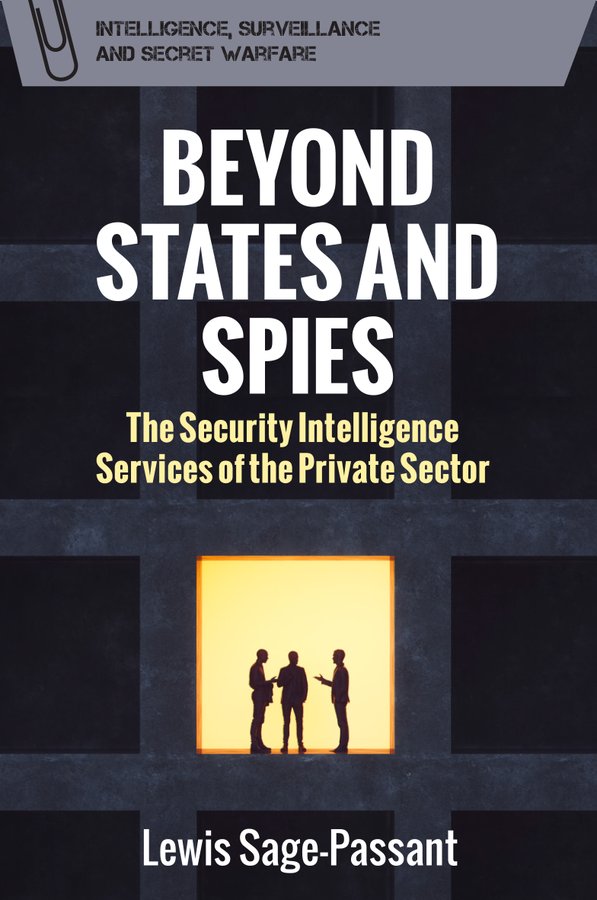
Examines how corporations use intelligence to shape and navigate the world. It brings private sector intelligence studies to Edinburgh University Press’s Intelligence, Surveillance, and Secret Warfare series. It radically challenges our state-centric understandings of intelligence, surveillance, and covert action.
The first book on this subsection of Intelligence Studies, which is now being taught at universities around the world. It will appeal to undergraduate, postgraduate, and doctoral researchers, as well as those in what we might call traditional intelligence studies. Importantly, it will also appeal to - and be read by - industry practitioners.
Scholars have long viewed intelligence as the preserve of nation states. Where the term ‘private sector intelligence’ is used, the focus has been overwhelmingly on government contractors. As such, a crucial aspect of intelligence power has been overlooked: the use of intelligence by corporations to navigate and influence the world. Where there has been academic scrutiny of the field, it is seen as a post-9/11 phenomenon, and that a state monopoly of intelligence has been eroded.
Beyond States and Spies demonstrates - through original research - that such a monopoly never existed. Private sector intelligence is at least as old as the organised intelligence activities of the nation state. Beyond States and Spies offers a comparative examination of private and public intelligence, and makes a compelling case for understanding the dangers posed by unregulated intelligence in private hands. Overall, this casts new light on a hitherto under investigated academic space.
NEWS |
A massive seizure of the drug suggests that fentanyl production is thriving in Mexico, despite a ban by certain criminal groups under significant US pressure.
United States Customs and Border Protection (CBP) officers at the Port of Lukeville, Arizona, made the largest single fentanyl seizure in CBP history, according to an agency press release.
On July 1, a US citizen arrived at the border in a pickup truck, and during the vehicle’s inspection, officers discovered four million blue fentanyl pills, weighing over 453 kilos (over 1,000 pounds). It is nearly quadruple the previous single record of 115 kilograms (254 pounds) in 2019, seized in Nogales, Arizona.
The size is particularly significant, as fentanyl is typically smuggled in much smaller quantities, making it much harder to detect. In 2023, the average amount of fentanyl seized in land seizures on the US-Mexico Border event was just 10.4 kilos (around 22 pounds), according to CBP seizure data accessed by InSight Crime.
The U.S. intelligence community is readying new rules for internal usage of artificial intelligence, creating a first directive to govern how spies adopt and deploy the rapidly advancing technology. John Beieler, the U.S. intelligence community’s AI chief, told The Washington Times the directive is still a work in progress focused on such things as the ethical use of AI and ongoing monitoring of models once they are deployed.
Precisely when the rules will be issued is unclear but Mr. Bieieler said they are intended to hold up under whoever is in charge of the federal government next year.
“A lot of the things that we’re baking into the [intelligence community directive] are good governance practices to have within the [intelligence community], regardless of [the] political landscape,” Mr. Beieler said. “We’re talking about telling the IC elements that you should have robust tests and evaluation procedures, you should have robust documentation, you should have [standards for] how you accord to civil liberties and privacy.”
The group working to craft the rules grew out of a gathering of machine-learning professionals within the spy agencies more than five years ago, according to Mr. Beieler.
The Australian Security Intelligence Organisation (ASIO) has confirmed publicly that Iran isn’t the only foreign power interfering with a diaspora community in Australia. Responding to a question on whether India was similarly engaged (following a media report), ASIO Director-General Mike Burgess told ABC’s Insiders on 11 August ‘there is a range of countries that [commit foreign interference in Australia], not just Iran, many countries that would surprise your viewers. When [ASIO] find it we deal with it effectively.’
I’ll take Burgess at his word that those countries would surprise, as I have a suitably vivid imagination.
The Department of Foreign Affairs and Trade has previously confirmed interference by both the Chinese and Cambodian governments, and former Prime Minister Malcolm Turnbull specifically referred to reports of Chinese covert activities when introducing foreign interference laws in 2017. And similar allegations have been raised publicly against Rwanda, Ethiopia, Myanmar and Vietnam, among others.
Prime Minister Anthony Albanese and Defence Minister Richard Marles are set to imminently announce the successor to the highly respected director-general of the Australian Signals Directorate (ASD), Rachel Noble, as the roster of senior security intelligence community statutory terms ticks over.
While yet to be officially confirmed, it is understood Noble has, for some time, indicated she was unlikely to seek reappointment to the job that must rate as possibly the most high-pressure, high-stakes and high-tempo role in the intelligence apparatus because its mandate is to fortify civilian as well as military infrastructure against constant cyber attacks, as well as conduct offensive operations.
The concurrent rapid escalation and atomisation of many cyber actors amid hot conflicts in Ukraine, and subsequently Gaza, is known to have significantly upped the operational temperature and demands for signals intelligence units around the world because the sheer volume of activity and communications has increased exponentially.
ARTICLES |
In an era where information is the new currency, the ability to protect one’s digital footprint is not just a skill — it’s an art. Open Source Intelligence (OSINT) is a double-edged sword, empowering both investigators and adversaries. For those on the receiving end of prying eyes, mastering the techniques to evade OSINT is paramount. This guide delves into the nuances of becoming invisible in a world of digital surveillance.
Soldiers and civilians serving at sensitive security sites continue to reveal sensitive information about army bases and those serving in them due to the use of smartphones and wearable technologies like smartwatches. Although the existence of these bases is no longer a secret, the information being unwittingly leaked by soldiers and officials enables the enemy to identify which of the soldiers serve at bases, collect and collate other information about them and then target them by tracking, spying on and even extorting or harming them.
Peter Shor published one of the earliest algorithms for quantum computers in 1994. Running Shor’s algorithm on a hypothetical quantum computer, one could rapidly factor enormous numbers—a seemingly innocuous superpower. But because the security of digital information relies on such math, the implications of Shor’s algorithm were ground-shaking.
It’s long been prophesied that modern cryptography, employed universally across the devices we use every day, will die at the hands of the first practical quantum computer.
Naturally, researchers have been searching for secure alternatives.
In 2016, the US National Institute of Standards and Technology (NIST) announced a competition to create the first post-quantum cryptographic algorithms. These programs would run on today’s computers but defeat attacks by future quantum computers.
Beginning with a pool of 82 submissions from around the world, NIST narrowed the list to four in 2022. The finalists went by the names CRYSTALS-Kyber, CRYSTALS-Dilithium, Sphincs+, and FALCON. This week, NIST announced three of these have become the first standardized post-quantum algorithms. They’ll release a standard draft of the last, FALCON, by the end of the year.
The Simandou iron mine in Guinea represents one of the last greenfield projects in the world, and its vast reserves of high-grade ore are expected to tip the scales of global supply. Some even call it the “Pilbara killer,” referring to the potential of Simandou to erode Australia’s dominant position in global iron markets. Now, after decades of false starts, corruption scandals, political upheavals, and lawsuits, the promise of Simandou is inching toward realization, spurred forward by a Chinese government that wants nothing more than to unseat Pilbara and lessen China’s reliance on critical inputs sourced from the West in the process.
REPORT |
Effectiveness is a term often used in intelligence studies. However, what effectiveness means in relation to intelligence remains elusive and intelligence effectiveness is studied from a wide variety of viewpoints. This paper aims to understand the concepts of effectiveness of intelligence and seeks to gain greater insight into what drives effectiveness. Reviewing 176 studies from 12 journals this paper identifies four paradigms of intelligence effectiveness – utility, intelligence failure, precision, and rigor- and describes distinct perspectives within each paradigm, the constructs used to determine effectiveness, and their antecedents. Analysis of the results shows that the paradigms of intelligence effectiveness are interrelated. In addition, paradigms and their constructs can be sequenced, revealing gaps in our knowledge, and providing an agenda for further research.
Large language models (LLMs) match and sometimes exceeding human performance in many domains. This study explores the potential of LLMs to augment human judgement in a forecasting task. We evaluate the effect on human forecasters of two LLM assistants: one designed to provide high-quality ("superforecasting") advice, and the other designed to be overconfident and base-rate neglecting, thus providing noisy forecasting advice. We compare participants using these assistants to a control group that received a less advanced model that did not provide numerical predictions or engaged in explicit discussion of predictions. Participants (N = 991) answered a set of six forecasting questions and had the option to consult their assigned LLM assistant throughout.
Our preregistered analyses show that interacting with each of our frontier LLM assistants significantly enhances prediction accuracy by between 24 percent and 28 percent compared to the control group. Exploratory analyses showed a pronounced outlier effect in one forecasting item, without which we find that the superforecasting assistant increased accuracy by 41 percent, compared with 29 percent for the noisy assistant.
We further examine whether LLM forecasting augmentation disproportionately benefits less skilled forecasters, degrades the wisdom-of-the-crowd by reducing prediction diversity, or varies in effectiveness with question difficulty. Our data do not consistently support these hypotheses. Our results suggest that access to a frontier LLM assistant, even a noisy one, can be a helpful decision aid in cognitively demanding tasks compared to a less powerful model that does not provide specific forecasting advice. However, the effects of outliers suggest that further research into the robustness of this pattern is needed.
OPINION |
In 2024, Australian security relies on maintaining a resilient democracy and an underlying strong civil society as much as it does on secrecy to protect sensitive information from foreign or domestic threat actors. For two decades, our public discourse has focused on balancing national security and our freedoms, but that doesn’t need to be a perfect marriage. Our focus should just be on making it work.
The first review conducted by the new Independent National Security Legislation Monitor (INSLM) Jake Blight, Secrecy offences—Review of Part 5.6 of the Criminal Code Act 1995, provides important recommendations for improving our secrecy legislation and laying the foundations for a better relationship between the national intelligence community (NIC) and the media.
The relationship is not always amicable, as shown by the 2019 AFP raids on Annika Smethurst and the ABC, and last year’s reporting on former secretary of home affairs Mike Pezzullo’s proposal to reinstitute a system for issuing D-notices—official requests not to publish.
In American politics, labeling something a matter of “national security” automatically elevates its importance. In the language of foreign policy observers, national security questions, such as regulating weapons of mass destruction, are matters of “high politics,” whereas other issues, such as human rights, are “low politics.”
Of course, not everyone agrees on which issues fall into the national security bucket. And the American definition of national security has fluctuated wildly over time. The term was used by both George Washington and Alexander Hamilton during the Revolutionary era without being precisely defined. At the start of the Cold War, the federal government greatly expanded the size of the bucket after the passage of the 1947 National Security Act, but that law never defined the term itself. As tensions with Moscow eased at the end of the 1960s, the scope of national security began to shrink a bit, but that ended when the 1973 oil embargo triggered new fears about energy security. In the 1980s, the definition widened until the Cold War ended.
In the years between the 1991 collapse of the Soviet Union and the 9/11 attacks of 2001—an era in which the United States seemed to have few immediate rivals—even security scholars had difficulty defining the meaning of national security. Unsurprisingly, they could not reach a consensus. Since the subsequent “war on terror,” however, the national security bucket has grown into a trough. From climate change to ransomware to personal protective equipment to critical minerals to artificial intelligence, everything is national security now.
TALKS, WEBINARS & PRESENTATIONS |
In To Catch a Spy: The Art of Counterintelligence, James M. Olson, former chief of CIA counterintelligence, offers a wake-up call for the American public and also a guide for how our country can do a better job of protecting its national security and trade secrets.
Olson takes the reader into the arcane world of counterintelligence as he lived it during his thirty-year career in the CIA. After an overview of what the Chinese, Russian, and Cuban spy services are doing to the United States, he explains the nitty-gritty of the principles and methods of counterintelligence.
In the beginning of the universe, all was darkness — until the first organisms developed sight, which ushered in an explosion of life, learning and progress. AI pioneer Fei-Fei Li says a similar moment is about to happen for computers and robots. She shows how machines are gaining "spatial intelligence" — the ability to process visual data, make predictions and act upon those predictions — and shares how this could enable AI to interact with humans in the real world. \
Back to the Resource Hub / Back to Links
The subjects, thoughts, opinions, and information made available in AIPIO Acumen reflect the authors' views, not those of the AIPIO.