
Back to the Resource Hub / Back to Links
The links below are organised by the month in which they are published
Decoding the Independent Intelligence Review (IIR) 2024
In late June, AIPIO conducted its final Roundtable for FY25, entitled ‘Decoding the Independent Intelligence Review (IIR) 2024: Implications for a Thriving Intelligence Community’. The Roundtable Proceedings document offers many useful insights in preparation for Intelligence 2025 in Sydney, 20-22 August 2025. You can access the Roundtable Proceedings, free-of-charge, here.
BOOKS |
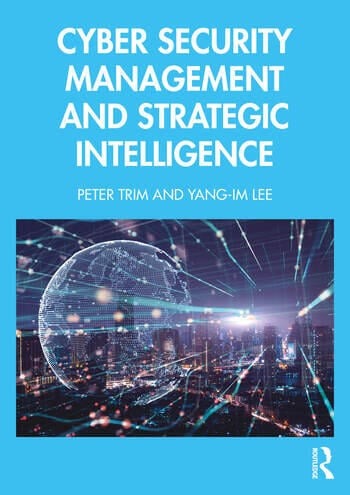
Within the organization, the cyber security manager fulfils an important and policy-oriented role. Working alongside the risk manager, the Information Technology (IT) manager, the security manager and others, the cyber security manager’s role is to ensure that intelligence and security manifest in a robust cyber security awareness programme and set of security initiatives that when implemented help strengthen the organization’s defences and those also of its supply chain partners.
Cyber Security Management and Strategic Intelligence emphasizes the ways in which intelligence work can be enhanced and utilized, guiding the reader on how to deal with a range of cyber threats and strategic issues. Throughout the book, the role of the cyber security manager is central, and the work undertaken is placed in context with that undertaken by other important staff, all of whom deal with aspects of risk and need to coordinate the organization’s defences thus ensuring that a collectivist approach to cyber security management materializes. Real-world examples and cases highlight the nature and form that cyber-attacks may take, and reference to the growing complexity of the situation is made clear. In addition, various initiatives are outlined that can be developed further to make the organization less vulnerable to attack. Drawing on theory and practice, the authors outline proactive, and collectivist approaches to counteracting cyber-attacks that will enable organizations to put in place more resilient cyber security management systems, frameworks and planning processes.
Cyber Security Management and Strategic Intelligence references the policies, systems and procedures that will enable advanced undergraduate and postgraduate students, researchers and reflective practitioners to understand the complexity associated with cyber security management and apply a strategic intelligence perspective. It will help the cyber security manager to promote cyber security awareness to a number of stakeholders and turn cyber security management initiatives into actionable policies of a proactive nature.
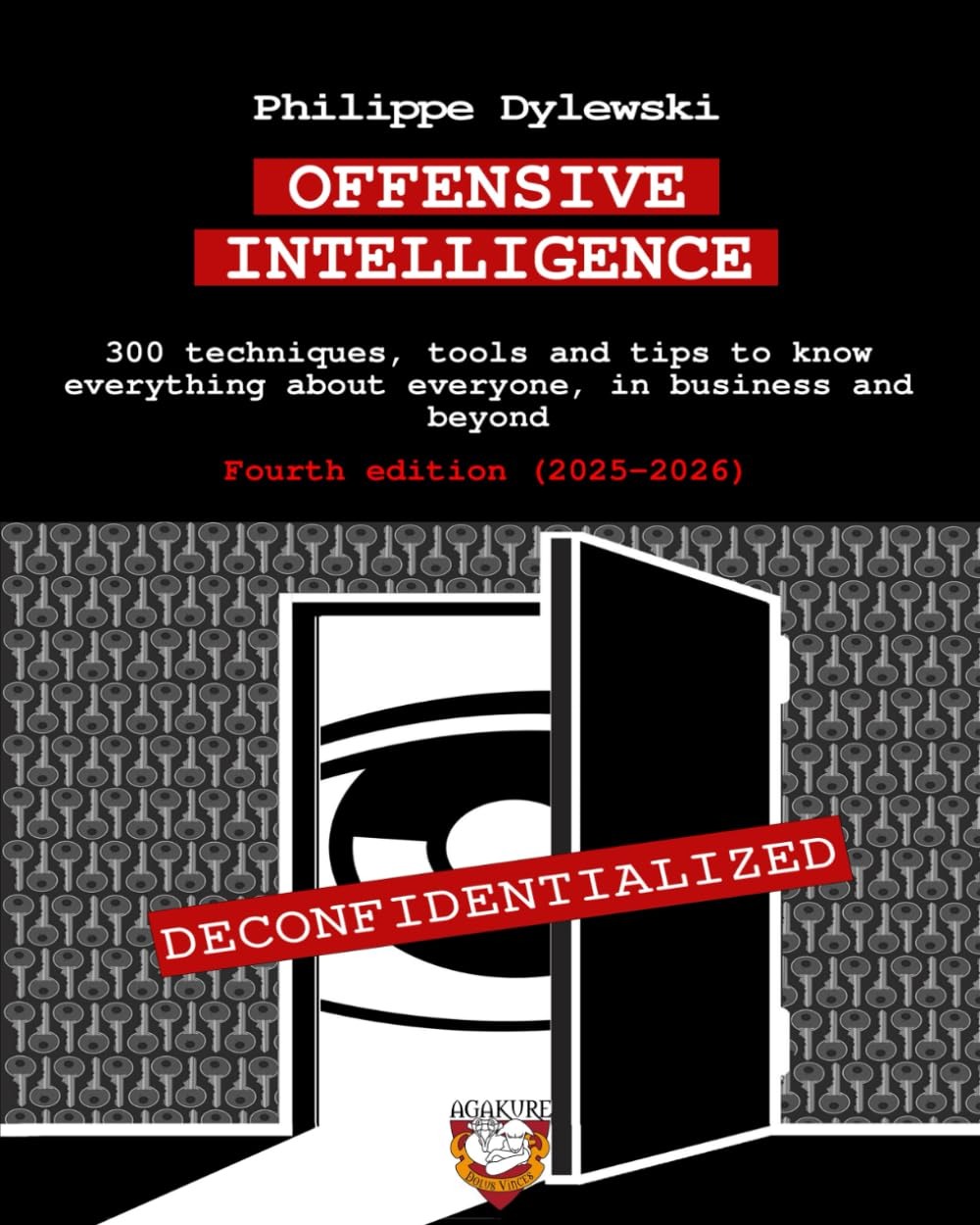
Now in its fourth edition, the book is designed to equip professionals—from journalists and recruiters to private detectives and business leaders—with the tools necessary to uncover actionable insights from publicly available data. Spanning over 440 pages, Dylewski’s work is structured around 300 real-world techniques that include advanced Google search strategies, social media footprint analysis, database mining, and facial recognition technologies. The book also touches on more sophisticated approaches such as navigating corporate databases, verifying financial information, tracking ghost companies, and protecting personal identity online. What sets this book apart is its unapologetically hands-on approach: it prioritizes practicality over theory and presents each technique as part of a larger toolkit for digital sleuthing. Dylewski’s background as both a psychologist and private investigator lends the book a unique perspective—he understands not only the tools but also the human behaviors behind the data. His experience in missing persons cases and corporate intelligence informs his understanding of how information flows, gets buried, or is manipulated. Rather than presenting intelligence work as mysterious or inaccessible, Dylewski breaks it down into repeatable, legal, and ethical strategies that anyone can learn. The book is especially useful for those conducting due diligence, investigating fraud, vetting job candidates, or performing competitive analysis. Each chapter builds on the idea that in today’s digital environment, information is abundant but fragmented, and success lies in knowing where to look and how to connect the dots.
Philippe Dylewski’s Offensive Intelligence: 300 Techniques, Tools and Tips to Know Everything About Everyone, in Business and Beyond is a tactical and practical guide to modern investigative methods, particularly those rooted in open-source intelligence. Offensive Intelligence is not just a manual—it’s a mindset, encouraging readers to be both curious and discerning as they navigate the complexities of digital landscapes. Whether you're trying to validate someone’s background, investigate a company, or simply sharpen your research skills, this book delivers a rare and compelling blend of method, insight, and application. Let me know if you'd like a summary of a specific technique or a closer look at one of the case examples.
The Ethics of National Security Intelligence Institutions: Theory and Applications (1st Edition) by Adam Henschke, Seumas Miller, Andrew Alexandra, Patrick F. Walsh, and Roger Bradbury is a pioneering work that explores the moral foundations and practical challenges of intelligence institutions in liberal democracies. Published in 2024 by Routledge, the book confronts the ethical tensions inherent in national security practices—such as surveillance, deception, and covert operations—and offers a fresh framework for evaluating their legitimacy. Rather than relying solely on traditional models like “just intelligence theory,” which adapts principles from just war theory, the authors argue for a teleological, institutionally grounded approach. This revised framework incorporates principles such as necessity, proportionality, reciprocity, and trust, allowing for a more nuanced and context-sensitive understanding of intelligence ethics.
The book is structured in two parts. The first section, “Concepts and Principles for Just Intelligence Institutions,” lays the theoretical groundwork by examining the nature of intelligence, the limitations of existing ethical models, and the moral significance of institutional design. It challenges readers to rethink how ethical principles apply when institutions are tasked with protecting national security in complex and often ambiguous environments. The second section, “Practices,” applies this framework to real-world intelligence activities, including espionage, covert action, and cyber operations. Through detailed analysis and case studies, the authors explore how these practices can be ethically justified—or condemned—based on their institutional context and strategic purpose.
This volume is particularly valuable for students, scholars, and practitioners in intelligence studies, ethics, international relations, and public policy. It bridges the gap between abstract moral theory and the operational realities of intelligence work, offering both philosophical depth and practical insight. In doing so, it equips readers with the tools to critically assess the ethical dimensions of intelligence institutions and their role in democratic societies. As surveillance technologies evolve and geopolitical tensions rise, the need for ethically sound intelligence practices becomes increasingly urgent. This book provides a timely and essential contribution to that conversation.
Ultimately, The Ethics of National Security Intelligence Institutions reframes the debate around intelligence ethics. It moves beyond simplistic moral judgments to a deeper understanding of institutional responsibility, normative coherence, and democratic accountability. By offering a robust ethical framework tailored to the unique demands of intelligence work, the authors chart a path toward more principled and transparent national security institutions.
US Intelligence Failure and Knowledge Creation: Improving Intelligence Analysis by Carl W. Ford, Jr. and Kathleen M. Vogel is a critical and timely examination of the structural and epistemological shortcomings within the U.S. intelligence community (IC). Published by Routledge in 2025, the book argues that many of the most consequential intelligence failures—such as those surrounding 9/11, the 2003 Iraq War, and the Russia-Ukraine conflict—stem not from a lack of data or technological capability, but from a deep-rooted deficiency in research and knowledge-generation practices. Over the past four decades, organizational decisions have prioritized current intelligence reporting and reactive structural fixes, while neglecting the cultivation of robust research capabilities. This imbalance has led to a systemic inability to produce nuanced, anticipatory analysis.
The authors trace the evolution of intelligence analysis and diagnose its current dysfunctions. They explore how the IC has become overly reliant on short-term reporting and tactical data, often at the expense of strategic insight and contextual understanding. A key theme is the lack of expertise and intellectual diversity within analytic teams, which hampers the community’s ability to interpret complex global developments. The book also addresses the politicization of intelligence, where analysis is shaped or constrained by political agendas, further distorting the knowledge creation process.
One of the book’s strengths lies in its interdisciplinary approach. It draws from political science, sociology, and science and technology studies to unpack how knowledge is constructed within intelligence institutions. The authors emphasize that improving intelligence analysis requires more than technical upgrades—it demands cultural and organizational transformation. They examine the potential role of artificial intelligence in enhancing analytic capabilities, but caution against viewing AI as a panacea. Instead, they advocate for a reinvigoration of human expertise, critical thinking, and methodological rigor.
In its final chapters, the book offers concrete recommendations for reform. These include changes to workforce development, leadership training, and institutional design aimed at fostering a more research-oriented and intellectually agile intelligence community. The authors propose short-, medium-, and long-term strategies that are policy-relevant and actionable, not only for U.S. agencies but also for intelligence institutions globally.
Ultimately, US Intelligence Failure and Knowledge Creation is a call to rethink how intelligence is produced and valued. It challenges readers—whether policymakers, analysts, or scholars—to confront the epistemic blind spots that undermine national security and to build a more resilient, knowledge-driven intelligence enterprise.
NEWS |
Australia's domestic spy chief has used a major speech in Adelaide to warn foreign espionage is costing the nation at least $12.5 billion a year, while revealing ASIO has disrupted 24 "major espionage and foreign interference" operations in the last three years alone.
ASIO director-general Mike Burgess has also confirmed that Australia expelled "a number" of undeclared Russian intelligence officers in 2022, whilst berating some public officials for "head-spinning" complacency about the threats posed by overseas intelligence agencies.
Mr Burgess has struck an increasingly urgent tone about the threats posed by foreign interference in recent years, but tonight's speech — delivered at the annual Hawke Lecture at the University of South Australia — is his most detailed account laying out the scale of the threat.
The spy chief again listed China, Russia and Iran as three of the main nations behind espionage in Australia but said Australians would be "shocked" by the number of other countries that were also trying similar tactics.
He said the 24 major operations disrupted over the past three years were "more than the previous eight years combined" and that strategic competition was driving a "relentless hunger for strategic advantage and an insatiable appetite for inside information".
The Australian Defence Force will formally establish a purpose-built space operations workforce for the first time, recognising the growing strategic importance of space as a contested domain and expanding Defence’s high-tech career opportunities. Unveiled during Exercise Talisman Sabre 2025 in Townsville on Tuesday, the move will see the introduction of targeted recruitment and specialist training programs from next year to grow Australia’s sovereign capability in satellite communications, space domain awareness, and missile warning.
Defence Personnel minister Matt Keogh said the new workforce would ensure Australia remains competitive in a “congested and contested environment”.
“Our region is rapidly evolving, and space is a critical operational domain,” Mr Keogh said. “Space capabilities will play a critical role in the execution of activities as part of Exercise Talisman Sabre 2025 alongside existing operational domains of maritime, land, air and cyber.
The dedicated workforce is part of a broader push outlined in the 2024 Defence Workforce Plan to grow emerging capabilities, including cyber and space. It will include roles such as space operations officers and space operations specialists, with new direct-entry pathways into the Royal Australian Air Force from 2026.
Public servants have been warned against revealing they have a security clearance on social media, with the home affairs minister declaring foreign spies shouldn’t be able to Google their targets. Tony Burke said that while the number of people publicly declaring they have a security clearance has fallen by 85%, it still remains a problem.
Burke said it will become a condition of a security clearance for the holder to not advertise it on social media. “I get that people on their profiles want to make themselves as employable as possible for the next job, but the best way to show that you are worthy of future work is to be worthy of helping keep secrets,” he told ABC Radio on Friday.
“That means you just must not be putting that sort of stuff up on social media so foreign people who want to engage in espionage and foreign interference … should not begin with a simple Google search to see who the people are they would need to contact.”
Spying by nation states is not new, and despite our geography, Australia has never been immune. This was made abundantly clear in a unique study, released last night by Director-General of Security Mike Burgess. Thanks to this study, Australians now have a sophisticated estimate of the cost of espionage directed against our governments, businesses and universities: at least $12.5 billion in just a single year.
While giving the 26th annual Hawke lecture, Burgess was measured, but still frank in his disbelief at the mix of inertia, naivety and fatalism that Australians are demonstrating across sectors (not just across government departments) in response to the threat of espionage. Burgess outlined that on all levels—government, industry and individual—behavioural responses are key to arresting the threat, or at least mitigating it more effectively. This tells us we need to stop leaving the house unlocked while shouting down the street that we have valuables on the kitchen bench.
As the result of a unique study by the Australian Institute of Criminology (AIC) on behalf of the Australian Security Intelligence Organisation, The Cost of Espionage does what it says on the tin: it uses the AIC’s well-practiced methodology for assessing the costs of serious and organised crime to estimate the costs of espionage. That cost amounts to $12.5 billion for 2023–24, capturing direct costs of known or suspected espionage, and public and private sector mitigation and response costs. In addition, the study estimates that effective mitigations and counter-espionage activities have prevented tens of billions of dollars’ worth of espionage costs.
ARTICLES |
The basic role of the state is to satisfy the primary human need, namely the need for security. To this end, it uses a number of instruments of a diverse nature, and counterintelligence is one of them. The scope of counterintelligence services has gradually expanded over time and currently includes not only counteracting hostile intelligence (sometimes also allied intelligence) but also combating organized crime (especially international), preventing the proliferation of weapons of mass destruction, combating terrorism (including cyberterrorism), controlling economic turnover in the field of dual-use technologies, combating individuals and groups seeking to overthrow the prevailing political order by force, combating extremism, cryptology, securing government communications, and finally protecting one's own intelligence operations. Counterintelligence is a kind of alter ego of intelligence, it is, as it were, the other side of the same coin. Adding the prefix kontr makes the basic word its opposite. Counterintelligence, unlike intelligence, which is supposed to obtain necessary information, protects it and ensures its safety. It is worth remembering, however, that counterintelligence is not only a defensive form of action, there is also offensive counterintelligence.
Its aim, is to control the actions of the opponent, to manipulate them and influence them, to obtain information about the modus operandi the opponent, his contacts, interests, goals, state of knowledge. Therefore, counterintelligence should be referred to collecting information and taking actions to protect against espionage, other intelligence activities, sabotage or contract killings. Modern counterintelligence services face a number of new challenges, which are primarily related to the development of new ICT technologies, social media, and systems based on artificial intelligence, including machine espionage. They can be used to disrupt the electoral process, cause social unrest or even revolution (color revolutions), spread disinformation through fake news or using deep technology fake. Since modern societies are information societies, they are highly susceptible to information attacks aimed at persuading them to behave in a specific way, e.g. to vote for a specific candidate or protest against the policy of a given government. Modern information techniques allow for the manipulation of images and sounds, and thus enable the publication of false information, processed, manipulated to achieve a specific goal of information warfare. An example here is the deepfake technology, which, through ultra-realistic video materials, can change the perception of a given person in the public consciousness and influence the outcome of elections.
Based on the above comments, it can be stated that today's counterintelligence, in addition to traditional challenges related to the protection and protection of its own systems and information resources, as well as an active form of counteracting espionage, must keep up with the development of new ICT technologies, social media, and systems based on artificial intelligence. Petrification in this area may lead to a decrease in its effectiveness, and consequently also to inefficiency and serious perturbations in the sphere of security.
Governments, sometimes, appear to lack an adequate appreciation and understanding of the conditions that promote Counterintelligence as a vital pillar of security in state affairs. This may explain why this sector of the Intelligence domain, has not been approached as a holistic security aspect by state actors. Counterintelligence is an integral part of the Intelligence process, carried out by state Intelligence services or, even, by private corporations hired specially for this purpose. Its contribution to state security is vital, since it safeguards the political stability of a state, ensuring its perpetual functioning and internal security, and, also, affects the decision-making process of an adversarial state, through deception operations, that impact its political, economic and military affairs. This article explores the role of Counterintelligence, in a highly competitive and ambiguous global security environment, and analyses its contribution in the fields of Information and Intelligence collection, management and analysis, as well as the decision-making process of a state or an adversarial state.
Although intelligence failures arise from multiple interacting causes, many studies focus on a single primary factor, such as information overload or bureaucratic dysfunction. This article introduces a causal framework adapted from forensic pathology to address the problem of complex causation in intelligence failures. Forensic pathologists use several categories of causes to break down the complexities of death investigations, and their approach is well suited for studying intelligence failures. In this article, the value of postmortem analysis is demonstrated through the examination of missteps that led to the US invasion of Iraq. Rather than isolating a single primary cause, as many studies have done, the postmortem approach shows that analytical errors, political interference, and belief homogeneity all played necessary roles. Postmortem analysis offers a structured method for identifying and classifying multiple causes behind intelligence failures, and it may prove useful for explaining other low-probability political outcomes.
Covert action of all kinds against strategic systems enjoys a long if somewhat hidden history. Efforts to counter the threat of ballistic missile fires from adversary states have increasingly focused on actions intended to deny, degrade and disrupt hostile batteries and their operations ‘left of launch’, before flight in anger. Offensive cyber capabilities are widely anticipated to play a substantial role in such actions. However, little information has been publicly disclosed regarding concepts of operation under which left-of-launch missions may be executed. As a result, many aspects of future operations in crisis and conflict remain unexamined, with attention to date largely focused on broader questions of nuclear stability. But the offensive cyber instrument is characterised by its constant employment in operations short of war, and in ways intended to shape future warfighting outcomes. We will weigh the balance between treating this mission as covert action, vice as an acknowledged military strategic mission. We explore the potential conditions of engagement, from program development to crisis manoeuvering, and in limited use scenarios. We will consider the implications for arsenal management, escalation and deterrence dynamics – along with the hard decisions that will confront planners and policymakers in such operations
REPORT |
For 40 years now, the Canadian Security Intelligence Service (CSIS) has protected the safety, security and prosperity of Canada and Canadians through trusted intelligence, advice and action. Yet, as we celebrate this milestone, we face a more complex and challenging national security environment than ever in our history. This year’s annual report provides us the opportunity to reflect on the work undertaken to transform and address an evolving environment. .
For 40 years now, the Canadian Security Intelligence Service (CSIS) has protected the safety, security and prosperity of Canada and Canadians through trusted intelligence, advice and action. Yet, as we celebrate this milestone, we face a more complex and challenging national security environment than ever in our history. This year’s annual report provides us the opportunity to reflect on the work undertaken to transform and address an evolving environment. .
OPINION |
Donald Trump is a master of shaping the political narrative, but his focus on messaging is one reason for his poor relationship with the United States' intelligence community. Recent disputes over Iran show how the latter can be a problem for Trump – as a source of evidence that can undermine his message. In order to preserve his narratives on Iran, the president risks politicizing the American intelligence community, which can undermine national security.
At midnight on Saturday 21 June, US forces launched Operation Midnight Hammer . B-2 stealth bombers took off from Missouri and flew 19 hours to Iran, where they bombed facilities related to that country's nuclear program. By 10pm, Trump claimed the US military had ' totally obliterated' the nuclear sites.
The attacks seemed a clear political victory: Trump had joined Israel in strikes that apparently ended the Iranian nuclear program. But the president's winning narrative was questioned immediately – in part by American intelligence and intelligence chiefs.
First, Trump was confronted on the justification for the attack – on whether Iran was building a nuclear weapon. The president dismissed the assessments of the US intelligence community and seemed to pressure his Director of National Intelligence, Tulsi Gabbard, to change her views .
Then Trump had to defend the results. A leaked report from the Pentagon's Defense Intelligence Agency (DIA) estimated that, rather than being 'obliterated', US attacks had only set Iran's program back by a few months. The White House reacted furiously to the contradiction, calling the early 'low confidence' assessment ' fake news' , threatening to subpoena reporters for their sources, while Trump threatened to sue the New York Times and CNN.
Reforms outlined in a July ASPI report, aimed at strengthening the Parliamentary Joint Committee on Intelligence and Security’s (PJCIS), are insufficient. The recommendations don’t go far enough to fully address concerns around parliamentary oversight of Australia’s national intelligence community (NIC).
The committee’s composition is a source of ongoing disagreement. Contentious amendments to the committee’s membership, particularly the possible inclusion of crossbenchers, have sparked concerns about politicisation disrupting the institution’s traditionally bipartisan and confidential culture. However, preserving the status quo hinders greater rigour and objectivity.
I disagree with the idea of Labor and Coalition members monopolising the committee. Appropriate safeguards can be applied, and further improvements can be obtained by directly involving the parliament on all sides, in both chambers and independent of the executive.
Intelligence agencies’ willingness to inform the PJCIS should not be dependent on the traditional parties of government, especially since intelligence agencies are accountable to parliament. While securing the trust and confidence of the agencies is critical, Australians are entitled to expect that intelligence agencies are independently scrutinised and are held to account by their elected representatives.
As a representative institution, parliament is at the heart of Australian democracy. Given today’s diverse parliamentary composition, all parliamentary committees, including the PJCIS, could benefit from a diversity of backgrounds, perspectives, opinions and levels of experience. Greater contestability in the committee could lead to positive policy outcomes in the public interest.
TALKS, WEBINARS & PRESENTATIONS |
Hosted by the Hayden Center, this forum brings together intelligence experts to discuss emerging threats and strategic priorities for the U.S. in 2025. It’s particularly useful for grasping the broader geopolitical context and how agencies are adapting.
The U.S. Department of State and the U.S. Department of Defense are excited to bring back last year’s popular webinar series on national security. This year, each webinar will dive into a unique national security topic and feature insights from Critical Language Scholarship (CLS) Program and Boren Awards alumni.
Back to the Resource Hub / Back to Links
The subjects, thoughts, opinions, and information made available in AIPIO Acumen reflect the authors' views, not those of the AIPIO.