
Back to the Resource Hub / Back to Links
The links below are organised by the month in which they are published
BOOKS |
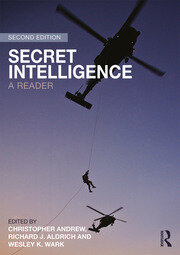
The second edition of Secret Intelligence: A Reader brings together key essays from the field of intelligence studies, blending classic works on concepts and approaches with more recent essays dealing with current issues and ongoing debates about the future of intelligence.
Secret intelligence has never enjoyed a higher profile. The events of 9/11, the conflicts in Iraq and Afghanistan, the missing WMD controversy, public debates over prisoner interrogation, together with the revelations of figures such as Edward Snowden, recent cyber attacks and the rise of 'hybrid warfare' have all contributed to make this a ‘hot’ subject over the past two decades.
Aiming to be more comprehensive than existing books, and to achieve truly international coverage of the field, this book provides key readings and supporting material for students and course convenors.
This new edition contains essays by leading scholars in the field and will be essential reading for students of intelligence studies, strategic studies, international security and political science in general, and of interest to anyone wishing to understand the current relationship between intelligence and policy-making.

From an elite Navy rescue swimmer comes this insider perspective on what it takes to survive some of the most dangerous situations imaginable — and how the lessons learned can help overcome other momentous challenges.
Brian Dickinson, famously known for having climbed down Mt. Everest while completely snow blind, is often asked how he managed the incredible feat. He has always attributed it to his faith and to his U.S. Navy Search and Rescue Training, which taught him how to remain calm in moments of chaos. For the first time, Brian takes an in-depth look at the training that saved his life and the missions—both his and others’—where these skills were put to the test to save other people.
Over two decades after being honorably discharged from the Navy, Brian is compelled to share his unique military training and experiences. He believes that sharing the training that he received to overcome adversity in the most extreme scenarios can help others to overcome their own personal Everest. Even beyond mountaineering, the military training has rewired Brian’s ability to navigate difficult business, financial, health, and relationship challenges. With the chaos of the world continuing to expand, these stories from U.S. Navy rescue swimmers provide a fresh perspective on what it takes to survive some of the most dangerous situations, and how that shapes the rest of a person’s life.
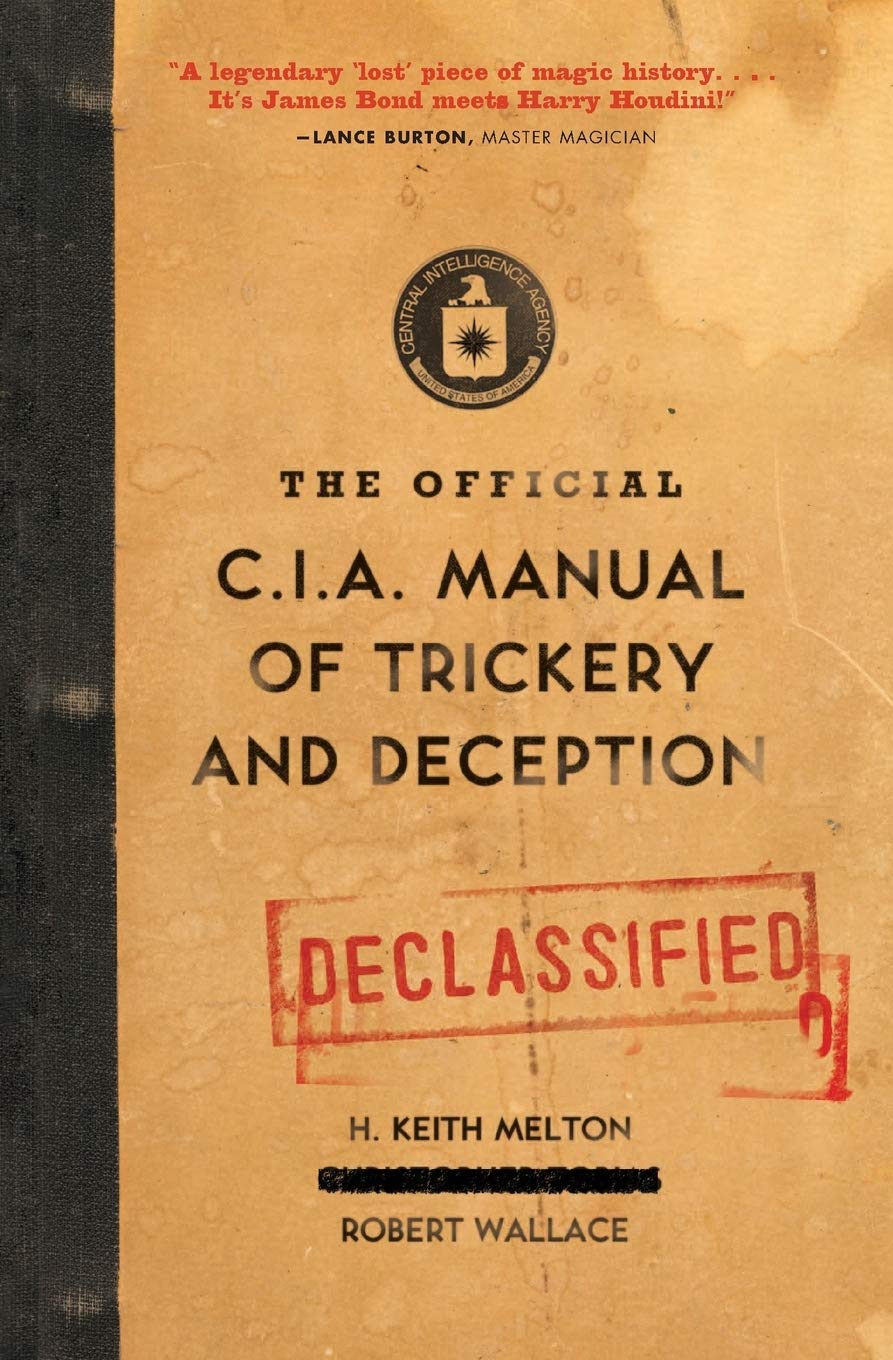
An amazing historical artifact, this eye-opening handbook offered step-by-step instructions to covert intelligence operatives in all manner of sleight of hand and trickery designed to thwart the Communist enemy. As part of MK-ULTRA, the CIA's secret mind-control and chemical interrogation research program, John Mulholland brings a manual that is both useful and informative to intelligence enthusiasts.
This legendary document is the brainchild of John Mulholland, then America’s most famous magician, believed lost forever. But thanks to former CIA gadgeteer Bob Wallace and renowned spycraft historian H. Keith Melton, The Official CIA Manual of Trickery and Deception is now available to everyone, spy and civilian alike.
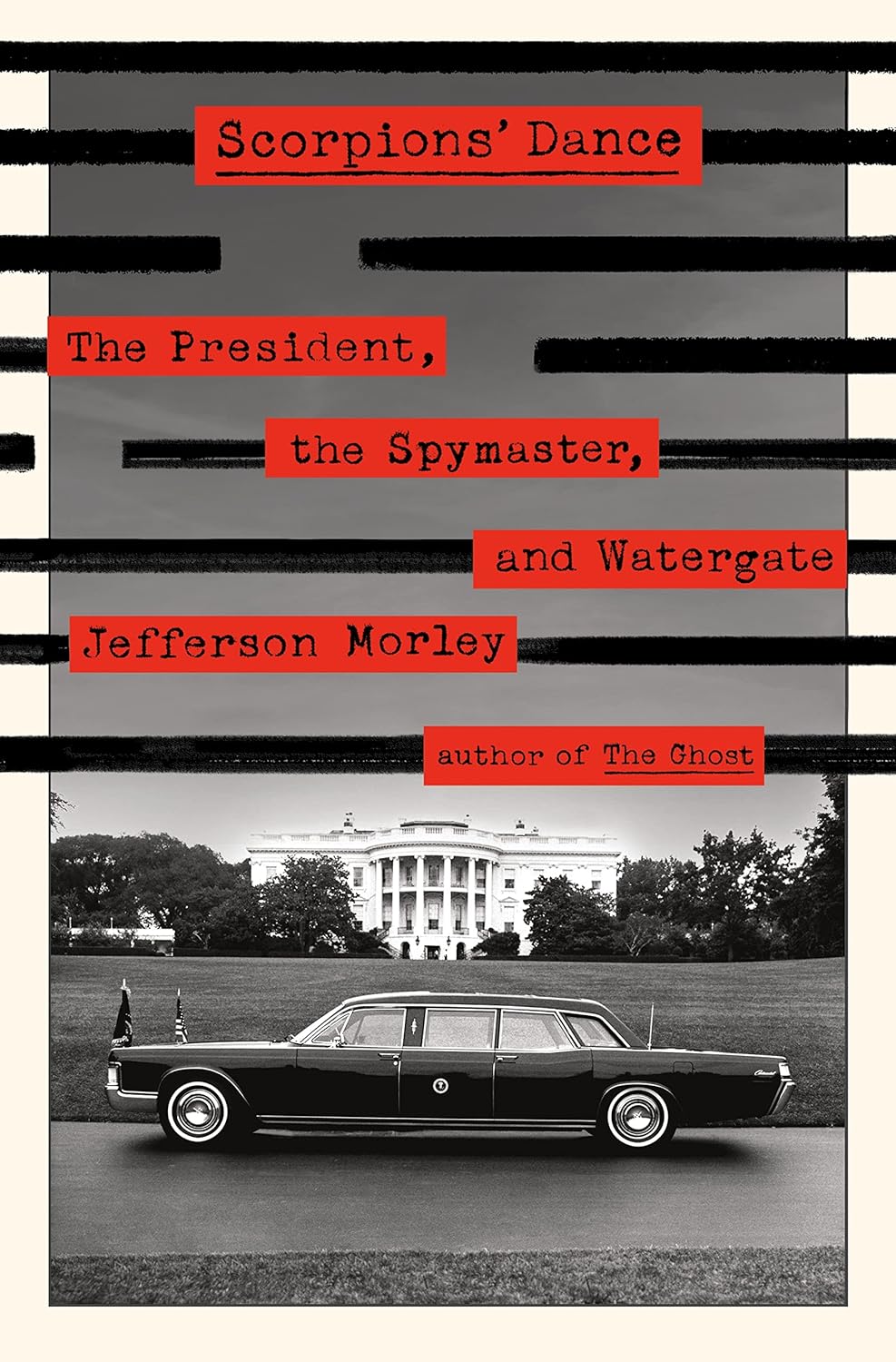
For the 50th anniversary of the Watergate break-in: The untold story of President Richard Nixon, CIA Director Richard Helms, and their volatile shared secrets that ended a presidency.
Scorpions' Dance by intelligence expert and investigative journalist Jefferson Morley reveals the Watergate scandal in a completely new light: as the culmination of a concealed, deadly power struggle between President Richard Nixon and CIA Director Richard Helms.
Nixon and Helms went back decades; both were 1950s Cold Warriors, and both knew secrets about the disastrous Bay of Pigs invasion of Cuba as well as off-the-books American government and CIA plots to remove Fidel Castro and other leaders in Latin America. Both had enough information on each other to ruin their careers.
After the Watergate burglary on June 17, 1972, Nixon was desperate to shut down the FBI's investigation. He sought Helms' support and asked that the CIA intervene―knowing that most of the Watergate burglars were retired CIA agents, contractors, or long-term assets with deep knowledge of the Agency's most sensitive secrets. The two now circled each other like scorpions, defending themselves with the threat of lethal attack. The loser would resign his office in disgrace; the winner, however, would face consequences for the secrets he had kept.
Rigorously researched and dramatically told, Scorpions' Dance uses long-neglected evidence to reveal a new perspective on one of America's most notorious presidential scandals.
NEWS |
Harry Ferguson didn't mean to become a spy.
When he finished studying at England's Oxford University in the 1980s he was planning to join the army.
That was until he received a tap on the shoulder from his tutor asking if he had thought of serving his country in "other ways". A few weeks later, a plain brown envelope turned up in his mailbox inviting him to an interview with an anonymous government department. He went on to spend decades travelling the world in disguise as an international spy for MI6 — the UK's international intelligence service — foiling terrorist weapon plots and disrupting narcotics trades.
"It's kind of like a trap you walk into because you think to yourself, 'Well, I know it's probably not James Bond, but what is it really like?'" Mr Ferguson told the ABC.
"You go to one interview and another interview, then you start training and before you know you are undercover in the depths of Nigeria."Hvaldimir first gained international attention in April 2019 when he was spotted near the Norwegian island of Ingoya wearing a harness equipped with a mount for a camera.
We were pleased to host Kerri Hartland, Director-General of the Australian Secret Intelligence Service (ASIS) on 29 Oct 2024 for an exclusive address to university students. DG Hartland spoke about the ongoing need for the human element of intelligence gathering in an increasingly digital world and busted some myths about working at ASIS.
In an interview, Head of NSC, Professor Rory Medcalf said DG Hartland’s speech "resonated" with the students, who were drawn from both the ANU and the University of Canberra.
"We've seen steps to transparency by ASIS chiefs over the past decade, but this is the first time one has made such a clear careers pitch to students," he said.
The FBI is warning the public that criminals exploit generative artificial intelligence (AI) to commit fraud on a larger scale which increases the believability of their schemes. Generative AI reduces the time and effort criminals must expend to deceive their targets. Generative AI takes what it has learned from examples input by a user and synthesizes something entirely new based on that information. These tools assist with content creation and can correct for human errors that might otherwise serve as warning signs of fraud. The creation or distribution of synthetic content is not inherently illegal; however, synthetic content can be used to facilitate crimes, such as fraud and extortion.1 Since it can be difficult to identify when content is AI-generated, the FBI is providing the following examples of how criminals may use generative AI in their fraud schemes to increase public recognition and scrutiny.
Covid-19 likely leaked from a Chinese laboratory, according to a two-year investigation into pandemic in the US. A 520-page report from the Republican-controlled House Select Subcommittee on the Coronavirus Pandemic, which killed 1.1 million Americans, looked at the federal and state-level response, as well as the pandemic’s origins and vaccination efforts.
“This work will help the United States, and the world, predict the next pandemic, prepare for the next pandemic, protect ourselves from the next pandemic, and hopefully prevent the next pandemic,” panel chairman Brad Wenstrup said in a letter to Congress.
“The Covid-19 pandemic highlighted a distrust in leadership. Trust is earned. Accountability, transparency, honesty, and integrity will regain this trust. A future pandemic requires a whole of America response managed by those without personal benefit or bias. We can always do better, and for the sake of future generations of Americans, we must. It can be done.”
ARTICLES |
If you happen to be waiting for your morning coffee at the Starbucks in the Pentagon, you might not be aware that you are surrounded by what is probably the world’s highest density of strategists. Every year, without fail, thousands of mid-level and senior military officers as well as their civilian counterparts will complete some form of professional education that prepares them to be strategists or emphasizes strategic thinking. But what is the true payoff of all the money the U.S. government spends on “strategic education” aside from all those fancy certificates on office walls in Washington DC? A quick look at the last two decades of American global strategy suggests strategic education may simply have become a rite of passage instead of something to be put into practice.
To be sure, every student who attends a strategic education program is undoubtedly familiar with Prussian military strategist Carl von Clausewitz, who famously wrote that “war is a continuation of politics by other means.” But it seems that two decades of American strategists have forgotten (or worse, never truly absorbed) Clausewitz’s prescient admonition that politicians and military commanders must “recognize the kind of war they are undertaking, neither mistaking it for, nor attempting to turn it into something it cannot be because of the nature of the circumstances.” Our track record certainly leaves much to be desired. Over the past twenty years, the $6 trillion Afghanistan and Iraq debacles were followed by more regime change in Libya, plunging that country into a civil war (and subsequent proxy war) that rages to this day. Western attempts to overthrow Syria’s Bashar al-Assad were blunted by Russian support, ensuring Assad remains firmly in control. American strategy failed to deter Russia from invading Georgia in 2008 or Ukraine in 2014 and again in 2022. Finally, the hawkish consensus emerging in Washington (i.e. a “New Cold War”?) that conflict with China is increasingly likely—if not inevitable—risks excessively securitizing every aspect of the U.S.-China relationship.
In the race to recruit and deploy talent, organizations often focus on attracting highly skilled experts and then optimizing internal knowledge flow. But translating expertise into better business decisions and superior outcomes hinges on how well in-house experts are organized. Balancing specialization with collaboration, matching experts with the right tasks, promoting a broad spectrum of expertise, and embedding domain expertise into leadership are all factors that matter. The disasters involving Boeing’s 737 Max 8 airliner, which claimed hundreds of lives, and the company’s ongoing business struggles offer a stark lesson: Poor organization of expertise can have severe consequences. Only by thoughtfully placing and valuing experts can managers unlock their workforce’s full potential.
That insight was derived from a recently published research, which was based on interviews with engineers, technicians, and product managers specializing in dozens of expertise areas at another major aeronautical organization. The 15-month in-depth field study examined how experts are organized — staffed into job roles, grouped in departments and projects, and classified in specialty directories. My findings indicate that the design of organizational structures can reveal and enhance expertise — or devalue and obscure it. The research also informs guidance on how to improve your organization’s approach to organizing experts.
Timely warning to policy-makers and the general public about the planned Russian invasion of Ukraine is hailed as an intelligence and strategic communication success. It has resulted in increased confidence in US and UK intelligence services and in revigorated involvement in strategic communication in security and defence. Decision-makers at all levels seem to have understood that employing intelligence in strategic communication in a timely and transparent manner can lead to enhanced public understanding of ongoing security challenges and support for measures that could affect their own well-being, as well as to restore confidence in government actions. The current research analyzes how intelligence was integrated into the strategic communications of the US, UK, NATO and the EU in the months preceding the Russian invasion in Ukraine. The objective of the research is to draw lessons learned during this period to better understand how, to what extent and in what circumstances traditionally classified intelligence products can be integrated in decision-makers’ strategic communication and what limitations need to be imposed.
Intelligence officers have an ethical responsibility to choose the most appropriate tools and methods—collectively called “tradecraft”—and this responsibility transcends military or civilian affiliation, rank or seniority, employment status (contractor versus government personnel), intelligence discipline, and intelligence career field. Each intelligence officer has an ethical responsibility to seek a greater and deeper understanding of tradecraft; to apply tradecraft effectively and appropriately; to speak up when tradecraft is being used poorly, or not at all; and to teach and mentor all who ask for help or do not know to ask. This responsibility cannot be outsourced to technology solutions, nor to an ombudsman or a senior manager. In the United States, it cannot be replaced by treating Intelligence Community Directive 203 as a checklist. Nor will it solve all the Intelligence Community’s woes—including politicization—but it offers an important layer of protection against poor intelligence while providing a real mechanism to actualize integrity.
REPORT |
Workplace culture is important. It’s time to examine it in the National Intelligence Community (NIC).
Research shows that people surrounded by behaviour contrary to organisational values are 47 percent more likely to engage in unethical behaviour. Another finding is that average teams outperform those dominated by unpleasant superstars. We also know that high-level executive thinking is impaired under stress—not exactly ideal for human brains that rely on snap judgements, bias and decision-making shortcuts, and much less so in high-stakes intelligence analysis and reporting.
In contrast, a consciously designed high-performing team environment can set the right conditions. This may be a culture that challenges cognitive biases, fosters candour, increases accountability and drives diversity of thought. The right team culture can also help retain and grow personnel and drive shared purpose and understanding of workers’ roles, cultivating agency reputations as employers of choice.
But, working environments in the NIC can lack transparency. They are often hidden away in agency basements and secure zones. Notwithstanding formal oversight from the Inspector-General of Intelligence and Security, some NIC workplaces can be isolated from public view, and therefore be more susceptible to developing internal cultural practices that would not be accepted elsewhere. The 2024 Independent Intelligence Review, whose report has not yet been published, presents the perfect opportunity to evaluate the NIC’s cultural positioning in the evolving security environment, paying due attention to employees, their working conditions and psychological well-being.
For nearly eight decades, the world has been navigating the dangers of the nuclear age. Despite Cold War tensions and the rise of global terrorism, nuclear weapons have not been used in conflict since Hiroshima and Nagasaki in 1945. Efforts such as strategic deterrence, arms control and non-proliferation agreements, and the U.S.-led global counterterrorism have helped to keep nuclear incidents at bay. However, the nation's success to date in countering nuclear terrorism does not come with a guarantee, success often carries the risk that other challenges will siphon away attention and resources and can lead to the perception that the threat no longer exists.
This report found that U.S. efforts to counter nuclear or radiological terrorism are not keeping pace with the evolving threat landscape. The U.S. government should maintain a strategic focus and effort on combatting terrorism across the national security community in coordination with international partners, State, Local, Tribal and Territorial authorities, the National Laboratories, universities and colleges, and civil society. Developing and sustaining adequate nuclear incident response and recovery capabilities at the local and state levels will likely require significant new investments in resources and empowerment of local response from Federal Emergency Management Agency (FEMA), working with the Centers for Disease Control and Prevention, Environmental Protection Agency, Department of Energy, and National Institutes of Health.
OPINION |
Fifteen years after his death, David Blackwell’s name will be on every tech nerd’s lips in 2025. Nvidia, a semiconductor giant, has named its latest superchip after the mathematician and game theorist, who was the first African-American inducted into the National Academy of Sciences.
Last week, time collapsed. Bashar al-Assad’s fall recalled scenes across the region from the start of the Arab spring almost 14 years ago. Suddenly history felt vivid, its memories sharpened. In fact it no longer felt like history. Scenes that it seemed we would never see again – of crowds thronging the squares; the obscene riches of despots exposed, their fortresses stormed, their iconography desecrated – unlocked a familiar, almost sickening sense of possibility. Of giddiness, of horror at what fleeing dictators had left in their wake, and of hope. Syria’s long revolution – the death, torture, imprisonment and exile that Assad’s crushing of it unleashed – makes its successful end bittersweet. The price was so high, which makes its spoils even more dear.
The moment is also different in another way. In those 14 years, other revolutions across the region either unravelled or resulted in the retrenchment of dictatorial regimes under new management. And so that sense of untrammelled optimism that followed the fall of that first crop of dictators is tempered by some wariness of what comes next. But it can and should be a productive wariness rather than a reason for despair. Because what Syria benefits from now is an understanding of the fragility of this period. To those of us who experienced it before in other countries, it felt like a time when the momentum of revolution was unstoppable and cleansing. It had a kinetic energy that swept away the old systems to be replaced by new administrations, armed with good intentions and popular support, that would simply figure it out.
TALKS, WEBINARS & PRESENTATIONS |
In the second video of our ‘Securing our Future’ series, national security experts share their perspectives on the overlooked risks that could impact Australia's future security landscape. From climate change and cybersecurity to shifting geopolitical dynamics and social cohesion, this video explores important yet often understated areas of concern.
Too often, conversations on defence, security, foreign policy, prosperity, social cohesion, and sustainability are compartmentalised. At the 'Securing our Future' conference, participants explored where and how these priorities can converge in Australia’s interest. This is the second video in a short series aimed at continuing the conversation from the event.
Artificial intelligence (AI) and large language models are becoming a mainstay in our daily lives, but how are these tools being used in delivering open-source intelligence? Janes Red Team Analyst Harry Lawson explores the role these tools have in intelligence tradecraft, uncovering the balance between cutting-edge technology and established analytical standards.
Back to the Resource Hub / Back to Links
The subjects, thoughts, opinions, and information made available in AIPIO Acumen reflect the authors' views, not those of the AIPIO.