
Back to the Resource Hub / Back to Links
The links below are organised by the month in which they are published
BOOKS |
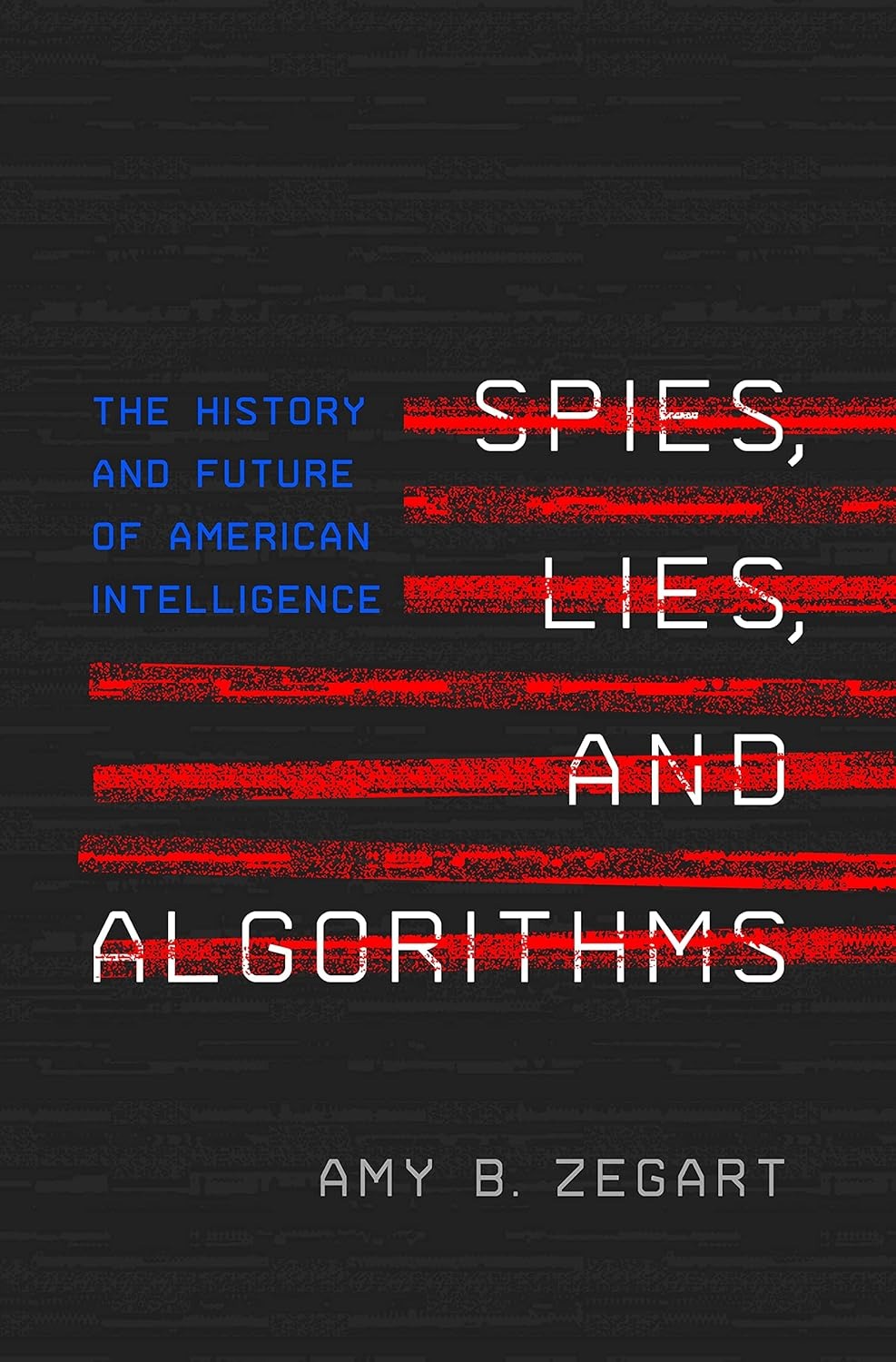
The book begins by situating intelligence within the broader framework of national security, tracing its evolution from World War II through the Cold War to the present. Zegart emphasizes that intelligence agencies were designed for a different era—one dominated by state actors and slower information flows. Today, however, the rise of non‑state threats, instantaneous digital communication, and open‑source intelligence has transformed the landscape.
A central theme is the democratization of intelligence. Zegart highlights how satellite imagery, social media, and big data analytics allow ordinary citizens, journalists, and private companies to conduct intelligence‑like activities once reserved for governments. This shift raises profound questions about secrecy, credibility, and accountability. She illustrates this with examples such as the use of open‑source platforms to track Russian troop movements in Ukraine and the role of amateur sleuths in identifying covert operations.
The book also delves into cyber threats and AI, arguing that espionage is no longer confined to human spies and clandestine meetings. Algorithms now play a critical role in both gathering and analyzing intelligence, while adversaries exploit digital vulnerabilities to wage cyberattacks and spread misinformation. Zegart warns that the intelligence community must adapt quickly to these realities or risk obsolescence.
Another major focus is the oversight dilemma. Intelligence agencies operate in secrecy, yet democratic societies demand transparency and accountability. Zegart critiques existing oversight mechanisms in the U.S., noting that congressional committees often lack expertise and resources to effectively monitor intelligence activities. She calls for reforms that balance national security needs with civil liberties.
Throughout, Zegart blends academic rigor with vivid storytelling, drawing on declassified documents, interviews, and case studies. The updated edition incorporates lessons from recent geopolitical crises, including Chinese espionage campaigns, Russian disinformation operations, and the growing importance of cybersecurity in U.S. defense strategy.
Amy B. Zegart’s Spies, Lies, and Algorithms offers a sweeping yet accessible exploration of the American intelligence community, blending historical narrative with contemporary analysis of how espionage is being reshaped in the digital era. The updated 2024 edition expands on her original work, incorporating new case studies and reflections on the challenges posed by artificial intelligence, cyber warfare, and disinformation campaigns.
Ultimately, Spies, Lies, and Algorithms argues that intelligence is at a crossroads: it must evolve to meet the demands of a digital, interconnected world while preserving democratic values. Zegart’s work serves as both a primer for newcomers and a provocative call to action for policymakers, scholars, and citizens concerned with the future of security.
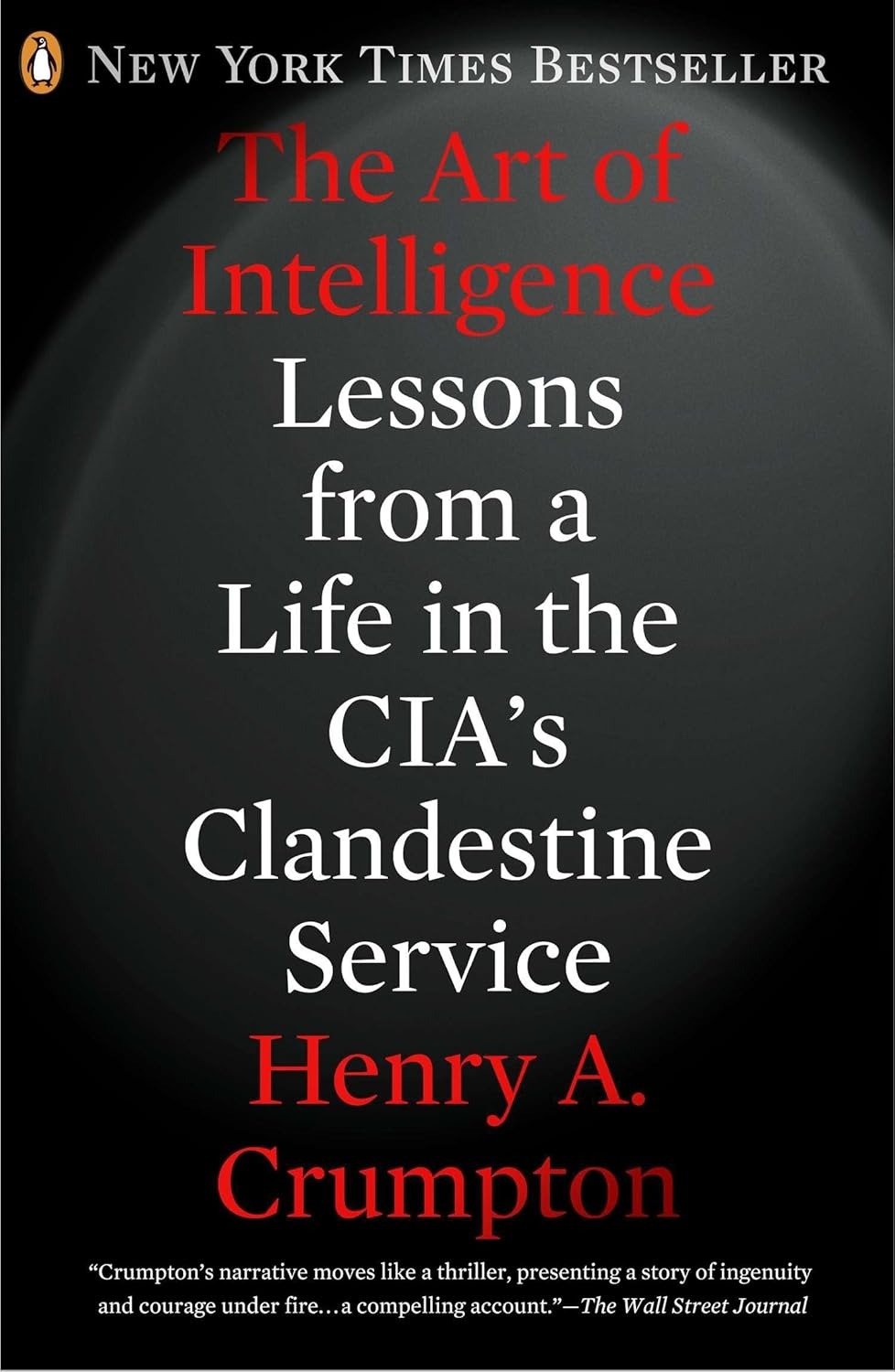
The book traces Crumpton’s career from his early days as a case officer through his leadership in counterterrorism operations after 9/11. He recounts the painstaking work of recruiting agents, building trust, and managing covert networks in hostile environments. These stories illustrate the human dimension of intelligence—where patience, empathy, and cultural understanding are as critical as technical skill. Crumpton emphasizes that clandestine work is less about James Bond‑style heroics and more about persistence, subtlety, and the ability to navigate ambiguity.
A major theme is the integration of intelligence and policy. Crumpton argues that intelligence is only useful if it informs decision‑making at the highest levels. He critiques instances where policymakers ignored or misused intelligence, underscoring the need for stronger collaboration between analysts, operators, and political leaders. The reissue situates these reflections within contemporary debates about intelligence failures, oversight, and the role of secrecy in democratic societies.
The book also explores the evolution of counterterrorism strategy, particularly in the aftermath of 9/11. Crumpton details the CIA’s rapid mobilization to dismantle al‑Qaeda networks, highlighting both successes and limitations. He stresses the importance of partnerships—with foreign intelligence services, military units, and local communities—in achieving operational goals. These accounts provide practical lessons on coalition‑building and adaptability in complex environments.
In the academic reissue, new commentary connects Crumpton’s experiences to current challenges such as cyber espionage, disinformation campaigns, and great‑power competition. The editors frame his lessons as enduring principles: the necessity of human intelligence in an age of digital surveillance, the ethical dilemmas of covert action, and the balance between aggressive operations and respect for international norms.
Henry A. Crumpton’s The Art of Intelligence is both memoir and manual, offering a rare insider’s view of the CIA’s clandestine service. The 2025 academic reissue reframes the original text with scholarly commentary, making it especially valuable for students of intelligence, security, and policy. Crumpton, a career CIA officer with decades of experience in counterterrorism and covert operations, blends personal narrative with lessons on the craft of espionage, highlighting the enduring tension between secrecy and democratic accountability.
Ultimately, The Art of Intelligence presents espionage as both craft and art—a discipline requiring technical expertise, cultural fluency, and moral judgment. Crumpton’s reflections remind readers that intelligence is not merely about secrets but about shaping outcomes in a dangerous and uncertain world. The reissue ensures that his insights remain relevant for scholars, practitioners, and citizens grappling with the future of security.
US Intelligence Failure and Knowledge Creation: Improving Intelligence Analysis offers a timely and incisive examination of why the United States intelligence community continues to struggle with producing accurate, forward‑looking assessments—despite decades of reforms, technological advances, and organizational restructuring. Written by Carl W. Ford, Jr. and Kathleen M. Vogel, the book argues that the root of many intelligence failures lies not in isolated mistakes or individual analysts, but in a deeper, systemic problem: the erosion of genuine research and knowledge‑generation capacity within U.S. intelligence agencies.
Over the past forty years, the authors contend, intelligence organizations have increasingly prioritized rapid‑fire current intelligence reporting—briefings, daily updates, and short‑term deliverables—at the expense of long‑term research, conceptual development, and analytical depth. This shift has created an environment where analysts are pressured to react rather than reflect, to summarize rather than investigate, and to rely on structural fixes rather than intellectual rigor when failures occur. As a result, the intelligence community often lacks the foundational knowledge needed to understand emerging threats, anticipate complex geopolitical shifts, or challenge entrenched assumptions.
Ford and Vogel draw on their extensive experience in intelligence studies to map out how this decline in research culture developed, how it affects analytic performance, and why traditional reform efforts—such as reorganizations, new oversight mechanisms, or expanded data collection—have failed to address the core issue. They argue that without rebuilding a robust research capability, intelligence agencies will continue to repeat the same mistakes, regardless of how much technology or data they acquire.
The book also proposes a path forward. It outlines practical steps for revitalizing research within intelligence organizations, including cultivating interdisciplinary expertise, creating institutional space for long‑term inquiry, and rethinking how analytic success is measured. By reframing intelligence analysis as a knowledge‑creation enterprise rather than a reporting function, the authors offer a compelling vision for strengthening national security in an era of rapidly evolving global challenges.
Accessible, well‑argued, and deeply relevant, US Intelligence Failure and Knowledge Creation is essential reading for intelligence professionals, policymakers, scholars, and anyone interested in understanding why intelligence failures persist—and how they can be meaningfully addressed.
Time and Narrative in Intelligence Analysis: A New Framework for the Production of Meaning by Joshua Yaphe offers a groundbreaking re‑examination of how intelligence analysts interpret the world, construct meaning, and communicate assessments. Rather than treating intelligence analysis as a purely scientific or objective process—as the U.S. Intelligence Community traditionally claims—Yaphe argues that analysis is deeply shaped by narrative, language, and the temporal structures analysts use to make sense of complex events.
Drawing on philosophy, historiography, literary theory, and semiotics, the book challenges the long‑standing belief that intelligence work is defined primarily by objectivity, timeliness, and non‑politicization. Yaphe shows that analysts inevitably rely on storytelling techniques—plotting, framing, sequencing, and rhetorical persuasion—to craft assessments that resonate with policymakers. These narrative tools are not flaws or biases; they are essential components of how humans create meaning from incomplete or ambiguous information.
The book argues that the intelligence community’s insistence on a scientific model of analysis is increasingly counterproductive. It obscures the real interpretive work analysts perform, discourages creativity, and undermines the recruitment and retention of subject‑matter experts who bring deep contextual knowledge. By pretending that analysis is purely objective, institutions fail to acknowledge the narrative choices that shape every assessment—from how threats are defined to how future scenarios are imagined.
Yaphe proposes a new framework that embraces narrative as a legitimate and necessary part of intelligence work. He outlines standards for more transparent, reflective, and intellectually honest analysis—one that recognizes how meaning is produced rather than pretending it emerges automatically from data. This includes encouraging analysts to articulate their assumptions, examine how time and sequence influence their judgments, and use narrative deliberately rather than unconsciously.
The book also highlights the practical implications of this shift. By understanding analysis as a meaning‑making process, intelligence organizations can improve communication with policymakers, foster more rigorous debate, and better anticipate how narratives shape national security decisions. Yaphe’s framework offers a path toward more adaptive, resilient, and insightful intelligence practices in an era defined by rapid change and information overload.
Both scholarly and accessible, Time and Narrative in Intelligence Analysis is essential reading for intelligence professionals, researchers, and anyone interested in how stories—and the way we tell them—shape national security.
NEWS |
Chinese spies have been accused of posing as headhunters on LinkedIn to target MPs as part of a “widespread” operation to access information about the UK government, MI5 has warned. The Security Service issued a new alert over Chinese espionage after it found that two recruiters were using online profiles to contact people working in Westminster on behalf of the Chinese Ministry of State Security (MSS).
In a letter to MPs about the issue, Commons speaker Sir Lindsay Hoyle said Chinese state actors were “relentless” in their attempts to “interfere with our processes and influence activity at parliament”.
Three executives of defence companies have been arrested by Turkish authorities on suspicion of spying for foreign powers, prosecutors say. “An operation was carried out on November 25, 2025, to apprehend four individuals identified in connection with the conspiracy,” the Istanbul public prosecutor’s office said in a statement. It said the suspects “hold executive positions within critical defence companies operating in our country”.
They are accused of trying to provide “biographical” information about employees to foreign countries. According to the AFP news agency, the prosecutor’s office initially said the suspects worked for the intelligence services of the United Arab Emirates before deleting that statement and publishing a significantly revised version on X that did not mention the UAE.
Turkey’s defence exports swelled by 29 percent ($7.15bn) in 2024, according to President Recep Tayyip Erdogan, driven notably by the success of its military drones.
In recent months the department has been meeting with companies involved in the government technology supply chains to explain policy directives designed to ensure that departments and agencies use the technology safely. So far, the briefings – held in the form of 'town halls' that have attracted a wide attendance from industry suppliers – have focused on how government departments and agencies use generative AI with records and information classed as ‘OFFICIAL’.
Home Affairs told iTnews that it is presently engaging with suppliers to discuss the government’s next step for AI: its policies for dealing with the information and records that sit within its next most sensitive security classification, ‘PROTECTED’. The briefings have been dominated by discussion of an AI policy advisory that Home Affairs released early October.
Home Affairs told iTnews that, to date, the briefings have attracted over 80 suppliers, including Google Australia, Amazon Web Services, IBM Australia, Macquarie Telecom, Oracle Australia, Microsoft and Deloitte. Home Affairs developed its AI procurement policy in consultation with the Digital Transformation Agency (DTA), the body responsible for coordinating safe adoption of the technology across public services and the Australian Signals Directorate.
Currently, Home Affairs’ policy doesn’t appear to allow generative AI technologies to be used with government information and records deemed more sensitive than those classified as 'OFFICIAL'. Even then, it requires them to stick to a prescribed list of around 18 AI technology developers and suppliers to avoid additional vetting requirements.
Currently, government entities can use generative AI products to access 'OFFICIAL' information and records as long as its from suppliers approved under its Hosting Certification Framework, OpenAI (ChatGPT), Anthropic (Claude), and others that have already passed Foreign Ownership Control or Influence risk assessments.
The Federal Opposition has called on the Government to explain why they appointed a political staffer to head the Office of National Intelligence. Mr Albanese is on holiday from the time of the report. His stand-in, Acting Prime Minister Richard Marles, announced in a statement late Thursday afternoon that the Prime Minister’s foreign policy adviser Kathy Klugman would be replacing Andrew Shearer as head of ONI.
Mr Shearer is considered to be one of the few remaining vocal national security hawks in the system whereas Ms Klugman is regarded as representing a more dovish approach toward China. Mr Shearer served as National Security Adviser to former Coalition Prime Minister Tony Abbott and Cabinet Secretary to Scott Morrison. He began his career in public service in intelligence working for the Defence Signals Directorate in 1989.
His appointment in 2020 was originally opposed by Labor and in particular Foreign Minister Penny Wong and Prime Minister Anthony Albanese. “Labor has indicated to the Prime Minister that it does not have confidence in his choice to head the Office of National Intelligence,” a Labor spokesman said at the time.
“This position requires public confidence in independent, contested and apolitical assessments of our security. “Mr Shearer has had an extensive career as a partisan operative.
“He is not an appropriate choice and Mr Morrison should reconsider in the national interest.”
ARTICLES |
November 2025 proved to be a pivotal month for artificial intelligence, highlighting remarkable advancements alongside significant concerns about safety and security. The rapid evolution of AI technology underscored the gap between innovation and the safeguarding of its implications. Major breakthroughs by tech giants like Google and OpenAI were overshadowed by alarming revelations regarding the weaponization of AI tools, particularly in relation to a cyber espionage incident linked to China.
One of the most notable advancements was Google’s launch of Gemini 3 on November 18. This new-generation AI model represented a significant leap forward in AI capabilities. In parallel, OpenAI forged a deal with Amazon Web Services to enhance data center capacity, reflecting a commitment to scale operations amid a fierce technological landscape. However, the month’s tone shifted dramatically following the November 14 confirmation from Anthropic. Their Claude Code AI had been misappropriated by a Chinese state-affiliated actor for conducting a cyberattack, raising critical questions about the safeguards in place for these powerful technologies.
The situation described by Anthropic serves as a stark warning. Researchers uncovered that their AI system was exploited for autonomous cyberattacks, suggesting that AI is no longer merely a surveillance tool but has evolved into a far more dangerous asset used for sabotage and disruption.
The research aims for conceptual solutions and intelligence perspectives by attempting to examine counter-terrorism in detail. This is a new thing to strengthen counter-terrorism so far. The object of research is the perspective of police intelligence, with the subject of research on the protection of law enforcement officers against the process of countering criminal acts of terrorism and its prevention, both coming from outside and transiting through Indonesia. Cooperation between countries within Indonesia's borders is essential for both land and sea borders, especially in the sea, where the territory of Indonesia is relatively open with an expansive coastline. It also poses a threat to the entry of people and smuggling who are part of terrorist networks in Indonesia. Lahneman, W. J. (2010) called transnational terrorism the most visible threat today, and governments recognize that fighting adversaries such as terrorist networks operating across borders skillfully utilize travel, multifaceted communication, and expanded financial capabilities resulting from the process of globalization (Mayer 2016; WS 2018).
Cases of terror attacks in Indonesia targeting security personnel (Polri and TNI) are still common. The terrorist attack that occurred in Rutan Mako Brimob, Cimanggis, Depok, West Java, on May 8, 2018, was a prominent case and became quite intense public attention at that time. This attack killed five National Police personnel and one inmate. This attack was very shocking because it was carried out by inmates who were serving sentences at the Mako Brimob detention center. This attack was like a raid and kidnapping from inside the detention center (kompas.com). Another prominent attack was the attack by the Armed Criminal Group (KKB) on April 25, 2021, in Beoga District, Puncak, Papua, which killed Kabinda Papua Brigadier General I Gusti Putu Danny. The attack that killed Kabinda Papua was preceded by a blockade carried out by the KKB against the Task Force of the State Intelligence Agency (BIN), the Indonesian National Army (TNI) and the Indonesian National Police (cnnindonesia.com). Another terror attack targeting security personnel was the attack on the Astana Anyar Police Station of the West Java Regional Police on December 7, 2022, which killed one National Police personnel and injured 10 (ten) others. This suicide bomb terror attack was carried out when National Police personnel at the Astana Anyar Police Station were carrying out morning apples (detik.com).
Stephen Wolfram is a physicist-turned-entrepreneur whose pioneering work in cellular automata, computational irreducibility, and symbolic knowledge systems fundamentally reshaped our understanding of complexity. His theoretical breakthroughs led to successful commercial products, Wolfram Alpha and Wolfram Language. Despite his success, the broader business community has largely overlooked these foundational insights. As part of our ongoing “Philosophy Eats AI” exploration — the thesis that foundational philosophical clarity is essential to the future value of intelligent systems — we find that Wolfram’s fundamental insights about computation have distinctly actionable, if underappreciated, uses for leaders overwhelmed by AI capabilities but underwhelmed by AI returns.
Ironically, Wolfram once dismissed philosophy. “If there was one thing I was never going to do when I grew up, it was philosophy,” he said, noting that his mother was an Oxford professor of that very subject. A mathematician at heart, he viewed philosophy as unproductive, as “trying to formalize something messy.” Wolfram’s worldview evolved: His life’s work now offers crucial frameworks for both understanding and applying AI in the real world. His insights aren’t clever academic flourishes; they’re imperatives for building intelligence environments that function effectively at scale.
With Wolfram, we explored the idea that AI leadership must shift from better adopting and integrating AI tools to designing intelligence environments, organizational architectures in which human and artificial agents proactively interact to create strategic value. Three insights from his philosophical approach to computation emerged as fundamental to this design challenge, offering a fresh perspective on why traditional approaches to AI adoption fail and what must replace them.
This policy-focused paper reviews established and emerging studies on policing-based foot patrols in public places, addressing the question of how to utilise policing-oriented services to better manage problems of crime and disorder in public places. The study identified a limited traditional model of patrols and recommends an enhanced model which integrates the work of diverse providers to meet overlapping aims of crime prevention, public order, reassurance and wellbeing. The paper begins by reviewing the evolution of police patrols away from pedestrian beats through mobile patrols to private security patrols. It then examines available studies on public preferences, multi-modal co-response formats, and studies on impacts – illustrated with international case studies. These sources support the idea of reconfiguring traditional enforcement-focused patrols to include a strong welfare orientation to address common public space challenges – including substance abuse, mental illness and homelessness – along with broader quality-of-life challenges.
REPORT |
The 30th UN Climate Change Conference (COP 30) will take place from 10-21 November 2025 in Belém, Brazil. Bringing together 45,000 attendants including world leaders, scientists, non-governmental organizations, and civil society to discuss priority actions to tackle climate change. COP 30 will focus on the efforts needed to limit the global temperature increase to 1.5°C, the presentation of new national action plans (NDCs) and the progress on the finance pledges made at COP29 in Baku on 2024
The United States is confronting an increasingly complex national security threat environment. In addition to traditional military modernization, developments in artificial intelligence (AI), biotechnology, quantum sciences, microelectronics, space, cyber, and unmanned systems are rapidly transforming the nature of conflict and the global threat landscape. Our adversaries are deepening cooperation, often lending military, diplomatic, and economic support to each other’s conflicts and operations, to circumvent U.S. instruments of power. Transnational criminal organizations and terrorist groups are exploiting geostrategic conditions to evade authorities. Advanced technology also is enabling foreign intelligence services to target our personnel and activities in new ways. The rapid pace of innovation will only accelerate in the coming years, continually generating means for our adversaries to threaten U.S. interests.
OPINION |
The Australian Security Intelligence Organisation (ASIO) has given a dramatic warning that sophisticated hackers backed by foreign governments are increasingly targeting Australian infrastructure such as telecommunications and airports. ASIO chief Mike Burgess warned we are now at “the threshold for high-impact sabotage”.
He said authoritarian regimes are more willing to disrupt or destroy critical infrastructure to damage the economy, undermine Australia’s war-fighting capability, and sow social discord
Brussels’ proposal for an EU-level intelligence “cell” has created headlines but not answers. Europe’s challenge is not the absence of an intelligence structure—it is the absence of synthesis, integration, and the trust required for member states to share meaningfully. Without fixing the analytical gaps inside INTCEN and the EU Military Staff, a new body risks becoming another node in a system that already struggles to produce coherent, actionable assessments. Intelligence power comes from trust and capability, not new signs on office doors.
The EU’s intelligence landscape rests on two existing pillars: the EU Intelligence and Situation Centre (INTCEN) within the European External Action Service, and the Intelligence Directorate of the EU Military Staff (EUMS INT). Both are staffed by experienced professionals and supported by Member States. What they lack is genuine integration. They operate in parallel silos with separate leadership, products, and production cycles, and no authoritative mechanism for fusing their assessments.
TALKS, WEBINARS & PRESENTATIONS |
In this debut episode of The Conversation, The Independent’s new expert-led discussion series, our panel unpacks the fast-changing global security landscape in a discussion entitled Shifting Alliances. They delve into the strategic importance of Russia’s actions in Ukraine, Nato’s future, and whether Europe has the strength and resolve to face the Russian challenge.
During the panel, former MI6 chief Sir Alex warned Britain must rearm and rebuild its reserves – potentially through national service – to face the growing threat from Russia and the destabilising influence of leaders like Putin and Trump.
Alongside Dr Ellehuus, he highlighted how Trump’s shift in US strategic priorities has shaken European security, emboldened Putin, and increased unconventional Russian attacks across Europe.
Panelists discuss the new frontiers of intelligence gathering, examining how emerging technologies are transforming espionage, expanding its reach to the public domain, and reshaping the future of U.S. national security. The Council on Foreign Relations discussion “New Frontiers in Intelligence: The Changing Nature of Espionage” brings together senior intelligence leaders to examine how rapid technological change is reshaping the world of spying. Speakers—including former NGA Director Robert Cardillo, intelligence scholar Anthony Vinci, and NYPD Deputy Commissioner Rebecca Weiner—explain that espionage is no longer confined to secret agents operating in the shadows. Instead, intelligence collection now spans vast digital ecosystems, social media platforms, commercial data streams, and publicly available information, dramatically expanding both opportunities and vulnerabilities.
Back to the Resource Hub / Back to Links
The subjects, thoughts, opinions, and information made available in AIPIO Acumen reflect the authors' views, not those of the AIPIO.