
Back to the Resource Hub / Back to Links
The links below are organised by the month in which they are published
BOOKS |
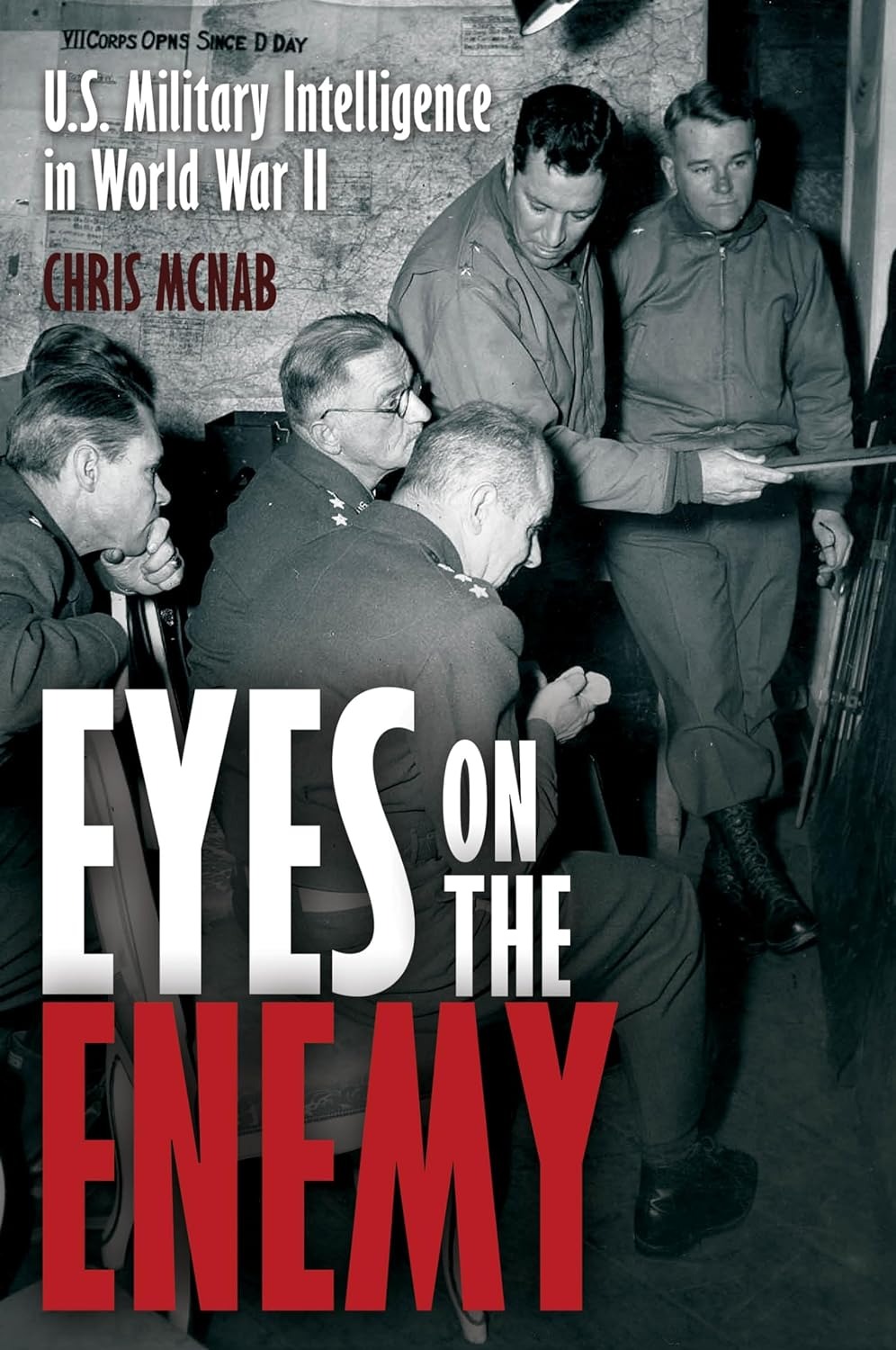
On December 7, 1941, an imperial Japanese carrier strike force attacked the US Pacific Fleet at Pearl Harbor, taking advantage of what was one of the most profound intelligence failures in US history. Galvanized into action, the branches of the U.S. military subsequently developed one of the greatest, albeit imperfect, intelligence-gathering and analysis networks of the combatant nations, opening an invaluable window onto the intentions of their enemies.
The picture of U.S. military intelligence during World War II is a complex one. It was divided between the fields of signal intelligence (SIGINT) and human intelligence (HUMINT), combat intelligence and War Department intelligence, and between numerous different organizations, including the Military Intelligence Division (MID), Military Intelligence Service (MIS), the Office of Naval Intelligence (ONI), the Counter Intelligence Corps (CIC), the Office of Strategic Services (OSS) and the many intelligence units organic to Army, Navy, Army Air Forces, and Marine Corps. The documents collected in this book reveal the theoretical and practical principles behind wartime intelligence gathering and analysis, from the frontline intelligence officer to the Washington-based code-breaker. They explain fundamentals such as how to observe and record enemy activity and intercept enemy radio traffic, through to specialist activities such as cryptanalysis, photoreconnaissance, prisoner interrogation, and undercover agent operations.
A unique look at American military intelligence during World War II using contemporary manuals and briefings. The painstaking work of an intelligence operator required a sharp, attentive mind, whether working behind a desk or under fire on the frontlines. The outputs from these men and women could ultimately make the difference between victory and defeat in battle.
This book illustrates that big data is transforming intelligence production as well as changing the national security environment broadly, including what is considered a part of national security as well as the relationships agencies have with the public. The book highlights the impact of big data on intelligence production and national security from the perspective of Australian national security leaders and practitioners, and the research is based on empirical data collection, with insights from nearly 50 participants from within Australia’s National Intelligence Community. It argues that big data is transforming intelligence and national security and shows that the impacts of big data on the knowledge, activities and organisation of intelligence agencies is challenging some foundational intelligence principles, including the distinction between foreign and domestic intelligence collection. Furthermore, the book argues that big data has created emerging threats to national security; for example, it enables invasive targeting and surveillance, drives information warfare as well as social and political interference, and challenges the existing models of harm assessment used in national security. The book maps broad areas of change for intelligence agencies in the national security context and what they mean for intelligence communities, and explores how intelligence agencies look out to the rest of society, considering specific impacts relating to privacy, ethics and trust.
This book sets out the big data landscape, comprising data abundance, digital connectivity and ubiquitous technology, and shows how the big data landscape and the emerging technologies it fuels are impacting national security. This book will be of much interest to students of intelligence studies, technology studies, national security and International Relations.
 Terrorism, Extremism, Disinformation and Artificial Intelligence: A Primer for Policy Practitioners by Milan Gandhi
 Focussing on current and emerging issues, this policy briefing paper surveys the ways in which technologies under the umbrella of artificial intelligence (AI) may interact with democracy and— specifically— extremism, mis- and disinformation, and illegal and ‘legal but harmful’ content online. The paper considers examples of how AI technologies can be used to mislead and harm citizens and how AI technologies can be used to detect and counter the same or associated harms, exploring risks to democracy and human rights emerging across the spectrum. It begins by providing a brief primer on AI and outlining general concerns relating to accountability — the “cornerstone” of AI governance — data collection and quality, and the opacity of AI models. Special consideration is given to generative AI systems, such as chat bots powered by large language models (LLMs), due to their recent popularisation and wide-ranging capabilities. It then provides an overview of different types of AI systems, including those that generate content, disseminate and target content, select and amplify content within online information environments, assist in the mitigation of online harms, or present a risk to public safety. It also examines potential mitigations to the identified risks, focusing on ethical principles, public policy and emerging AI regulation. Given the immense scope and potential impacts of AI on different facets of democracy and human rights, this briefing does not consider every relevant or potential AI use case, nor the long-term horizon. It is intended to empower policymakers, especially those working on mis- and disinformation, hate, extremism and terrorism specifically, as well as security, democracy and human rights more broadly.
Milan Gandhi is a Research Fellow at ISD and supports Dr Aaron Maniam to convene the technology policy cluster at the University of Oxford’s Blavatnik School of Government (BSG). He is currently completing the MSc in Public Policy Research at BSG while conducting policy-relevant research and analysis on issues connecting digital technologies, democracy and geopolitics. Milan holds a Master of Public Policy with Distinction from the University of Oxford and a Bachelor of Laws (1st Class) from the University of Queensland. He is supported by a 2022 John Monash Scholarship and a 2023 BSG Scholarship.

Jonna Hiestand Mendez began her CIA career as a “contract wife” performing secretarial duties for the CIA as a convenience to her husband, a young officer stationed in Europe. She needed his permission to open a bank account or shut off the gas to their apartment. Yet Mendez had a talent for espionage, too, and she soon took on bigger and more significant roles at the Agency. She parlayed her interest in photography into an operational role overseas, an unlikely area for a woman in the CIA. Often underestimated, occasionally undermined, she lived under cover and served tours of duty all over the globe, rising first to become an international spy and ultimately to Chief of Disguise at CIA’s Office of Technical Service.
In True Face recounts not only the drama of Mendez’s high-stakes work—how this savvy operator parlayed her “everywoman” appeal into incredible subterfuge—but also the grit and good fortune it took for her to navigate a misogynistic world. This is the story of an incredible spy career and what it took to achieve it.
NEWS |
The U.S. Department of the Treasury published the 2024 National Risk Assessments on Money Laundering, Terrorist Financing, and Proliferation Financing. These reports highlight the most significant illicit finance threats, vulnerabilities, and risks facing the United States.
The reports detail recent, significant updates to the U.S. anti-money laundering/counter-financing of terrorism framework and explain changes to the illicit finance risk environment. These include the ongoing fentanyl crisis, foreign and domestic terrorist attacks and related financing, increased potency of ransomware attacks, the growth of professional money laundering, and continued digitization of payments and financial services. These assessments also address how significant threats to global peace and security—such as Russia’s ongoing illegal, unprovoked, and unjustified war in Ukraine and Hamas’s October 7, 2023 terrorist attacks in Israel—have shaped the illicit finance risk environment in the United States.
CIA Director William J. Burns has revealed in a major new journal article that his agency has retooled its analysis and operations and doubled its budget to focus on the rising threat from China. Mr. Burns, writing in the journal Foreign Affairs, described China as a bigger long-term threat than Russia, and the CIA under his direction in the past two years has reorganized and redirected funds to China as a top priority.
“Accordingly, the CIA has committed substantially more resources toward China-related intelligence collection, operations and analysis around the world — more than doubling the percentage of our overall budget focused on China over just the last two years,” Mr. Burns said. “We’re hiring and training more Mandarin speakers while stepping up efforts across the world to compete with China, from Latin America to Africa to the Indo-Pacific.”
Canada's financial intelligence agency and European allies are highlighting attempts to export sensitive technology to Russia in violation of sanctions imposed against Moscow. The warning comes in a new joint advisory from the Financial Transactions and Reports Analysis Centre of Canada, known as Fintrac, and its counterparts in the Netherlands and Germany. The agencies say they received reports "from a variety of sources" about suspicions of such illicit activities after Russia's full-scale invasion of Ukraine in 2022.
The agencies discovered that the individuals and organizations trying to evade sanctions and export control measures in their respective jurisdictions were using similar tactics. The advisory is intended to help banks and others recognize financial transactions and related activity that could be linked to the purchase of goods for illegal export as well as the laundering of criminal proceeds from this activity. The specific aim is to prevent the Russian Federation from accessing needed technology and goods to supply and replenish its military and defence industrial base.
When China opened its fifth research station in Antarctica this month, analysts sounded alarm bells about potential security threats on Australia's southern doorstep. Experts warned that China's expanding activity in Antarctica combined with Australia's inaction and lack of funding could lead to Beijing's increased strategic presence in the frozen continent. The new Qinling base could also improve China's surveillance capabilities and give it more control over transport routes to exploit resources, they say.
However, a Chinese Foreign Ministry spokesperson insisted the new station would be used to "provide a platform for joint scientific exploration and cooperation between China and other countries and help advance peace and sustainable development in the region".
ARTICLES |
In August, Ali Bongo, then-president of the Central African nation of Gabon, made a startling revelation to a top White House aide: During a meeting at his presidential palace, Bongo admitted he had secretly promised Chinese leader Xi Jinping that Beijing could station military forces on Gabon’s Atlantic Ocean coast.
Alarmed, U.S. principal deputy national security adviser Jon Finer urged Bongo to retract the offer, according to an American national security official. The U.S. considers the Atlantic its strategic front yard and sees a permanent Chinese military presence there—particularly a naval base, where Beijing could rearm and repair warships—as a serious threat to American security.
“Any time the Chinese start nosing around a coastal African country, we get anxious,” a senior U.S. official said.
In October 2014 the People’s Liberation Army (PLA) held its 17th International Symposium Course, which was attended by 48 international representatives in Beijing, including the author.1 At this conference, PLA officers employed the Chinese concept “strategic space” in reference to their perceived strategic disadvantage, which they blamed on their containment within the “first island chain.” They sought to rectify the position of the People’s Republic of China (PRC) with the possession of Hong Kong, the South China Sea, and Taiwan and through “counter-encirclement” by projecting power beyond the “second island chain.”2 Parallels were drawn between contemporary challenges to Russian and Chinese strategic space involving “color revolutions” (Kyiv’s Euromaidan protests and Hong Kong’s Umbrella Movement), and sympathy was expressed for Russia’s need to annex Crimea for “the strategic space it needed to survive.”
In a world of rapid change and geopolitical turbulence, intelligence services are an important weapon in a policymaker’s arsenal.
When it comes to human intelligence, the Central Intelligence Agency (CIA) is arguably at the top. For 76 years, the Agency has been spying and analyzing information to equip American presidents with the necessary tools. There have been many public failures and an unknown number of great successes.
CIA Director Bill Burns recently wrote an opinion piece in the Foreign Affairs magazine outlining the current intelligence environment and the challenges the CIA and the rest of the U.S. Intelligence Community face.
What he said about technology and the concept of strategic declassification is revealing.
Developments in generative artificial intelligence (genAI) and Large Language Models (LLMs) have led to the emergence of deepfakes. The term “deepfake” is based on the use of deep learning (DL) to recreate new but fake versions of existing images, videos or audio material. These can look so realistic that spotting them as fake can be very challenging for humans.
Facial manipulation methods are particularly interesting because faces are such an important element of human communication. These AI-generated pieces of media can convincingly depict real (and often influential) individuals saying or doing things they never did, resulting in misleading content that can profoundly influence public opinion.
This technology offers great benefits in the entertainment industry, but when abused for political manipulation, the capability of deepfakes to fabricate convincing disinformation, could result in voter abstention, swaying elections, societal polarization, discrediting public figures, or even inciting geopolitical tensions.
REPORT |
Terrorism is no longer the leading international threat to the United States or its top defense priority, but challenges related to violent extremism remain. The threat from Salafi-jihadist groups such as al Qaeda and the Islamic State has declined, and ethnonationalist threats are largely contained. However, a broader patchwork of violent far-right and far-left extremist ideologies has become more prominent on the global stage. Meanwhile, terrorism continues to overlap in significant ways with strategic competition, especially via Iran's support to terrorist groups like Hamas and Hezbollah.
This report was made possible by general support to CSIS. No direct sponsorship contributed to this report.
Kateryna (name changed) is 45 and lives in Kyiv. Her brother Bohdan (name changed), 37, has been fighting the Russian army on the front line in eastern Ukraine for over a year. In late 2023, Kateryna received a call from a hospital in Dnipro. Her brother was in the emergency room, she was told. He was alive and relatively unharmed, but hysterical. He had overdosed on methadone.
The last thing Bohdan remembers is trying to save a wounded Ukrainian soldier by stopping the bleeding with tourniquets. He understood the futility of his attempts when the soldier fell to the ground and he was left holding only the soldier’s hands, which had been completely torn off from his body. Bohdan’s entire unit had been wiped out in a matter of days, he would later recall. He does not remember much after that, only that he went AWOL and sought drugs to help him cope. He knew exactly what to get, who to contact and how much the drugs would cost. ‘It’s really easy,’ he said. After all, Bohdan had used drugs before.
OPINION |
For as long as countries have kept secrets from one another, they have tried to steal them from one another. Espionage has been and will remain an integral part of statecraft, even as its techniques continually evolve. America’s first spies spent the Revolutionary War using ciphers, clandestine courier networks, and invisible ink to correspond with each other and their foreign allies. In World War II, the emerging field of signals intelligence helped uncover Japanese war plans.
Scorpions are fascinating. Found on every continent except Antarctica, their fossil records span 420 million years. Indeed, they might be the oldest land animals still in existence. With astonishing resilience, they withstand heat and cold extremes, tempering their metabolism to thwart starvation. Calculating and precise animals, scorpions can even consciously adjust their sting’s venom level.
SCORPION was also the Australian Security Intelligence Organisation’s (ASIO’s) long-standing, publicly registered telegraphic address—and inspired the title of a most unusual and candid memoir of Australian intelligence, 1988’s Tale of the Scorpion by Harvey Barnett.
It’s level of venom: measured, subtle but stinging.
Barnett was ASIO Director-General 1981-1985, having served two decades with ASIO’s sister agency, the Australian Secret Intelligence Service (ASIS). By 1984, and owing to the second Hope Royal Commission, Barnett would be thrust into the public spotlight.
Similarly, his unusual memoir was a first of its kind, opening the door to Australian intelligence’s historically closed shop. While Sir Edward Woodward’s One Brief Interval (2005) included some chapters on ASIO, Tale of the Scorpion is not autobiography. Rather it’s a meditation on the Australian way of espionage and counterespionage.
TALKS, WEBINARS & PRESENTATIONS |
Rory Cormac (X) and Richard Aldrich join Andrew (X; LinkedIn) to discuss intelligence and the British Monarchy. The links between the royals and espionage prove the Crown to be far more than just a figurehead.
When my friend and colleague, David Kahn, the journalist and famed cryptologist, died last month at the age of 93, I thought back to our days at Newsday in the 1980s. Even some people who worked with us didn’t know that the quiet copy editor in the Viewpoints section was the same man as the acclaimed intelligence historian.
Back to the Resource Hub / Back to Links
The subjects, thoughts, opinions, and information made available in AIPIO Acumen reflect the authors' views, not those of the AIPIO.