
Back to the Resource Hub / Back to Links
The links below are organised by the month in which they are published
BOOKS |
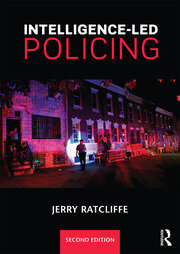
What is intelligence-led policing? Who came up with the idea? Where did it come from? How does it relate to other policing paradigms? What distinguishes an intelligence-led approach to crime reduction? How is it designed to have an impact on crime? Does it prevent crime? These are just a few of the questions that this book seeks to answer.
This revised and updated second edition includes new case studies and viewpoints, a revised crime funnel based on new data, and a new chapter examining the expanding role of technology and big data in intelligence-led policing. Most importantly, the author builds upon an updated definition of intelligence-led policing as it has evolved into a framework capable of encompassing more operational police activity than simply organized crime and recidivist offenders.
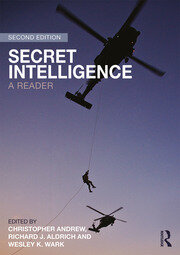 2nd Edition Secret Intelligence: A Reader Edited By Christopher Andrew, Richard J. Aldrich, Wesley K. Wark
 Secret intelligence has never enjoyed a higher profile. The events of 9/11, the conflicts in Iraq and Afghanistan, the missing WMD controversy, public debates over prisoner interrogation, together with the revelations of figures such as Edward Snowden, recent cyber attacks and the rise of 'hybrid warfare' have all contributed to make this a ‘hot’ subject over the past two decades.
The second edition of Secret Intelligence: A Reader brings together key essays from the field of intelligence studies, blending classic works on concepts and approaches with more recent essays dealing with current issues and ongoing debates about the future of intelligence.
Aiming to be more comprehensive than existing books, and to achieve truly international coverage of the field, this book provides key readings and supporting material for students and course convenors. It is divided into four main sections, each of which includes full summaries of each article, further reading suggestions and student questions.
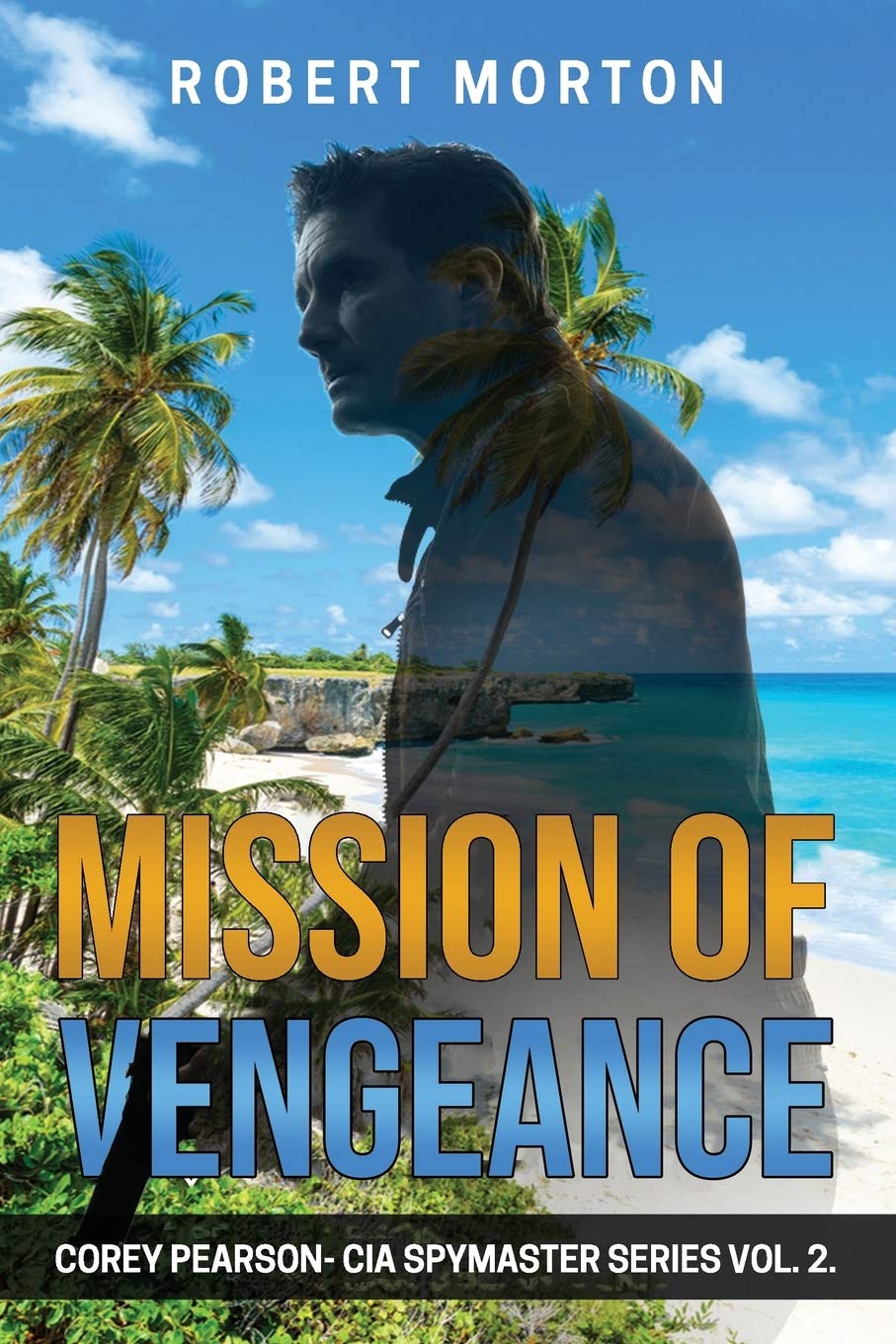
Prepare to be enthralled by "Mission of Vengeance," an electrifying spy thriller where deception and hidden truths become the tools of survival. CIA spymaster Corey Pearson receives an urgent order from the President of the United States to track down and eliminate the perpetrators behind the chilling murder of an American family in the serene Dominican Republic.
As Pearson navigates the grisly crime scene, a crucial clue sets him on a perilous path. The evidence points to two former Russian KGB agents harboring a malevolent agenda. Tensions escalate further when one of them defects to Pearson, revealing a chilling Russian conspiracy that threatens U.S. dominance in the Caribbean, putting countless American lives at risk.
However, "Mission of Vengeance" transcends the usual action thriller tropes. While it promises adrenaline-pumping action sequences, it also delves deep into the intricacies of authentic spycraft tactics and espionage strategies. Brace yourself for an enthralling narrative that blends cunning strategy with gripping car chases and intense gunfights.
With innocent lives hanging in the balance, the President commands a high-stakes mission of retribution. Corey Pearson and his elite counterintelligence teams race against time to thwart an impending catastrophe. Meanwhile, a nerve-wracking showdown between two global superpowers looms on the horizon.
Embark on a heart-racing journey through the realm of espionage, deceit, and high-stakes geopolitics in "Mission of Vengeance." Will Corey Pearson succeed in averting disaster, or will the world spiral into chaos? Uncover the truth in this riveting thriller that seamlessly weaves action with genuine spycraft tactics and espionage strategies, ensuring you remain at the edge of your seat until the final page.
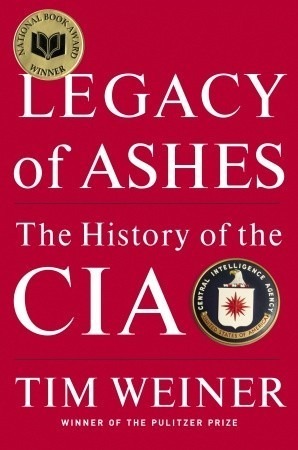
For the last sixty years, the CIA has managed to maintain a formidable reputation in spite of its terrible record, burying its blunders in top-secret archives. Its mission was to know the world. When it did not succeed, it set out to change the world. Its failures have handed us, in the words of President Eisenhower, “a legacy of ashes.”
Now Pulitzer Prize–winning author Tim Weiner offers the first definitive history of the CIA—and everything is on the record. LEGACY OF ASHES is based on more than 50,000 documents, primarily from the archives of the CIA itself, and hundreds of interviews with CIA veterans, including ten Directors of Central Intelligence. It takes the CIA from its creation after World War II, through its battles in the cold war and the war on terror, to its near-collapse after September 11th, 2001.
NEWS |
Australia joined the US-led invasion of Iraq, one of the most contentious decisions of John Howard’s prime ministership, without a formal cabinet submission setting out a full analysis of the risks.
Cabinet papers published by the National Archives on Monday show the full cabinet signed off on the decision on 18 March 2003 based on “oral reports by the prime minister”.
The record of the cabinet’s decision contains no mention of any doubt about Iraqi leader Saddam Hussein’s continued possession of weapons of mass destruction. This key justification for the war fell away after months of failed searches after the invasion.
Surging investment from China, including a multibillion dollar oil project late last year, is leaving a giant question mark over Sri Lanka even as it tries to restructure towering debt and recover from its worst economic crisis as an independent nation: Just how much leverage does Beijing have over the island country?
China is the largest bilateral creditor to Sri Lanka, which in May 2022 became the first Asian lower-middle income country to default on its sovereign debt in two decades. Chinese loans had financed a string of large infrastructure projects, including highways, an airport and a port in the country.
You’ve likely noticed a new presence joining your virtual meetings—artificial intelligence designed to capture the discussion. Transcription services can benefit users by helping them capture notes and allowing for consistent messaging within organizations. Automated notes are also easier to search and distribute quickly.
While these technologies can be advantageous, companies should account for and mitigate potential risks. Below are five such risks and potential mitigation strategies.
FBI Director Christopher Wray on January 9 said the Bureau is well-postured to defend against foreign interference heading into the 2024 election cycle, despite the growing number of foreign actors and nation-states seeking to disrupt our democratic process.
"Americans can and should have confidence in our election system," Wray said during a fireside chat with U.S. Army Gen. Paul M. Nakasone—the director of the National Security Agency and commander of U.S. Cyber Command—that was moderated by National Public Radio journalist Mary Louise Kelly. The FBI hasn’t witnessed any foreign interference effort that has jeopardized "the integrity of the vote count itself in any material way," he added.
The conversation was part of the 2024 Fordham International Conference on Cybersecurity, co-hosted by the FBI and Fordham University at the school’s Lincoln Center campus in New York City.
ARTICLES |
For an enterprise funded by the state, the public knows surprisingly little about intelligence activities. This goes far beyond the necessary secrecy of the work involved – but more knowing little about the intricacies of what constitutes good intelligence to facilitate an informed debate in a democracy.
In research published this month by the journal Intelligence and National Security, I have sought to set out what good intelligence looks like in practice.This study is based on nearly 50 interviews within the Australian National Intelligence Community (NIC) to identify the essential characteristics of good intelligence, revealing that it must be timely, purposeful, actionable, accurate, unbiased and provide value-add.
Nearly six years ago the Director of National Intelligence sponsored a public competition to see how well an algorithm could replicate human-made analytical intelligence reports.
The results wouldn’t be very impressive looking back from the current age of ChatGPT; the best entry, written by a French programmer, looked good but didn’t make all that much sense. Still, at the time the ODNI found the results “highly encouraging.”
Fast forward a half decade and far more advanced algorithms — neural net learning artificial intelligence — are already at work within CIA headquarters, according to a former senior official, even if they’re not pumping out final analytical reports.
The Israel-Hamas war began in the early hours of Saturday, October 7, when Hamas militants and their affiliates stole over the Gazan-Israeli border by tunnel, truck, and hang glider, killed 1,200 people, and abducted over 200 more. Within minutes, graphic imagery and bombastic propaganda began to flood social media platforms. Each shocking video or post from the ground drew new pairs of eyes, sparked horrified reactions around the world, and created demand for more. A second front in the war had been opened online, transforming physical battles covering a few square miles into a globe-spanning information conflict.
This article explores the context, legacy and influence of David Wise and Thomas Ross’ influential history of the CIA, The Invisible Government. It highlights how the book broke the silence in the American media on CIA covert operations. It documents the CIA’s attempts to censor the book upon its publication. It will also show how the book was reinterpreted by conspiracy theorists, Soviet propagandists, and leading figures within the decolonization movement. Finally, it argues that the book’s ultimate legacy, although a misreading of their original argument, can be found in the ‘deep state’ narrative so prevalent among conspiracy theorists today.
The attacks against Israel launched by HAMAS on 7th October 2023 were undoubtedly a strategic surprise to Israel and the world in general. They opened up a debate about intelligence failure and the relationship between intelligence failure and policy failure. Some commentators pointed out that while this may have been an intelligence failure for Israel, it was a counterintelligence success for HAMAS, which had kept its plans and capabilities hidden. In the interests of informing debate about the intelligence issues raised by the attacks, Intelligence and National Security has made a collection of articles on Israeli, HAMAS, and Hezbollah intelligence available free of charge for a limited period.
REPORT |
The government enters 2024 with no shortage of critique and commentary on how to protect Australia’s interests in a volatile world.
Two globally repercussive wars are raging, strategic breakdown in our region is a genuine fear, and the intersection of climate risk, societal mistrust, disinformation, tech disruption, economic shocks and other cross-border contagion bodes ill.
The mandate of the Global Initiative Against Transnational Organized Crime is to build a better evidence base with a view to improving responses to transnational organized crime. From years of work, we know that organized crime is a growing problem that needs an urgent response. The impact of organized crime is severe, and harms people’s lives on a daily basis. Part of the challenge is to provide that credible evidence base.
OPINION |
A new study from academics at Stirling University and the University of Edinburgh imagines how biometric artificial intelligence (AI) could be deployed by policing in the future, setting out both the potential risks and the opportunities that tools such as facial recognition drones could bring, as Policing Insight’s James Sweetland reports.
An important but overlooked reason that the US struggles with the complexity of the contemporary strategic environment is that it continues to mistakenly employ outdated linguistic “frames.” Josh Kerbel explains how those frames—”post-Cold War” and the increasingly ubiquitous “new Cold War”—profoundly distort the US’ strategic perspective. He argues for “entanglement” as an alternative or replacement frame that will help the US better grasp today’s highly interconnected and interdependent world.
Ever since George Washington warned in his 1796 farewell address that the new nation should avoid becoming entangled in the affairs of foreign powers, the term “entanglement” has been a dirty word in US foreign policy discussions. Of course, in President Washington’s less connected world, avoidance was more of a choice. Today, the country has no choice. The world is unavoidably complex, and only by calling it what it is—entangled—will we be able to think about it realistically.
TALKS, WEBINARS & PRESENTATIONS |
Our guest this week was Bellingcat Founder and Creative Director Eliot Higgins. Eliot came by our Discord server to talk to us about his book, "We Are Bellingcat", and to answer questions from our community about the current state of open source digital investigations. Eliot also spoke about where he thinks the field is headed in the future. This is a recording of a Discord Server Stage Talk that took place in the Bellingcat Discord Server on April 17, 2023. To join the server, download discord and visit www.discord.gg/bellingcat.Music courtesy of Epidemic Sound.
In this episode, Dr Miah Hammond-Errey and Ben Scott join Olivia Shen to discuss the increasing importance of open-source intelligence and big data in intelligence analysis, and the evolution required from intelligence agencies to keep up.
Dr Miah Hammond-Errey is the Director of the Emerging Technology Program at the United States Studies Centre at the University of Sydney.
Ben Scott is a Senior Advisor at the ANU National Security College, and has over 25 years of experience in diplomacy, intelligence and think tanks, including stints at the Lowy Institute and the Office of National Intelligence.
Olivia Shen is a Director at NSC on secondment from the Department of Home Affairs.
Back to the Resource Hub / Back to Links
The subjects, thoughts, opinions, and information made available in AIPIO Acumen reflect the authors' views, not those of the AIPIO.