
Back to the Resource Hub / Back to Links
The links below are organised by the month in which they are published
BOOKS |
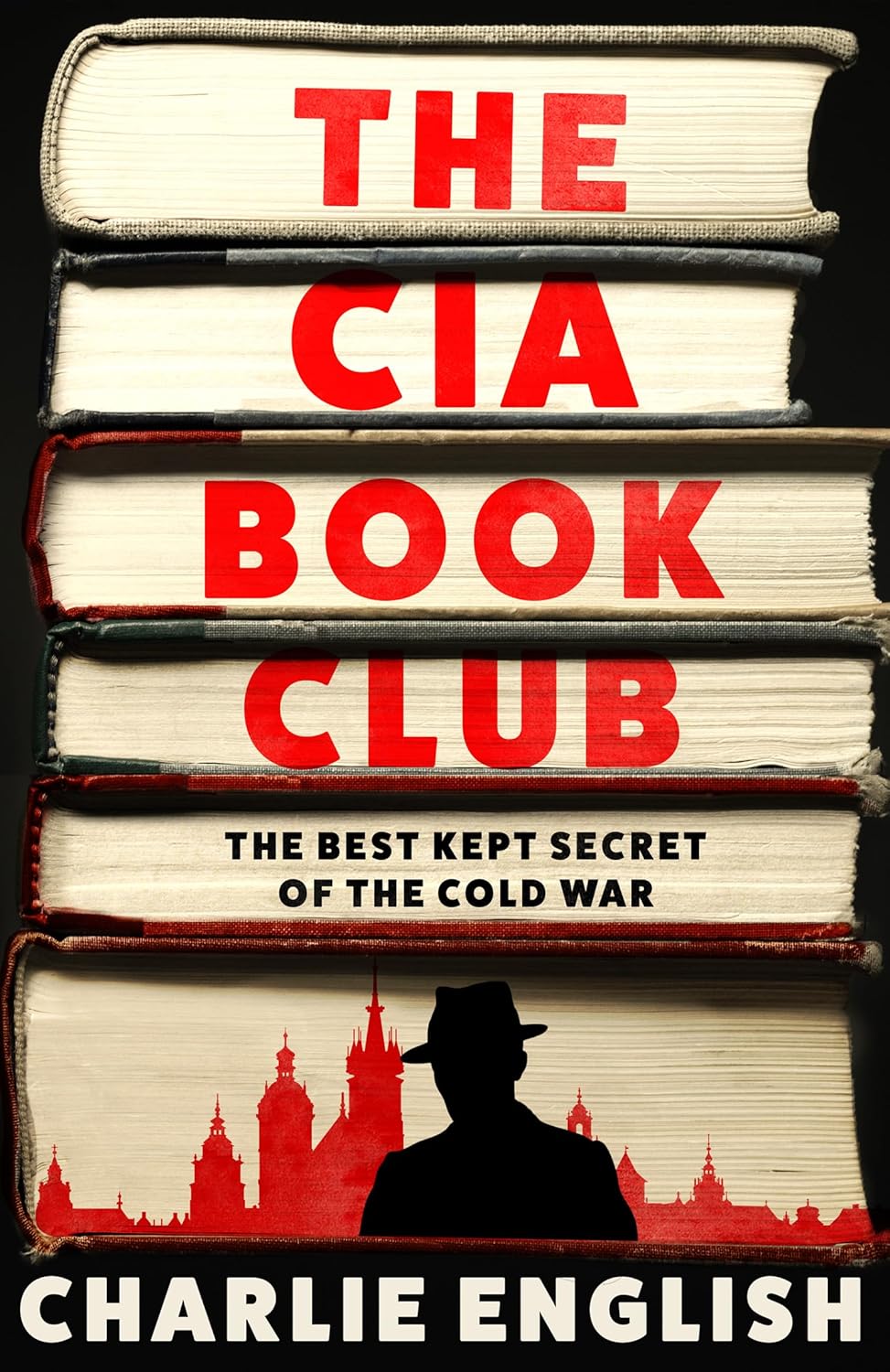
This is the astonishing story of the ten million books that US intelligence smuggled across the Iron Curtain during the Cold War.
At the heart of the story is a secret CIA program that smuggled millions of banned books into Eastern Bloc countries during the Cold War, with a particular focus on Poland. The agency believed that literature—especially works by authors like George Orwell, Boris Pasternak, Aleksandr Solzhenitsyn, and Hannah Arendt—could inspire dissent, awaken critical thought, and ultimately destabilize authoritarian regimes from within.
The operation was led by George Minden, a Romanian-born CIA operative who orchestrated the distribution of these books with obsessive secrecy. Books were hidden in suitcases, disguised as technical manuals, or even dropped from balloons. Some were mailed to random addresses in Eastern Europe, while others were smuggled in by travelers or diplomats. The CIA also provided underground publishers with printing presses, ink, and paper, enabling the rise of samizdat—self-published literature that circulated secretly among dissidents.
Poland emerged as a central front in this cultural war due to its strong intellectual tradition and growing resistance movement. Figures like Miroslaw Chojecki, dubbed the “minister of smuggling,” played a crucial role in distributing forbidden texts and organizing underground networks. These efforts helped fuel the rise of Solidarity, the labor movement that would eventually challenge Soviet dominance and contribute to the collapse of communism in Eastern Europe.
From copies of Orwell to Agatha Christie, the Western effort was to undermine the censorship of the Soviet bloc, offer different visions of thought and culture to the people, and build relationships with real readers in the East.
Historian Charlie English follows the characters of the era, with Bucharest-born George Minden at the narrative’s heart. Tasked with masterminding the effort, Minden understood both sides of the he was opposed to the intellectual straightjacket created by the communist system, but he also resented the Americans’ patronising tone – the people weren’t fooled by what their puppet governments were saying, but they did need culture, diversity of thought, entertainment, art, reassurance and solidarity. This is how the perilous mission to bring books as beacons of hope played out, told in riveting detail.
English’s narrative blends the intrigue of a spy thriller with the depth of historical analysis, exploring themes of soft power, cultural resistance, and the transformative potential of ideas. The book also examines the moral ambiguities of espionage and the bureaucratic infighting that often complicated these idealistic missions. Ultimately, The CIA Book Club is a vivid and inspiring account of how literature became a tool of liberation—and how, in the battle for hearts and minds, words proved mightier than weapons.
The book is divided into three major sections, each corresponding to one of the CIA’s core functions. In the first section, Rositzke explores espionage, the art of gathering intelligence through human sources. He describes how the CIA recruited agents, ran spy networks, and infiltrated hostile regimes. He emphasizes the challenges of operating in closed societies like the Soviet Union, where surveillance was intense and the risks of exposure were high. Rositzke also reflects on the limitations of espionage, noting that while it could yield valuable insights, it was often plagued by misinformation, double agents, and bureaucratic infighting.
The second section focuses on counterespionage, the effort to detect and neutralize enemy spies. Rositzke delves into the murky world of deception, double-crosses, and psychological manipulation. He recounts famous cases of Soviet moles within Western intelligence agencies and the painstaking efforts required to uncover them. He also critiques the CIA’s internal security culture, arguing that paranoia and inter-agency rivalry sometimes undermined effective counterintelligence work. Rositzke’s analysis reveals how the line between hunter and hunted could blur in the shadowy realm of spycraft.
The final and most controversial section addresses covert action—the use of secret operations to influence political outcomes abroad. Rositzke discusses the CIA’s involvement in coups, propaganda campaigns, and paramilitary missions in countries such as Iran, Guatemala, and Vietnam. He acknowledges that some of these operations were successful in the short term but warns that they often had unintended consequences, including long-term instability and blowback against U.S. interests. He is particularly critical of the tendency to overestimate the effectiveness of covert action and underestimate the complexity of local politics.
Harry Rositzke’s The CIA’s Secret Operations offers a rare insider’s account of the Central Intelligence Agency’s clandestine activities during the Cold War, written by a former senior CIA officer who helped shape many of its early strategies. Drawing on his decades of experience, Rositzke provides a candid, detailed, and often critical examination of how the CIA conducted espionage, counterespionage, and covert action from its inception through the height of U.S.-Soviet tensions.
Throughout the book, Rositzke maintains a tone of pragmatic realism. He neither glorifies nor demonizes the CIA but instead seeks to demystify its operations and expose the institutional flaws that hindered its effectiveness. He is especially concerned with the politicization of intelligence, where policymakers selectively used or ignored intelligence to support predetermined agendas. He argues that the CIA’s greatest strength—its ability to operate in secrecy—was also its greatest vulnerability, as it often led to a lack of accountability and oversight.
Rositzke also reflects on the ethical dilemmas inherent in intelligence work. He questions the morality of manipulating foreign governments, the use of disinformation, and the human cost of covert warfare. Yet he also defends the necessity of intelligence in a dangerous world, asserting that a well-run intelligence service is essential for national security.
Published in 1977, The CIA’s Secret Operations remains a foundational text for understanding the inner workings of American intelligence. It offers a rare blend of firsthand experience, historical analysis, and critical reflection. Rositzke’s insights are especially valuable because they come from someone who helped build the CIA from the ground up, yet was unafraid to critique its failures. For readers interested in the real-world mechanics of espionage and the ethical complexities of covert power, this book provides a sobering and illuminating account.
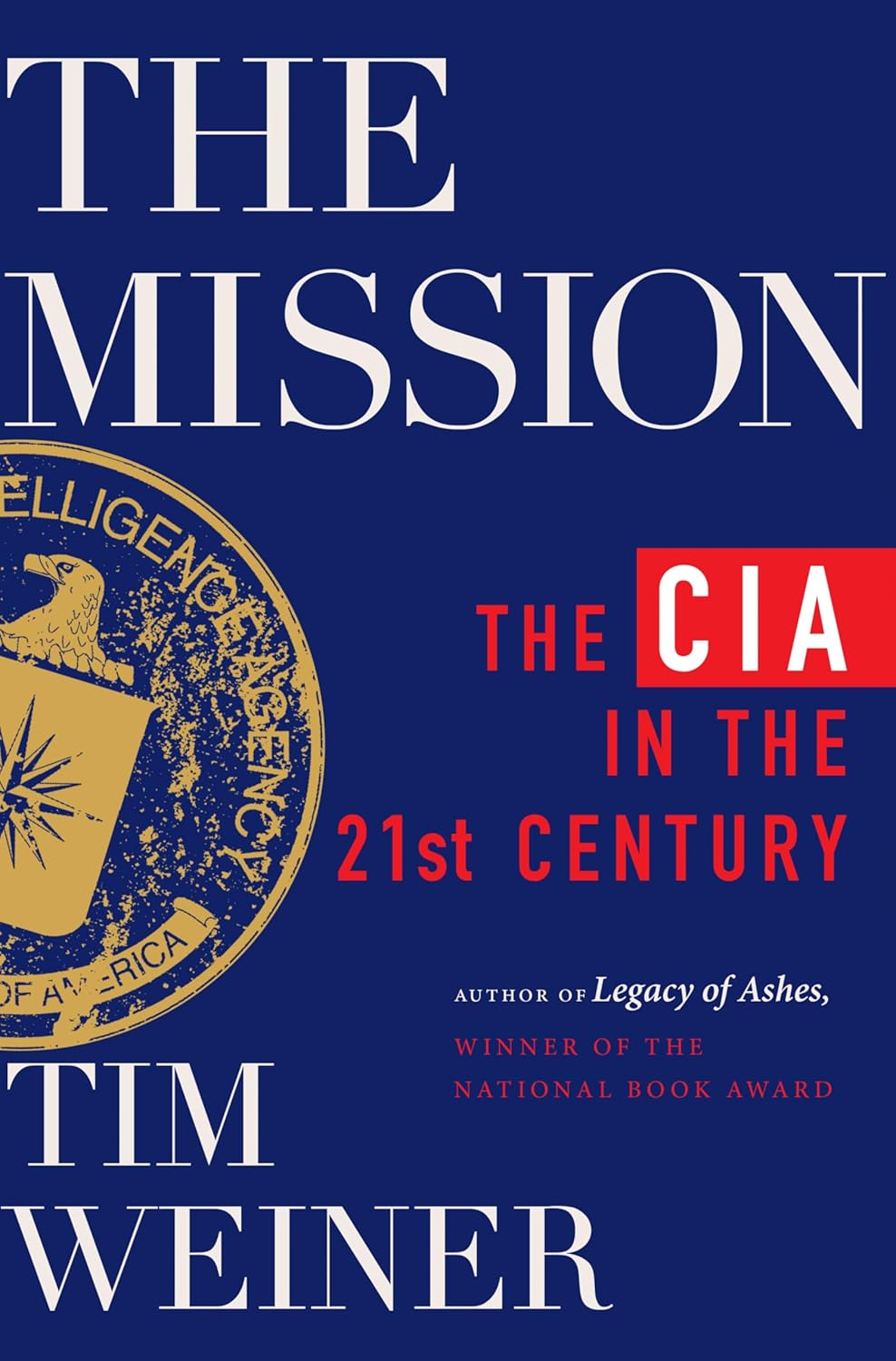
At the turn of the century, the Central Intelligence Agency was in crisis. The end of the Cold War had robbed the agency of its mission. More than thirty overseas stations and bases had been shuttered, and scores that remained had been severely cut back. Many countries where surveillance was once deemed crucial went uncovered. Essential intelligence wasn’t being collected. At the dawn of the information age, the CIA’s officers and analysts worked with outmoded technology, struggling to distinguish the clear signals of significant facts from the cacophony of background noise.
Then came September 11th, 2001. After the attacks, the CIA transformed itself into a lethal paramilitary force, running secret prisons and brutal interrogations, mounting deadly drone attacks, and all but abandoning its core missions of espionage and counterespionage. The consequences were grave: the deaths of scores of its recruited foreign agents, the theft of its personnel files by Chinese spies, the penetration of its computer networks by Russian intelligence and American hackers, and the tragedies of Afghanistan and Iraq. A new generation of spies now must fight the hardest targets—Moscow, Beijing, Tehran—while confronting a president who has attacked the CIA as a subversive force.
From Pulitzer Prize winner Tim Weiner, The Mission tells the gripping, high-stakes story of the CIA through the first quarter of the twenty-first century, revealing how the agency fought to rebuild the espionage powers it lost during the war on terror—and finally succeeded in penetrating the Kremlin. The struggle has life-and-death consequences for America and its allies. The CIA must reclaim its original mission: know thy enemies. The fate of the free world hangs in the balance.
A masterpiece of reporting based on-the-record interviews with six former CIA directors and scores of spies, station chiefs, and top operations officers: The Mission is a gripping and revelatory history of the modern CIA, reaching from 9/11 through its covert operations in Afghanistan and Iraq to today’s secret battles with Russia and China, concluding with the Agency's own fight for survival under the current president of the United States
Tim Weiner's epic successor to Legacy of Ashes, his National Book Award–winning classic about the CIA's first sixty years
Every nation has an intelligence apparatus—some means by which its top officials acquire needed information on sensitive issues. But each nation does it differently, influenced by its history, its geographical conditions, and its political traditions. In this book, Mark M. Lowenthal examines the development of U.S. intelligence to explain how and why the United States went from having no intelligence service to speak of to being the world’s predominant intelligence power almost overnight, and he discusses the difficult choices involved in maintaining that dominance in a liberal democracy.
This is a sweeping, analytical chronicle of how American intelligence evolved from its Revolutionary War roots to its current global dominance. Lowenthal—drawing on his insider experience in the CIA and State Department—offers more than just a timeline. He explores the tensions between secrecy and democratic accountability, the impact of technology on intelligence gathering, and the pragmatic decisions that shaped the U.S. intelligence community through wars, political shifts, and ethical dilemmas.
Lowenthal describes how the lack of a tradition of spycraft both hindered and helped American efforts to develop intelligence services during and after the Second World War. He points to the political pragmatism—leading to difficult choices—with which most intelligence directors operated; the constant tension between security and civil liberties in a constitutional democracy; the tension between the need for secrecy and the accountability required for democratic governance; and the way the growing importance of technology changed both the methods and the objectives of intelligence gathering. Far more than simply an episodic history, this book offers an analysis of why American intelligence developed as it did—and what it has meant for the nation’s and the world’s politics.
NEWS |
When the BBC revealed that MI5 had lied to three courts, the Security Service apologised for giving false evidence - vowing to investigate and explain how such a serious failure had occurred. But last week, the High Court ruled that these inquiries were "deficient", ordering a new "robust" investigation. A panel of judges said they would consider the issue of contempt of court proceedings against individuals once that was complete.
Now we can detail how, over the past few months leading up to the judgment, MI5 continued to provide misleading evidence and tried to keep damning material secret. The material gives an unprecedented insight into the internal chaos at MI5 as it responded to what has become a major crisis and test of its credibility. At the heart of the case is the violent abuse of a woman by a state agent under MI5's control. After the BBC began investigating, MI5 attempted to cover its tracks - scattering a trail of false and misleading evidence.
The case started very simply: I was investigating a neo-Nazi, who I came to understand was also an abusive misogynist and MI5 agent. After I contacted this man - known publicly as X - in 2020 to challenge him on his extremism, a senior MI5 officer called me up and tried to stop me running a story. The officer said X had been working for MI5 and informing on extremists, and so it was wrong for me to say he was an extremist himself.
A Mexican drug cartel hired a hacker to surveil the movements of a senior FBI official in Mexico City in 2018 or earlier, gathering information from the city’s camera system that allowed the cartel to kill potential FBI informants, the Justice Department inspector general said in a new report. The hacker was also able to “see calls made and received” by the FBI official and their geolocation data in a major breach of operational security that occurred as the FBI was working on the case of former Sinaloa cartel boss Joaquin “El Chapo” Guzmán Loera, the inspector general said.
The hacker tracked people coming in and out of the US Embassy in Mexico City before zeroing in on the FBI’s assistant legal attache, a role that works closely with Mexican law enforcement, the report said, citing an FBI case agent at the time. The report did not identify the hacker.
“According to the case agent, the cartel used (information provided by the hacker) to intimidate and, in some instances, kill potential sources or cooperating witnesses,” says the inspector general report, which was a broader review of the FBI’s approach to protecting sensitive information and avoiding surveillance.
The stunning new details offer a rare look at how technology can be exploited in the high-stakes battle between US law enforcement and the violent Mexican cartels that control illicit drug trade. The Trump administration has made cracking down on cartels a national security priority, in part by declaring them as foreign terrorist groups.
The Australian Defence Force will formally establish a purpose-built space operations workforce for the first time, recognising the growing strategic importance of space as a contested domain and expanding Defence’s high-tech career opportunities. Unveiled during Exercise Talisman Sabre 2025 in Townsville on Tuesday, the move will see the introduction of targeted recruitment and specialist training programs from next year to grow Australia’s sovereign capability in satellite communications, space domain awareness, and missile warning.
Defence Personnel minister Matt Keogh said the new workforce would ensure Australia remains competitive in a “congested and contested environment”.
Among the roughly 1,350 workers laid off at the State Department last week were senior analysts in the bureau of intelligence, including people who specialize in Russia and Ukraine, according to several current and former U.S. officials. The firings mean a loss of expertise as President Trump renews his efforts to settle the war between Russia and Ukraine, one of his top foreign policy goals. On Monday, Mr. Trump announced a new plan to send arms to Ukraine and threatened harsh economic penalties against Russia unless it agreed to a cease-fire.
The layoffs were among several at the department’s Bureau of Intelligence and Research, commonly known as INR. The bureau employs no spies and does not conduct surveillance of its own, but provides analysis about world events to help guide U.S. diplomacy.
It is unclear how many intelligence analysts were dismissed on Friday, and the bureau still retains workers who will focus on Russia and Ukraine after the merger of two offices within INR. Ellen McCarthy, a former State Department official who led the bureau for two years during Mr. Trump’s first term, said that paring jobs from it was “shortsighted.”
ARTICLES |
For decades, the U.S. Intelligence Community (IC) has viewed climate change as a serious national security threat that will create “new and compounded stresses on people and societies around the world,” according to one of the records featured in a repository of U.S. intelligence reports published online today by the National Security Archive. From early evaluations of Russia’s post-Soviet environmental challenges in the 1990s to present-day threat assessments on human and environmental security, the 45-document collection follows the evolution of the IC’s environmental monitoring and its increasingly dire warnings about the security threats posed by climate change.
The bottom line, according to the 2019 testimony of one State Department intelligence analyst: “Fundamental characteristics” about the planet “are moving outside the bounds experienced in modern history.” (Document 36A)
Despite a clear societal interest in knowing the truth about climate change, the U.S. continues to shield important intelligence assessments on the subject from public view. As part of today’s publication, the Archive renews its call for the Office of the Director of National Intelligence (ODNI) to declassify the 2008 National Intelligence Assessment (NIA) on “Climate Change Impacts to 2030,” the only known intelligence assessment on climate change still classified at the “Confidential” level.
The assessments published here today grow increasingly sophisticated over time in their analyses, evaluations, and warnings about the risks of climate change to U.S. interests, with more recent reports placing greater emphasis on complex threats like ecological degradation and biodiversity loss. Still, from 1999 to present, the IC has generally overlooked the domestic impacts, human-driven causes, and systemic contributors to climate change.
“Speak plainly!” Russian President Vladimir Putin snapped at his foreign intelligence chief, Sergei Naryshkin, at a televised security council meeting on the eve of his shambolic full-scale invasion of Ukraine in February 2022. Naryshkin was visibly nervous. Once he had finally stammered out his support for recognizing the Ukrainian regions of Donetsk and Luhansk as independent states—the words Putin was waiting for—he was abruptly told to sit down, like an unprepared pupil flubbing an oral exam. Naryshkin’s apparent ambivalence about embracing Putin’s pretext for the war was likely due to the lack of solid intelligence that Putin’
How do we know that U.S. national security strategies are effective? In the past, U.S. administrations measured ‘success’ in years. Policymakers, think tanks and academics all contributed to the evaluation of strategy. However, information and technology are moving more quickly now, and policymakers are looking for a faster and more reliable way to know whether U.S. strategy is working. If the planning and evaluation process speeds up, this will require stronger coordination and cooperation between planners, policymakers, and intelligence professionals.
In a survey and in-depth interviews, the author asked intelligence and planning professionals for their views on forming closer ties with each other. The results of the study found technical as well as cultural barriers to bringing the intelligence community, planners, and policymakers together to evaluate national security strategies. The main technical barrier is information collection: unlike public sector strategies and plans, such as environmental regulations or public health, information on the effectiveness of national security strategy requires secret data that lies within the intelligence community or in open source information that the intelligence community does not normally collect and process. Technical issues are also different at the strategic, operational, and tactical levels.
The main cultural reason is particular to the United States: a serious attempt to measure effectiveness would require intelligence professionals to collaborate more closely with planners to design comprehensive, measurable goals and objectives, with evidence-based indicators to evaluate key aspects of U.S. national security strategies and plans. This violates a longstanding practice within the U.S. intelligence community of maintaining a healthy distance from policymaking.
Intelligence services have traditionally operated behind a veil of secrecy to protect their methods, sources, and operational imperatives. This confidentiality has long been a cornerstone of intelligence work, but it now faces growing challenges in the digital age. The rapid circulation of information on social media, the influence of online discourse, and rising public demands for transparency have placed pressure on even the most secretive institutions.Footnote1 Ukraine’s Main Directorate of Intelligence (HUR) of the Ministry of Defense operates within this tension between secrecy-oriented intelligence practices and the demands of continuous public communication in a media-saturated wartime environment.
Amid the ongoing war between Russia and Ukraine, the HUR has embraced a public-facing strategy that departs from secrecy-driven norms. It shares intelligence-related content daily basis via Telegram and other social media platforms.Footnote2 This approach is defined by sustained, interactive engagement with the public. In contrast, most Western intelligence agencies remain more restrained. During late 2021 and early 2022, the United Kingdom and United States selectively released intelligence about Russian troop movements near Ukraine’s borders.Footnote3 These announcements were episodic and strategically timed, designed to influence international opinion and deter aggression.Footnote4 Most Western agencies continue to justify a cautious posture by citing legal and bureaucratic constraints, as well as fears of potential misuse or unintended consequences of shared information.Footnote5
By comparison, the HUR’s strategy is broader and more dynamic. Using Telegram as a broadcast platform, the HUR disseminates multiple messages each day, often including operational footage and thematic intelligence updates. This divergence prompts questions about whether existing models of intelligence communication, largely developed in peacetime and Western contexts, adequately account for this form of persistent public engagement.
REPORT |
In a recent experiment, nearly 300 executives and managers were shown recent stock prices for the chip-maker Nvidia and then asked to predict the stock’s price in a month’s time. Then, half the group was given the opportunity to ask questions of ChatGPT while the other half were allowed to consult with their peers about Nvidia’s stock. The executives who used ChatGPT became significantly more optimistic, confident, and produced worse forecasts than the group who discussed with their peers. This is likely because the authoritative voice of the AI—and the level of detail of it gave in it’s answer—produced a strong sense of assurance, unchecked by the social regulation, emotional responsiveness, and useful skepticism that caused the peer-discussion group to become more conservative in their predictions. In order to harness the benefits of AI, executives need to understand the ways it can bias their own critical thinking.
China’s engagement with the Middle East and North Africa (MENA) has evolved since it established diplomatic relations with countries in the region during the latter half of the twentieth century, from a predominantly bilateral approach to one incorporating both bilateral and multilateral cooperation. As countries in the MENA region seek to diversify their economies away from hydrocarbon exports and balance their security partnerships with the United States, they are increasingly turning to China as a partner of choice.
As China seeks to play an even greater normative role in reshaping the international order through its Three Major Initiatives (三大倡议) – the Global Security Initiative, Global Development Initiative and Global Civilization Initiative – and continues to pursue a high-tech advanced economy, its relationship with the MENA region will remain important for the foreseeable future. China also sees the region as an opportunity to showcase to the world, and particularly to Global South countries, the success of the ‘China model’ for governance, economic development and multilateralism.
OPINION |
In an era of escalating strategic competition, the effectiveness of Australia’s government and national security apparatus hinges on its ability to use information with precision and agility. Yet, the very systems designed to protect sensitive information are at risk of becoming cumbersome impediments. Australia’s approach to the management of security classifications creates an environment that accumulates inefficiency and risk.
This is not just about over-classifying material. It is a symptom of a deeper challenge: a default to secrecy, often without a clear understanding of an information asset’s purpose or true sensitivity. This manifests as a drag on national capability, hindering the collaboration and agility required to navigate a deteriorating security environment.
The consequences are profound, paradoxically creating new security risks while trying to mitigate old ones. When everything is treated as a secret, it becomes difficult to protect what really must be kept hidden. Classifying too much information at high levels can dilute focus, creating noise that obscures genuinely critical intelligence and stretches resources thin.
This problem directly impacts the usability of information, a key theme in the 2024 Independent Intelligence Review.
Over-classification and the proliferation of complex caveats restrict the flow of information between agencies, stifling the analysis and innovation needed to tackle complex threats. This is particularly acute at the seams between the core intelligence agencies, which often operate at Top Secret by default, and the rest of the National Intelligence Community and broader government, which must use this intelligence to act.
Intelligence analysis is both a discipline and a craft — an ever-evolving fusion of structured reasoning, contextual judgment, and professional artistry. At its best, it supports strategic and operational decisions in environments marked by complexity, ambiguity, and rapid change.
This A to Z collection is not a glossary in the traditional sense. Rather, it is a reflective lexicon drawn from my own practice — an articulation of terms that have shaped how I think, work, and support decision-makers. Each term offers a window into the lived realities of intelligence work: the analytical habits we nurture, the traps we try to avoid, and the techniques we rely on when evidence is incomplete, and time is short.
Every analyst brings a unique perspective to the craft of intelligence. What concept has shaped your practice? What word defines your analytical lens? What term(s) would you add to this lexicon?
TALKS, WEBINARS & PRESENTATIONS |
Webinar: Constructive engagement with China: Does China threaten Australia’s future peace and security?
The United States and China are contesting for great power supremacy. Australia depends on the United States for security; and on China for our economic prosperity, with China accounting for a third of all our exports. How should Australia best navigate this challenge? In recent years there are some who suggest that China is our greatest military threat – is this correct?
Dr Jocelyn Chey, inaugural Executive Director of the Australia-China Council, former senior diplomat at the Australian Embassy in Beijing, and now Adjunct Professor at the Institute for Chinese Arts and Culture at the University of Western Sydney will discuss how China's foreign policy is determined by its history, culture and by its historical experience.
"The critical issue is: who can you trust?"
Dr Vince Scappatura teaches in the School of International Studies at Macquarie University, and is author of The US Lobby and Australian Defence Policy, Monash University Publishing, 2019. He is currently working with Professor Richard Tanter on the 'Nuclear-Capable B-52H Stratofortress Bombers Project' which can be located on the website of the Nautilus Institute for Security and Sustainability. He will address whether China is a threat to Australia, what shared US/Australia objectives are with regard to China and what they should be if we are to have hope of a constructive relationship.
The John Sloan Dickey Center for International Understanding unites the many and diverse strengths of Dartmouth College -- its students, faculty, staff, across undergraduate and graduate schools -- in addressing the world's challenges. We are defined not only by the scope of the issues we address, but the way in which we do it: through collaboration, innovation, interdisciplinary study and respect for the diversity of viewpoints.
Back to the Resource Hub / Back to Links
The subjects, thoughts, opinions, and information made available in AIPIO Acumen reflect the authors' views, not those of the AIPIO.