
Back to the Resource Hub / Back to Links
The links below are organised by the month in which they are published
BOOKS |
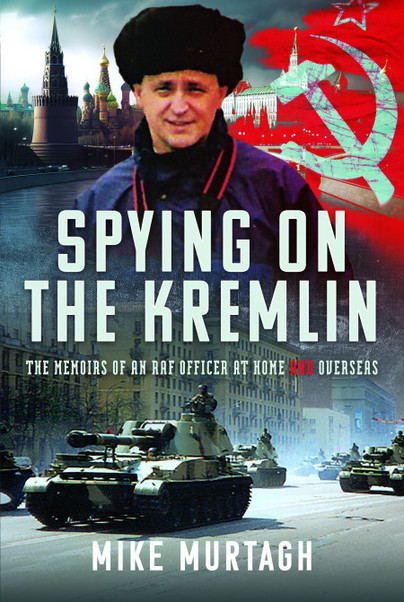
Spying on the Kremlin details the background and unintentional turning points in what has been an eventful life. Mike Murtagh has had a gun stuck in his face, been seconds from a mid-air collision, been struck by lightning in an aircraft, made two emergency landings, had a sniper-sight trained on him, been the target of at least one honeytrap, nearly bled to death in India, been threatened by people working for the Azeri Mafia, worked on a movie with three Oscar-winners and may have inadvertently eaten someone.
It’s a memoir of a working-class boy in an unlikely life journey from austere 1950s South Wales to the political theatre of The Kremlin and beyond via service as an RAF Officer and as a Diplomat. His experiences of living and working in Russia has given him valuable insights into the Russian psyche, as well as the workings and capabilities of the Russian military which still have currency and relevance.
Given his humble origins, none of this was ever supposed to have happened to him and could not have been predicted. Such opportunities were almost unavailable to working-class boys at the time. However, sometimes in an almost accidental fashion, he grasped the opportunities that came his way.
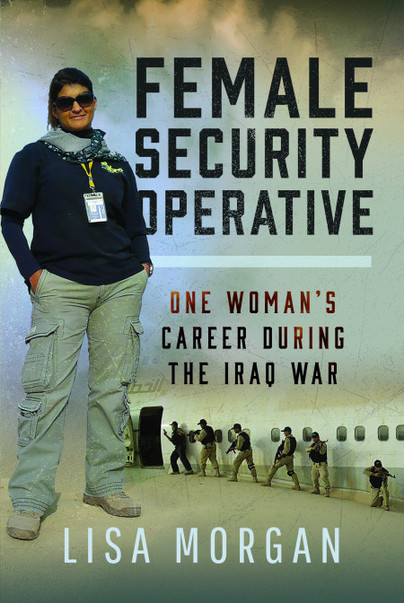
In the gripping memoir Female Security Operative, the author takes the reader on a trailblazing journey of chaos through her life in the world of security. Breaking barriers and heroic beliefs, she reveals her remarkable journey as she navigates a male dominated industry with unwavering determination and courage.
From her early days as an unassuming woman from England to her transformation into a formidable security operative, the author shares the pivotal moments that shaped her character and propelled her into the realm where resilience and vigilance are paramount.
With no-nonsense storytelling and raw honesty, she invites readers on a heart pounding adventure through the treacherous landscapes of war-torn Iraq
With Saddam Hussein captured, she’s assigned to ensure the safety of civilian flights at Baghdad’s International Airport, the author witnesses the harsh realities of a nation torn apart by conflict. With vivid descriptions and a remarkable attention to detail, the author describes the daily struggles, triumphs, and tragedies that she and her fellow operatives face. From heart stopping moments of imminent danger to small acts of kindness and camaraderie every page brims with authenticity and a genuine love for humanity.
Working side by side with ordinary Iraqis, she witnesses the strains and the profound impact of a shattered infrastructure and the devastating consequences of a failed invasion. In the backdrop of mortar rounds, car bombs, and the constant threat of danger, she confronts her mission head on, driven by a deep sense of purpose and a desire to make a difference.
The author's motivation for embarking on this perilous journey is deeply rooted in her relationship with her brothers tragic death, a source of inspiration and guidance throughout her life. The opportunity to work in Iraq becomes her chance to honour his memory and embody the principles he taught, -strength, independence, and a resilient sense of humour, even in the darkest of times.
Female Security Operative offers an unfiltered narrative that delves into the emotional and physical toll of life on the front lines. It explores the toll her work takes on personal relationships, the inner conflict she wrestles with and the sacrifices she makes in the name of duty. This is an honest portrayal of the authors eight-year journey through the Middle East. It highlights the contradictions of war, and the consequences of political decision.
With integrity, flair, and a touch of humour, prepared to be moved, inspired, and forever changed by a female security operatives journey. It's a story that will linger in your thoughts, reminding you of the untold stories of unsung heroes, shedding light on those who strive to bring stability in a world plagued by chaos.
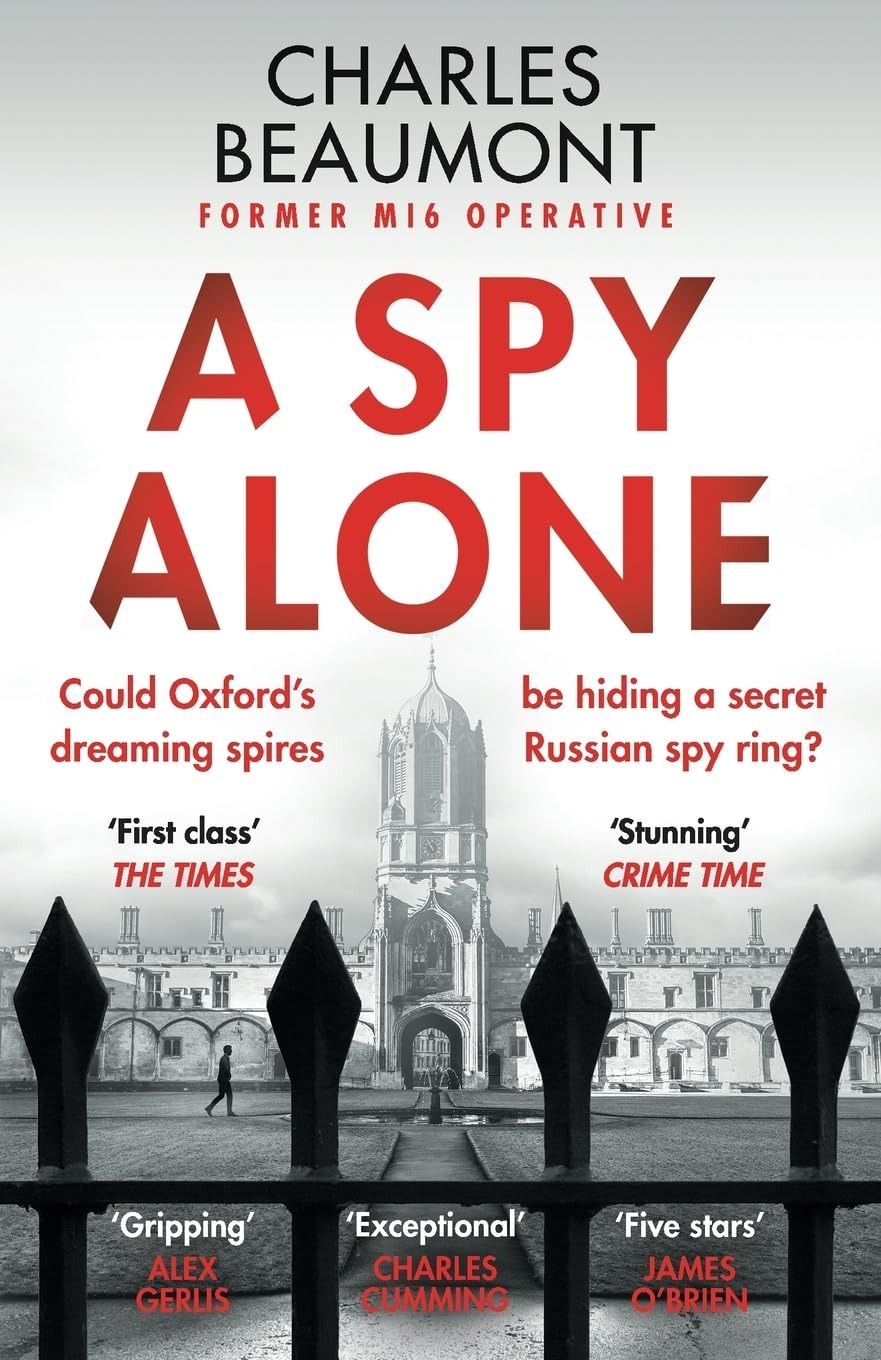
Everyone knows about the Cambridge Spies from the Fifties, identified and broken up after passing national secrets to the Soviets for years. But no spy ring was ever unearthed at Oxford. Because one never existed? Or because it was never found...?
2022: Former spy Simon Sharman is eking out a living in the private sector. When a commission to delve into the financial dealings of a mysterious Russian oligarch comes across his desk, he jumps at the chance.
But as Simon investigates, worrying patterns begin to emerge. His subject made regular trips to Oxford, but for no apparent reason. There are payments from offshore accounts that suddenly just... stop.
Has he found what none of his former colleagues believed possible, a Russian spy ring now nestled at the heart of the British Establishment? Or is he just another paranoid ex-spook left out in the cold, obsessed with redemption?
From Oxford's hallowed quadrangles to brush contacts on Hampstead Heath, agent-running in Vienna and mysterious meetings in Prague, A Spy Alone is a gripping international thriller and a searing portrait of modern Britain in the age of cynical populism. Perfect for readers of Charles Cumming, Mick Herron and John le Carré.
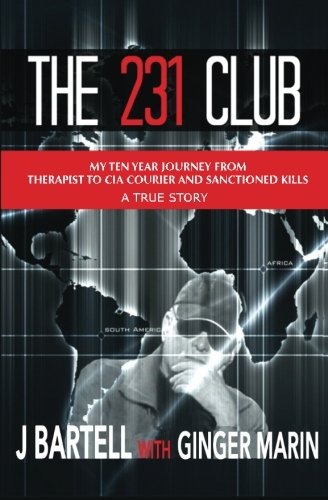
The 231 Club, a CIA true story, encompasses intriguing personalities, an examination of the psyche behind the storyteller, exciting and unique espionage adventures at a time when wits were at play more than gadgets. It dissects how one man with a great career and fulfilling life takes a radical detour which turns his whole world upside down.
J Bartell was an instructor, lecturer and chief of staff of a large California-based therapy institute whose clients included people from all walks of life. But it was his worldwide travels on behalf of affluent clients, including heads-of-state, that put him on the radar of the CIA. What started out as simple courier work eventually led to Bartell becoming part of a small group that handled off-book assignments, meaning no record, so there’s “plausible deniability”.
The CIA covert black ops group consisted of Bartell, his CIA handler Chauncey Holt and former U.S. Marine, Michael Harries, who is best known for having created the famous Harries Flashlight Technique which is used by law enforcement around the world for handling weapons in low-light conditions. Additional support to the group came from master gunsmith Jim Boland and Jeff Cooper, who is considered to be the father of modern combat shooting and tactics.
As a result of Bartell’s increased involvement, a virtual trip down a forbidding rabbit hole, he experiences everything from weapons deals and covert training missions to helping ruthless killers, hiding behind positions of power, get their due.
This CIA memoir informs and excites with true tale CIA black ops assignments.
NEWS |
The Houthi militants in Yemen have weapons that can reach as far as the Mediterranean Sea, according to a senior defense official, lending some credence to the group’s threats that it can expand its attacks on shipping beyond its immediate borders.
The US government is concerned that the Iran-backed group has the capability to extend strikes on shipping beyond the Red Sea and Gulf of Aden to the Mediterranean, said the official.
Not everyone you meet online is who they say they are. That won’t be news if you’re familiar with the messaging from our colleagues at the Australian Cyber Security Centre and Australian Federal Police about keeping yourself safe online.
But ASIO’s interests are a little different. Our business is to identify those who are trying to recruit Australians with access to sensitive information in order to get them to commit acts of espionage or foreign interference. This includes foreign spies who are targeting online social and professional networking sites.
That’s why this campaign is primarily aimed at Australians with access to sensitive information, such as those of you working in government, defence industry or academia. But our message is a cautionary tale for all Australians—be mindful of what personal information you choose to post online. You could be targeted for information that, if shared, could have serious consequences for Australia’s security, its economy or your business.
Rates of dengue are surging in Europe driven by climate change and the spread of mosquitos, the EU’s disease agency has warned.
The European Centre for Disease Prevention and Control (ECDC) found there were 130 locally acquired cases of dengue in the EU/EEA last year, compared with just 71 in the ten-year period between 2010 and 2021. Dengue symptoms include a high fever, headache, body aches, nausea and rash.
There were also 713 locally acquired human cases of West Nile virus and 67 deaths, from nine EU countries in 2023, including in many regions where infections had never been seen before. While this was lower than the previous year (1,133 cases), the ECDC is concerned at the wide geographical circulation of the virus.
Federal lawmakers in the US have dodged repeated inquiries over the past week about a covert operation ordered by the Israeli government to artificially boost support among Americans for its war in Gaza. At the same time, senior White House officials charged with advising President Joe Biden on matters of national security are claiming to have no knowledge of the operation—first disclosed publicly more than four months ago.
The operation, formally tied to the Israeli government by a New York Times reporter last week, kicked off in October 2023 following the surprise attack by Hamas in southern Israel. Researchers internationally began work to expose the campaign in February, identifying a flood of “suspicious accounts” on US-based social networking apps, most masquerading as Americans avowing support for the Israeli military response.
In addition to eroding support for the United Nations Relief and Works Agency, which provides assistance to 5.6 million Palestinian refugees, a chief aim of the Israeli operation, researchers say, was to sway the opinions of Black Americans. Per the Times—which cited four current and former Israeli officials in confirming their government had commissioned the campaign—its primary targets included the account of US congressman Hakeem Jeffries, the leader of the Democrats in the House, among others who are “Black and Democratic.”
ARTICLES |
Successfully tracking Chinese-linked cyber espionage operations is becoming increasingly difficult as Beijing’s hackers shift toward networks of virtual private servers and compromised smart devices to conceal their campaigns, researchers with Google Cloud’s Mandiant said.
Although not necessarily a new tactic, the growing use of such networks, akin to botnets, makes life harder for those tasked with defending networks amid frequent warnings from Western governments about aggressive Chinese espionage and pre-positioning within U.S. critical infrastructure networks as part of activity tracked as Volt Typhoon.
Veterans of the spy business like to remind people that there are friendly nations, but no friendly intelligence services.
In practical terms, that means our intelligence community shares intelligence with our close allies and even partners with their spy services when our respective interests overlap. At the same time, it also means that we spy on each other because each side never entirely trusts that the other’s intelligence is accurate or providing a full or disinterested picture.
Perhaps nowhere is this convoluted relationship better illustrated than in the intelligence ties between the United states and Israel. The two allies have a long history of intelligence cooperation that goes back to the earliest days of the Jewish state in the 1950s, when legendary CIA counterintelligence chief James Jesus Angleton established close ties to the Mossad and essentially took over the Israel account.
For the past two decades in particular, the CIA and Mossad have been sharing intelligence on mutual targets like Iran and its regional proxies: Hezbollah in Lebanon, several Shiite militias in Syria and Iraq and the Houthis in Yemen. And in the wake of Hamas’ devastating Oct. 7 attack—which surprised Israeli leaders—Jerusalem and Washington signed a secret memorandum that expanded their already extensive intelligence cooperation, raising concerns among some lawmakers and human rights groups that the new arrangement is adding to the staggering civilian death toll in Gaza.
An armada of old tanker ships has sprung up to move sanctioned Russian and Iranian oil, putting sailors in peril and threatening environmental catastrophes.
At the center of this trade is a surprising new player in global shipping.
The EU should prepare for the consequences of a future heroin shortage, the European Monitoring Centre for Drugs and Drug Addiction (EMCDDA) has warned, following the Taliban crackdown on opium in Afghanistan.
In 2022, the Taliban announced a ban on the cultivation of opium, previously a mainstay of the Afghan economy. The UN Office on Drugs and Crime (UNODC) estimates there has been a 95% decline in production since the ban was introduced.
“The analysis of satellite images shows that this ban is being implemented,” said Alexis Goosdeel, director of the EMCDDA.
“What we know is that there are still stocks available, either in Afghanistan or along the heroin route, so we can expect that it will take some time before we can observe a decrease on the market.”
REPORT |
Over the past several years, media reports and articles by policy and U.S. Intelligence Community (IC) professionals have suggested that the IC is held in increasingly lower regard by some decisionmakers—and also by some in the general public—and that predictions made by IC professionals have had variable success in influencing decisionmakers. The authors of this report explored whether and to what degree trust in intelligence predictions and national estimates has degraded over time and what internal and external factors might be drivers of any perceived or real changes in the relationship between policymakers and the IC.
The degree of perceived bias in intelligence estimates is highly dependent on the presidential administration in power. Also, policymakers most frequently introduce bias in intelligence assessments from a desire to minimize the appearance of dissent, while the IC tends to introduce bias through self-censorship. The research team observed tensions in the relationship between IC professionals and policymakers: The IC has an incentive to elicit positive feedback from policymakers, and there are limited benefits (with regard to both the careers of intelligence professionals and their agencies' budgets) in receiving negative feedback from policymakers. These tensions could create friction between (1) providing objective information and analysis to policymakers and (2) serving policymakers as customers of intelligence.
This Special Report from the National Institute of Justice (NIJ) presents a synthesis of select findings from NIJ-supported research projects on public mass shootings, including school mass shootings, and identifies areas of need and interest for future research and recommendations.
Few events in American life shatter the public’s sense of well-being or shock the national conscience as much as someone repeatedly firing into a crowd. Scientific research supported by the National Institute of Justice (NIJ) confirms the profound negative impact of public mass shootings on the average citizen’s sense of safety. For over two decades, NIJ has supported scientific studies that examine the public mass shooting problem from multiple angles. Since 2014, NIJ has invested in numerous research projects that study mass shootings and, specifically, public mass shootings. This effort to build basic knowledge and advance our understanding has resulted in more than 60 distinct research publications. This special report presents a synthesis of select findings from over 60 publications on 18 NIJ-supported research projects on public mass shootings, including school mass shootings, since 2014. It also identifies areas of need and interest for future research and recommendations.
OPINION |
Australia has all but institutionalised self-censorship in intellectual strategic thought. An absence of secure academic positions, widening of the policy-scholarly divide, and a corrosive culture of in-fighting over a piece of the same (dwindling) funding pie continues to diminish our national security studies sector.
We have curated an intellectual space in which the same voices exist in harmonious agreement. Most strategic analysis or intellectual work tends to be churned out by design, not debate. Who needs robustness, let alone nuance?
Where there is difference, it tends to be personalised and emotional. Ad hominem jabs, attacks, and improper (often lasting) accusations of political allegiance are no longer manageable hazards of public intellectual life. Instead, they have become entrenched realities of our security discourse. Such forces use social media platforms, spill ink in national newspapers, and tend to dictate the membership of security centres and institutes – as well as the invitation lists for seminars and conferences.
People across the world, and the political spectrum, underestimate levels of support for climate action.
This “perception gap” matters. Governments will change policy if they think they have strong public backing. Companies need to know that consumers want to see low-carbon products and changes in business practices. We’re all more likely to make changes if we think others will do the same.
If governments, companies, innovators, and our neighbors know that most people are worried about the climate and want to see change, they’ll be more willing to drive it.
On the flip side, if we systematically underestimate widespread support, we’ll keep quiet for fear of “rocking the boat”.
This matters not only within each country but also in how we cooperate internationally. No country can solve climate change on its own. If we think that people in other countries don’t care and won’t act, we’re more likely to sit back as we consider our efforts hopeless.
TALKS, WEBINARS & PRESENTATIONS |
Two-time Pulitzer Prize-winning journalist James Risen details the life and work of Frank Church - the man who forever changed the US Intelligence Community. From humble Idaho beginnings through to his lofty Presidential ambitions, we delve into who Church really was and his tireless devotion to serving American ideals of transparency and accountability - culminating in the Church Committee. However, Church learned that you can't shine a light on the darkest corners of the FBI, CIA, and NSA without making some powerful enemies.
Academic Integrity supports institutions in implementing a unified approach to integrity training amidst the changing landscape of higher education. The course is comprised of four student-facing modules to support studying with integrity, and four staff-facing modules on fostering a culture of integrity. The modules emphasise that maintaining academic integrity is a shared responsibility that involves everyone within an academic community, including students, faculty, administrators, and staff.
Hosted by Epigeum, this webinar, part of our thought leadership series, Epigeum was joined by distinguished speakers Dr Lee Adam and Professor Michelle Picard.
Both speakers provided a presentation, which was followed by an audience Q&A.
Back to the Resource Hub / Back to Links
The subjects, thoughts, opinions, and information made available in AIPIO Acumen reflect the authors' views, not those of the AIPIO.