
Back to the Resource Hub / Back to Links
The links below are organised by the month in which they are published
BOOKS |
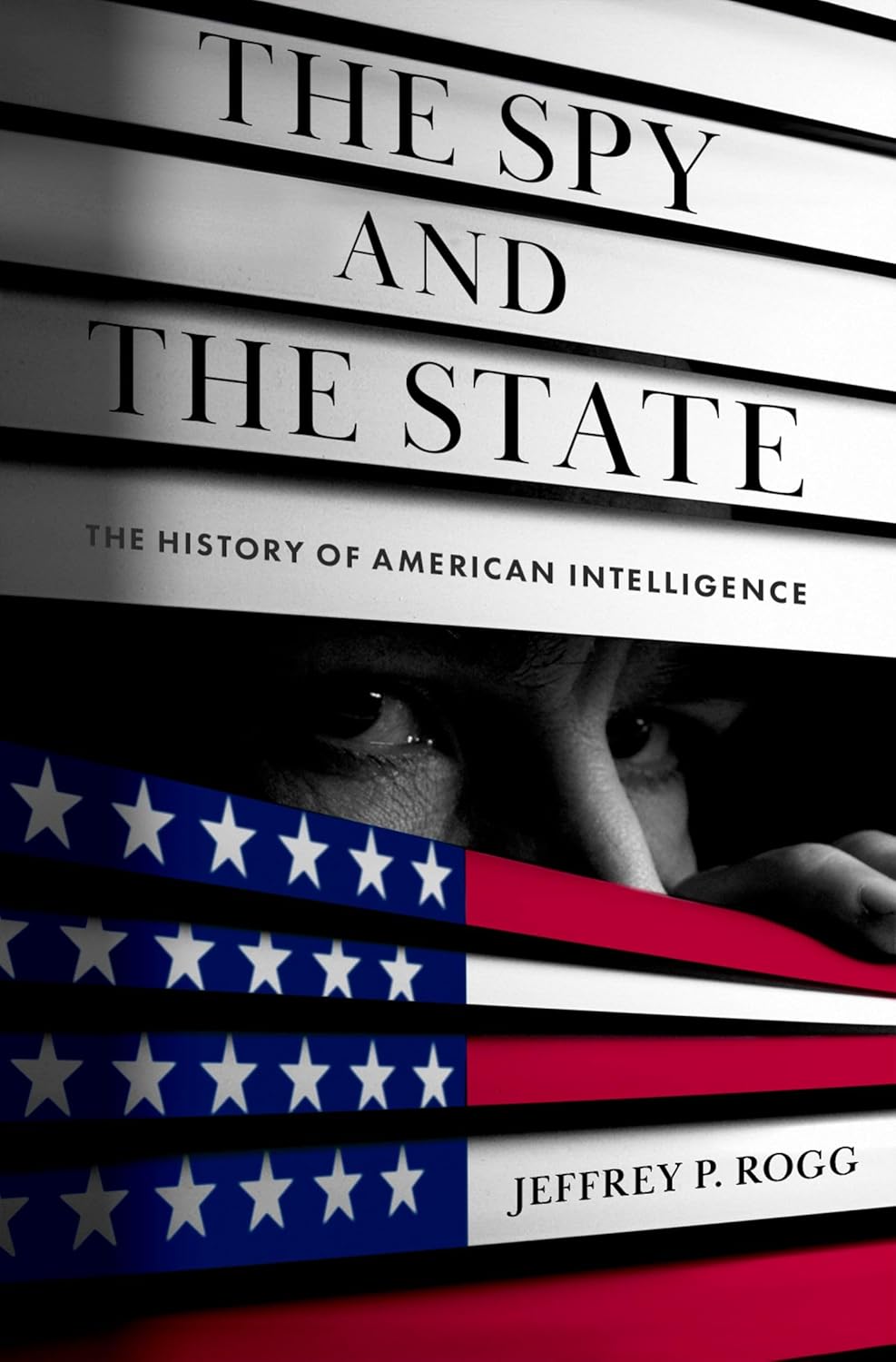
A novel and comprehensive narrative of American intelligence from the Revolutionary War to the present day.
Intelligence is all around us. We read about it in the news, wonder who is spying on us through our phones or computers, and want to know what is happening in the shadows. The US Intelligence Community or IC, as insiders call it, is more powerful than ever, but also more vulnerable than it has been in decades. It is facing the threat of rival intelligence services from countries like Russia and China while fighting to keep up with new technology and the private sector. Still, the IC's greatest struggle is always with the American people, who expect it to keep them safe but not at the cost of their liberty and principles. This foundational problem is at the center of The Spy and the State.
Based on original research and a new interpretation of US history, this masterful book offers a complete history of American intelligence from the Revolutionary War to the present day. Jeffrey Rogg explores the origins and evolution of intelligence in America, including its overlooked role in some of the key events that shaped the nation and the historical underpinnings of intelligence controversies that have shaken the country to its constitutional core. With the American public in mind, he introduces the concept of US civil-intelligence relations to explain the interaction between intelligence and the society it serves.
While answering questions from the past, The Spy and the State poses new questions for the future that the United States must confront as intelligence gains ever greater importance in the twenty-first century.
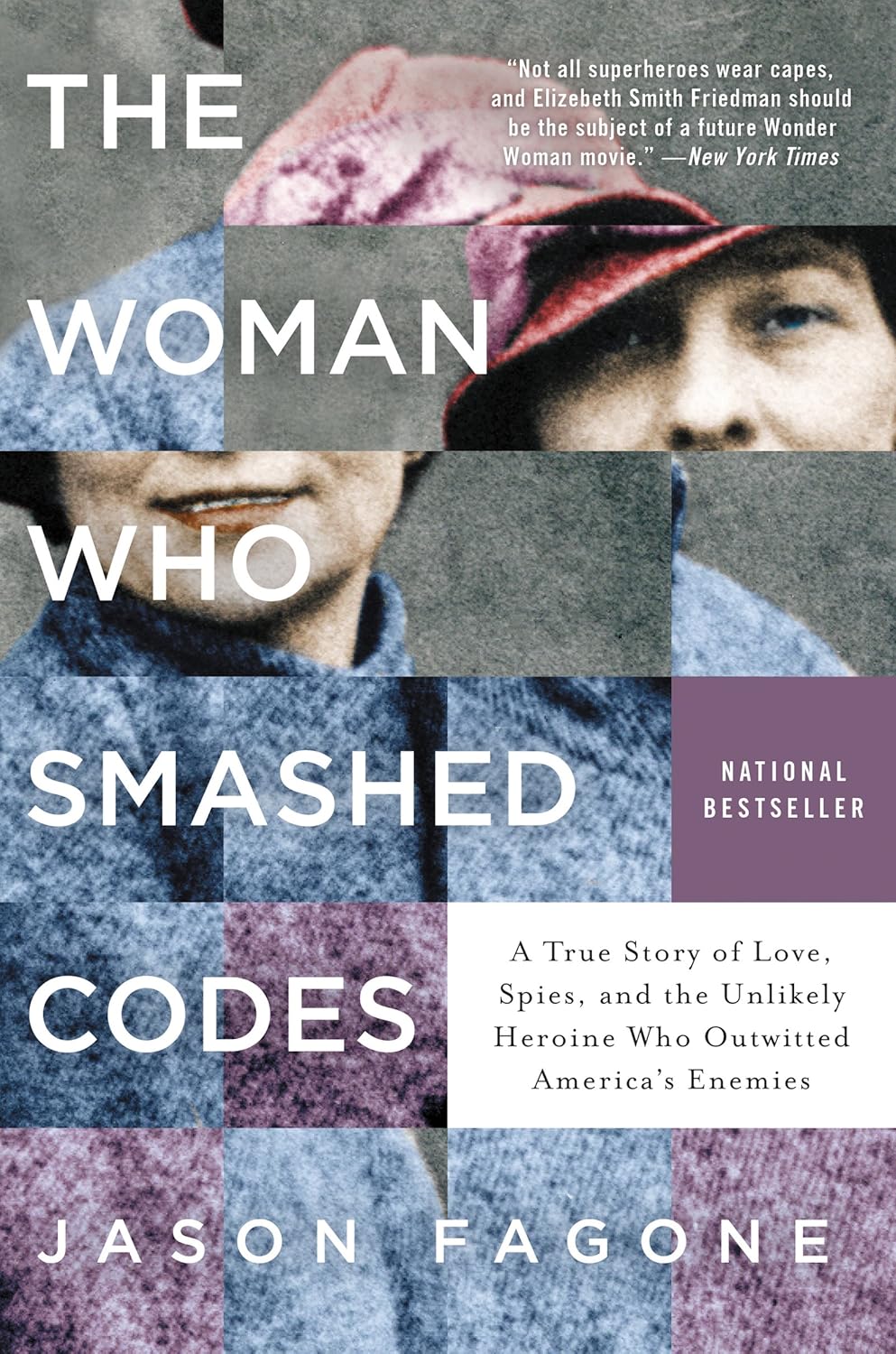
In 1916, at the height of World War I, brilliant Shakespeare expert Elizebeth Smith went to work for an eccentric tycoon on his estate outside Chicago. The tycoon had close ties to the U.S. government, and he soon asked Elizebeth to apply her language skills to an exciting new venture: code-breaking. There she met the man who would become her husband, groundbreaking cryptologist William Friedman. Though she and Friedman are in many ways the "Adam and Eve" of the NSA, Elizebeth’s story, incredibly, has never been told.
In The Woman Who Smashed Codes, Jason Fagone chronicles the life of this extraordinary woman, who played an integral role in our nation’s history for forty years. After World War I, Smith used her talents to catch gangsters and smugglers during Prohibition, then accepted a covert mission to discover and expose Nazi spy rings that were spreading like wildfire across South America, advancing ever closer to the United States. As World War II raged, Elizebeth fought a highly classified battle of wits against Hitler’s Reich, cracking multiple versions of the Enigma machine used by German spies. Meanwhile, inside an Army vault in Washington, William worked furiously to break Purple, the Japanese version of Enigma—and eventually succeeded, at a terrible cost to his personal life.
Fagone unveils America’s code-breaking history through the prism of Smith’s life, bringing into focus the unforgettable events and colorful personalities that would help shape modern intelligence. Blending the lively pace and compelling detail that are the hallmarks of Erik Larson’s bestsellers with the atmosphere and intensity of The Imitation Game, The Woman Who Smashed Codes is page-turning popular history at its finest.
This book sets out the big data landscape, comprising data abundance, digital connectivity and ubiquitous technology, and shows how the big data landscape and the emerging technologies it fuels are impacting national security.
This book will be of much interest to students of intelligence studies, technology studies, national security and International Relations.
This book illustrates that big data is transforming intelligence production as well as changing the national security environment broadly, including what is considered a part of national security as well as the relationships agencies have with the public. The book highlights the impact of big data on intelligence production and national security from the perspective of Australian national security leaders and practitioners, and the research is based on empirical data collection, with insights from nearly 50 participants from within Australia’s National Intelligence Community. It argues that big data is transforming intelligence and national security and shows that the impacts of big data on the knowledge, activities and organisation of intelligence agencies is challenging some foundational intelligence principles, including the distinction between foreign and domestic intelligence collection. Furthermore, the book argues that big data has created emerging threats to national security; for example, it enables invasive targeting and surveillance, drives information warfare as well as social and political interference, and challenges the existing models of harm assessment used in national security. The book maps broad areas of change for intelligence agencies in the national security context and what they mean for intelligence communities, and explores how intelligence agencies look out to the rest of society, considering specific impacts relating to privacy, ethics and trust.
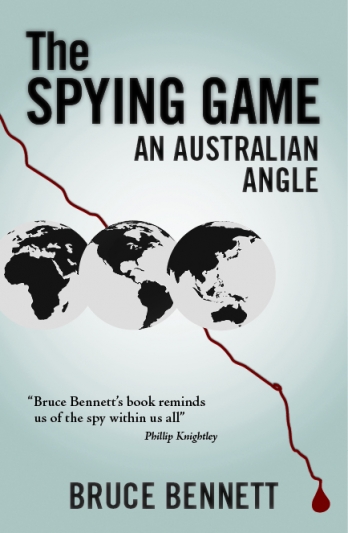
What are the roles of reason and imagination in secret intelligence? How do apparently normal people get involved? What happens to them? While British, American and Soviet empires have produced plentiful supplies of heroes, villains and stirring tales, Australians have typically averted their gaze from this country’s involvement in the ‘second oldest profession’. And yet espionage has been a part of Australia’s history since the earliest European imaginings of a southern land mass. Australian spies have produced their share of heroes and villains and this book shows how they influenced Australia’s diplomatic and military policy, and the personal price some of them paid.
‘As this book shows, films, novels and memoirs enable authors to imagine the deep-seated predilections and peccadilloes of spies and secret agents over the last four centuries of Australian existence. Sex and seduction? Those books and this one are replete with it. Narcissism? It is everywhere in novelistic and filmic treatments of the theme. Surprises? There is perhaps no more apposite concept in the context of The Spying Game than that of the unexpected.’ — Foreword
Bruce Bennett’s contribution to Australian literary studies was outstanding. His books include An Australian Compass 1991, Spirit in Exile 1991, The Oxford Literary History of Australia 1998, with Jennifer Strauss, Australian Short Fiction 2002, Homing In 2006 and he is co-editor of the anthology Of Sadhus and Spinners: Australian Encounters with India 2009.
NEWS |
Oleg Gordievsky, the long-standing KGB double agent who defected to Britain, has died aged 86.
Gordievsky was said to be Britain's most valuable spy in living memory inside Russia's intelligence agencies.
Counter-terrorism police are assisting the coroner, but his death is not being treated as suspicious.
He died peacefully at his home in Surrey, the BBC understands.
Gordievsky, a colonel in Russia's KGB, spent many years as a double agent, passing vital intelligence to both Britain's MI6 and MI5.
He has lived in Godalming under police protection since Moscow became suspicious of him in 1985 and he narrowly escaped arrest, trial and a firing squad by getting smuggled across the border into Finland in the boot of a car.
Two years earlier, as the KGB resident in London at the height of the Cold War, he warned his British handlers that Moscow had become so paranoid about an imaginary surprise attack by the West that the Soviet Union began making preparations to strike first.
As a result of his tip-off, NATO curtailed its military exercise codenamed Able Archer, and the crisis was averted.
A new museum of military intelligence is to be created in a series of underground tunnels built to shelter Londoners during the Blitz.
The Kingsway exchange tunnel complex, under High Holborn in the City of London, was constructed between 1940 and 1942 in order to protect people from aerial bombardment, but due to the changing nature of the war it was never used for its original purpose.
The complex instead housed the Special Operations Executive, a clandestine organisation established by prime minister Winston Churchill in 1940 to conduct espionage and sabotage in Nazi-occupied Europe. The tunnels are believed to have inspired the Q Branch in Ian Fleming’s James Bond novels.
The project is being led by The London Tunnels company, which has announced a new partnership with the Military Intelligence Museum in Chicksands, Bedfordshire, to create a heritage attraction on the site exploring the history of military intelligence.
The Military Intelligence Museum, which is located on a military base and only open to the public for advance bookings, will use its collections and expertise to help develop the "world's most authoritative" spy museum in the London tunnels.
The new attraction will include original artefacts, equipment, weapons, documents and images, and will feature stories from the Battle of Britain and D-Day, as well as espionage in the Cold War and the Falklands, and terrorist threats in the 21st century. A special exhibition will be dedicated to the Special Operations Executive.
MI6 will be led by a woman for the first time in the foreign intelligence service's 116-year history. Blaise Metreweli, who joined the Secret Intelligence Service in 1999, will become the 18th chief of the organisation and take over from Sir Richard Moore later this year. She is currently responsible for technology and innovation at the service and said she was "proud and honoured" to have been asked to lead. Prime Minister Sir Keir Starmer called the appointment "historic" at a time "when the work of our intelligence services has never been more vital".
MI6 is tasked with gathering intelligence overseas to improve the UK's security, with its core aims being to stop terrorism, disrupt the activities of hostile states and bolster cyber-security. Its chief, commonly referred to as "C", is the only publicly named member of the service.
Ms Metreweli, 47, is currently Director General "Q" - head of the crucial technology and innovation division that aims to keep the identities of secret agents secret, and come up with new ways to evade adversaries like China's biometric surveillance. "MI6 plays a vital role - with MI5 and GCHQ - in keeping the British people safe and promoting UK interests overseas," she said.
"I look forward to continuing that work alongside the brave officers and agents of MI6 and our many international partners."
Cybercriminals are no longer just hackers—they are rapidly becoming large-scale data brokers, weaponizing and monetizing stolen personal information at every stage of their operations, according to Europol’s 2025 Internet Organized Crime Threat Assessment (IOCTA). The report warns that data exploitation is now embedded across the cybercrime lifecycle, from breaching systems to selling stolen data on encrypted platforms. Everyday online environments—such as e-commerce sites, social media, and gaming platforms—are increasingly misused for grooming, radicalization, and financial crime.
Personal information, Europol says, is no longer just a byproduct of cyberattacks but a core commodity fueling ransomware, fraud, identity theft, and child exploitation. Social engineering remains the most common entry point, while advances in artificial intelligence have made these attacks faster, more scalable, and harder to detect.
According to Philipp Amann, former Group Chief Information Security Officer at Austrian Post and former head of expertise and stakeholder management at Europol’s European Cybercrime Centre (EC3), the IOCTA shows that stolen personal data has become the backbone of a vast cybercriminal ecosystem.
ARTICLES |
The traditionally regimented Australian Defence Force has overtaken the Australian Public Service in the race to attract and retain top-tier cyber and tech talent, following the Defence Force Remuneration Tribunal’s approval of a specialist Cyber Warfare employment category with dedicated military pay rates across all services.
The move to elevate and standardise cyberwarfare qualifications, ranks, and pay was initiated by the ADF and was unopposed by the Commonwealth.
The change is a big one because it recognises both the need and value of cyber skills in modern warfare (declared or otherwise) and the need for forces and the Department of Defence to create a clear career progression path for the cyber profession rather than restrictive service silos and career ghettos.
“Cyber Warfare employment categories are currently remunerated through the Graded Officer Pay Structure and Graded Other Ranks Pay Structure,” Defence’s remuneration tribunal found in its decision.
“The Chief of Defence Force has directed a common approach to Cyber Warfare employment categories to ensure Defence builds a fit-for-purpose cyber workforce in the ADF, acknowledging that traditional workforce management techniques must be adapted given the competition for cyber security talent.”
The return of Donald Trump to the White House has upended geopolitics with his unpredictable, transactional, and often chaotic approach to foreign policy. But he has not changed Xi Jinping's policy calculations. Rather, he has solidified them and created openings for Xi to drive a wedge into US alliances. Xi remains committed to turning China into a prosperous, high-tech superpower that will be able not just to challenge the United States, but to surpass it in many areas.
Xi Jinping’s China is a different country from the nation he took leadership of in late 2012. The low-profile diplomacy that initially underpinned Chinese modernisation — the late Deng Xiaoping’s so-called “hide and bide” policy — is a distant memory. Under Xi’s leadership, China has become openly assertive in pressing its interests and values. The dumping of Deng’s diplomatic dictum did not happen overnight. Many of the policies associated with Xi, such as embracing rivalry with the United States and developing an intimate relationship with Vladimir Putin’s Russia, were seeded in the era of his predecessor, Hu Jintao. But while Xi did not originate all the policies that now typify Chinese diplomacy, he has accelerated them.
After Labor’s shocking election defeat in 2019, Tony Burke was one of Anthony Albanese’s earliest and most consequential backers for the Labor leadership – supporting him over factional stablemate Chris Bowen. That act of loyalty helped secure Burke’s place in the prime minister’s inner circle. Now, with ambition that is neither hidden nor denied, Burke’s influence is growing.
The most compelling evidence of his rising stature is his securing of the Home Affairs portfolio, which comes with a reversal by Albanese of his first-term decisions to reallocate the oversight of ASIO and the Australian Federal Police to the Attorney-General’s Department.
At the time that move – made on the advice of the former attorney-general Mark Dreyfus – reinforced the perception that Labor was intent on tearing down the centralised security behemoth created by Malcolm Turnbull in 2017. That Home Affairs super-ministry brought all of Australia’s domestic intelligence, policing and border agencies under one roof, under the purview of then department secretary Mike Pezzullo. Albanese sacked Pezzullo in November 2023 over text messages he exchanged with a Liberal Party insider while the Coalition was in government, after an inquiry found Pezzullo had sought to influence political processes.
Labor had long opposed the model, and now, in government, appeared determined to dismantle it piece by piece. The prime minister insisted the rationale was clear. Three days after announcing the only ministerial reshuffle of his first term, he said the move was welcomed by “every national security expert, past and present ASIO directors-general”. He also said it put in place “appropriate structures for good governance”. He pointed to three major reviews conducted during the first term – by Dennis Richardson, Martin Parkinson and Christine Nixon – all of which, he said, had been “incredibly critical” of the structure and performance of the department under the previous government.
This study investigates the transformative role of artificial intelligence (AI) in state-sponsored cyber espionage, focusing on its dual use in offensive and defensive operations. Using data from the MITRE ATT&CK Framework, FireEye APT Groups Database, UNSW-NB15 Intrusion Detection Dataset, and the Cyber Conflict Tracker by CFR, this research applied network graph analysis, multi-criteria decision analysis (MCDA), ensemble classification models, and Difference-in-Differences (DiD) analysis. Results revealed that AI-driven offensive techniques, phishing (degree centrality 0.85), and adaptive malware (betweenness centrality 0.81) significantly enhance operational precision and scalability. Defensively, ensemble classification models achieved up to 95.8% accuracy, highlighting AI's efficacy in intrusion detection. AI regulatory frameworks reduced misattribution rates by 20% and escalation incidents by 10%, demonstrating their critical role in mitigating geopolitical risks. The findings impress AI's transformative potential in advancing cyber operations and shaping international policy and governance. By addressing challenges such as attribution, escalation risks, and ethical dilemmas, this study highlights the necessity for stronger global cooperation and regulatory frameworks to navigate the dual-use nature of AI, providing actionable insights for policymakers, cybersecurity professionals, and researchers, emphasizing the urgency of aligning technological advancements with strategies for enhancing global cybersecurity resilience.
REPORT |
The world has changed. The threat we now face is more serious and less predictable than at any time since the Cold War. The UK faces war in Europe, growing Russian aggression, new nuclear risks, and daily cyber-attacks at home. Our adversaries are working more in alliance with one another, while technology is changing how war is fought. Drones now kill more people than traditional artillery in the war in Ukraine, and whoever gets new technology into the hands of their Armed Forces the quickest will have the advantage.
We are in a new era of threat, which demands a new era for UK Defence. The Strategic Defence Review will make Britain safer—secure at home and strong abroad. It signifies a landmark shift in our deterrence and defence: moving to warfighting readiness to deter threats and strengthen security in the Euro-Atlantic. As the UK steps up to take on more responsibility for European security, we must have a ‘NATO first’ defence policy and lead within the Alliance. The UK will become the leading edge of innovation in NATO.
The SDR sets a path for the next decade and beyond to transform Defence. It will end the hollowing out of the UK’s Armed Forces and lead in a stronger, more lethal NATO. As we reform Defence and increase defence spending to 2.5% of GDP by 2027 and 3% in the next Parliament when fiscal and economic conditions allow, the SDR will help make defence an engine for growth—boosting prosperity, jobs and security for working people across the UK.
This report addresses how the National Intelligence University (NIU) can define its role in conducting and overseeing research that is relevant to members of the U.S. Intelligence Community (IC) and how it can identify study areas related to IC requirements and gaps. This report explores the definition of research, how it differs from traditional intelligence analysis, what intelligence research is currently being done within the IC and academia, and what pressing research questions are unanswered.
The report provides insights into the NIU’s unique position between academia and the IC and how its access to classified holdings and its understanding of a largely closed part of the U.S. national security enterprise allow NIU to conduct research that most organizations cannot. NIU can be a critical convener between the outside academic and research communities doing cutting-edge research and the IC. NIU should consider multiple factors in developing a research agenda, but its best value proposition comes when it leverages one of its four unique assets: organic access to IC stakeholder needs, access to classified data and data sets, faculty expertise in intelligence subjects and methods, and student subject-matter expertise. These unique assets would be engaged for research on unclassified or classified projects about the theory of intelligence and the intelligence discipline, and for practical questions relevant to national security priorities that can only be answered with the use of classified information. The report then suggests a decision-aid framework that can be used when making decisions about NIU’s research agenda.
OPINION |
Since Russia's full-scale invasion of Ukraine in 2022, European countries have expelled at least 750 Russian diplomats accused of espionage.
NATO says it has been the largest counterintelligence operation in the West since the Cold War.
In early May, six Bulgarian spies were jailed in the United Kingdom for feeding sensitive information to Russia.
NATO's deputy assistant secretary-general James Appathurai said Russia had a "higher risk appetite" towards espionage in 2025, and he believed the nation had increased its spying output.
Richard Moore, head of MI6, the UK's foreign intelligence agency, said Russia was on a "mission to generate mayhem".
So far, it isn’t even close. Israel’s bombing campaign is destroying not only Iran’s nuclear facilities but its ability to make war. After eliminating the Islamic Republic’s air defenses last fall, the Israeli air force now enjoys almost unprecedented freedom of operation over Iranian territory. Indeed, after hundreds of sorties, Israel has not lost a single aircraft. Meanwhile, Israel’s intelligence operatives have clearly penetrated many key Iranian institutions and have even launched drone attacks from within Iran. The unpopularity of the Iranian regime has made it a spy recruiter’s paradise, meaning the Mossad may become an even greater threat in the months ahead.
Senior Iranian officials have wondered openly, "Where is our air defense?" “Their own intelligence services failed to see the attack coming. Partly as a result, most of the country’s top military leaders and nuclear scientists have been killed. This war must be psychologically devastating to regime supporters. Iran has fired hundreds of ballistic missiles at Israel, but many are being shot down. So far they have failed to hit any strategic targets. At the same time, Israel is attacking Iran’s missile sites and other military facilities, degrading its ability to respond.
Iran’s “forward defense” strategy of using proxies to check Israeli power also is in tatters. That’s because the Islamic Republic’s proxy forces—Hezbollah in Lebanon, Hamas in Gaza and the Houthis in Yemen—are destroyed, degraded or otherwise engaged and have contributed nothing to Iran’s defense. All the while, Israeli Prime Minister Benjamin Netanyahu has vowed to keep the air campaign going.
TALKS, WEBINARS & PRESENTATIONS |
An insightful webinar exploring the evolving dynamics of conflict between India and Pakistan. Dr. M. Saeed Uzzaman, Head of the International Relations Department at the National University of Modern Languages, Rawalpindi (NUML), will delve into shifting military doctrines, emerging technologies, and geopolitical drivers shaping one of South Asia’s most enduring rivalries.
Dr Saeed Uzzaman is an Emerging Technologies Expert who has co-authored a book entitled ‘Changing Patterns of Warfare Between India and Pakistan: Navigating the Impact of New and Disruptive Technologies’ with Rizwana Abbasi. On this webinar, Dr Saeed will talk about this book, which is particularly important in the context of the recent Indo-Pakistan conflict. We look forward to welcoming Dr Saeed, who will present on this topic and then answer questions from the audience in the Q&A segment of the webinar.
RAND's David Ochmanek discusses the erosion of U.S. military power and influence. Ochmanek, who previously served as a deputy assistant secretary of defense under two different administrations, breaks down why U.S. defense strategy and posture have become “insolvent,” lessons from the war in Ukraine that the United States could apply to future conflicts, and how the U.S. military can learn to “fight differently.”
Back to the Resource Hub / Back to Links
The subjects, thoughts, opinions, and information made available in AIPIO Acumen reflect the authors' views, not those of the AIPIO.