
Back to the Resource Hub / Back to Links
The links below are organised by the month in which they are published
BOOKS |
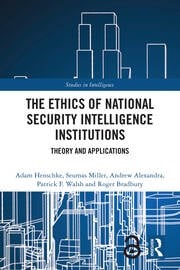
This book explores the ethics of national security intelligence institutions operationg in contemporary democracies.
Intelligence collection by agencies such as CIA, MI6, and Mossades involves practices and that are apparently inconsistent with the principles of ordinary morality – practices such as lying, spying, manipulation and covert action. However, in the defence of national security, such practices may not only be morally permissible, but may also under some circumstances be morally obligatory. One approach to the ethics of national security intelligence activity has been to draw from the just war tradition (so-called ‘just intelligence theory’).
This book identifies significant limitations of this approach and offers new, institutionally based, teleogical normative framework.
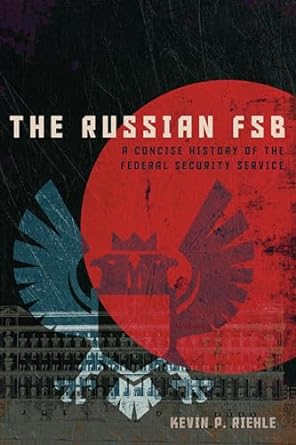
Since its founding in 1995, the FSB, Russia's Federal Security Service, has regained the majority of the domestic security functions of the Soviet-era KGB. Under Vladimir Putin, who served as FSB director just before becoming president, the agency has grown to be one of the most powerful and favored organizations in Russia. The FSB not only conducts internal security but also has primacy in intelligence operations in former Soviet states. Their activities include anti-dissident operations at home and abroad, counterintelligence, counterterrorism, criminal investigations of crimes against the state, and guarding Russia's borders.
In The Russian FSB, Kevin P. Riehle provides a brief history of the FSB's origins, placed within the context of Russian history, the government's power structure, and Russia's wider culture. He describes how the FSB's mindset and priorities show continuities from the tsarist regimes and the Soviet era. The book's chapters analyze origins, organizational structure, missions, leaders, international partners, and cultural representations such as the FSB in film and television.
Based on both English and Russian sources, this book is a well-researched introduction to understanding the FSB and its central role in Putin's Russia.
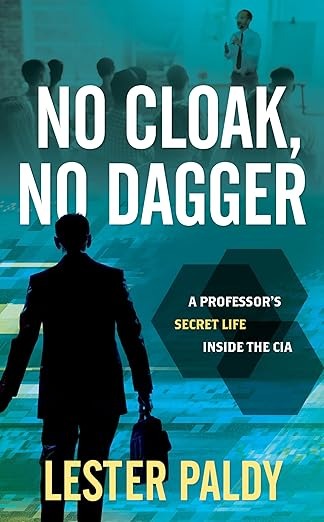
Lester Paldy, a distinguished professor, was tapped by the CIA in 1988 to join the Agency for a “trial run” as they faced a troubling new situation in Russia. That “temporary” assignment would last for 25 years, during which he would find himself tested by a shifting set of responsibilities, his ability to penetrate secret sites, his expertise in approaching and assessing targets for potential value to the Agency, and his personal commitment to breaking down long-held barriers between the CIA and the FBI. He achieved this by demonstrating to CIA officers and FBI special agents how to approach scientists in ways that fit smoothly into their research and organizational cultures. As long as Les Paldy remained at the CIA, officers and special agents from both intelligence bases would benefit from this unexpected opportunity.
Even today, years after his official departure from the Agency, Les Paldy is invited to brief intelligence officers and special agents. And now, the author extends an invitation to every reader to join him on his life-changing journey as the professor with “No Cloak, No Dagger.”
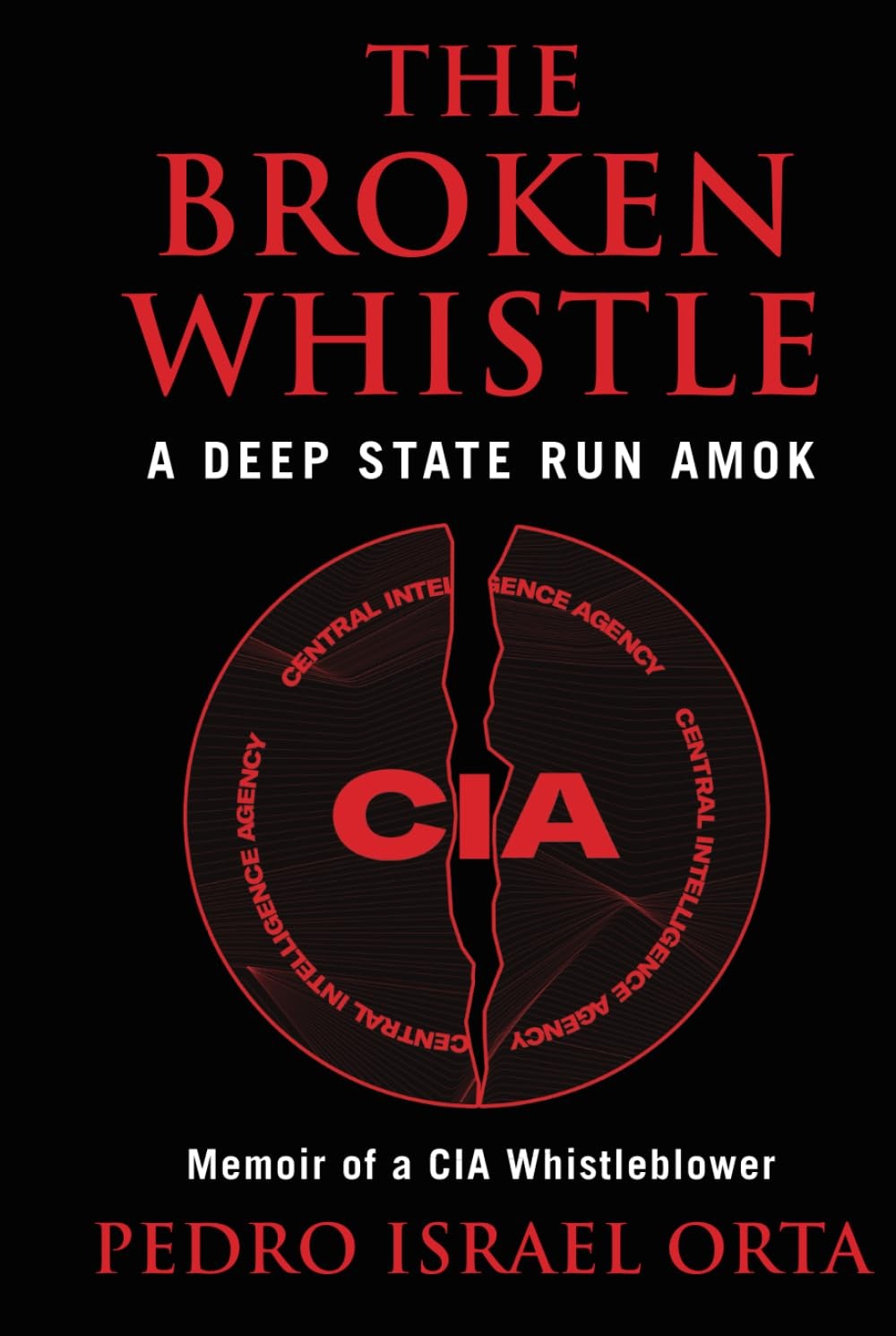
“Now here I was, post-Snowden, relying on a system President Obama, Congress, and IC leaders had touted as successful and functional. But was it truly working? My case exposed it as nothing more than a sham. Would the CIA and the IC attempt to rectify the situation? Did they genuinely desire to fix the broken system? Or would they persist in employing their illegal bullying tactics to silence whistleblowers? I was determined to take action, offering them an opportunity to correct their behavior.” —From The Broken Whistle
The Broken Whistleis a searing exposé that unveils a chilling chapter in American history, a narrative meticulously recounted by Pedro Israel Orta. Plunged into the heart of power and deception, Orta emerges as a force to be reckoned with. On September 23, 2019, his single Twitter thread ignited a tempest, tearing through the sinister underbelly of the Intelligence Community Whistleblower Protection Act (ICWPA), which had been perverted for political ends. In this gripping account, Orta fearlessly shines a light on a corrupt system that brazenly weaponized the very process designed to uphold truth and accountability.
NEWS |
We recently highlighted the need for companies to manage risks associated with the adoption of AI technology, including the malicious use of real-time deepfakes (i.e., AI-generated audio or video that impersonates a real person). In this article, we address three AI-related insider risks that warrant special attention by corporate compliance departments (i.e., insider deepfakes, barrier evasion, and model manipulation) and present possible ways to mitigate them.
A senior officer of the Luftwaffe, the German Air Force, is in his hotel room. He's in the region to rub shoulders with defence industry players at Asia's largest air show. He has had a long day - but he can't go to bed just yet.
Brigadier General Frank Gräfe has a work call to dial into with his boss - the commander of the German air force. It's not a big deal for the head of Air Force Operations. He sounds relaxed on the line as he chats with two colleagues about the "mega" view from his room, and how he's just come back from a drink at a nearby hotel where there's an incredible swimming pool.
"Not too shabby," one of them remarks.
Finally, the boss, Lieutenant General Ingo Gerhartz, dials in - and they begin. Over the next 40 minutes, the group appear to touch upon highly sensitive military issues, including the ongoing debate over whether Germany should send Taurus cruise missiles to Ukraine.
What none of the call's participants know is that they're being eavesdropped on - and their conversation is being recorded. Two weeks after the call took place, the audio tape was leaked by Russia's state-run RT channel.
The deadly H5N1 bird flu virus has spread more aggressively than ever before in wild birds and marine mammals since arriving in South America in 2022, raising the risk of it evolving into a bigger threat to humans, according to interviews with eight scientists.
Of more immediate concern is evidence the disease, once largely confined to bird species, appears to be spreading between mammals. This strain has already killed a handful of dolphins in Chile and Peru, some 50,000 seals and sea lions along the coasts, and at least half a million birds regionwide.
IDF intelligence analysis chief Brig.-Gen. Amit Saar will resign his post once the IDF publishes its probe of the October 7 intelligence failures, set for June, he announced on Wednesday at a closed military intelligence conference.
Saar is the most senior Israeli official to date to give an exact time frame for when he will resign, in a show of responsibility, although military sources said he was due to finish his role anyway over the summer.
Previously, a mid-level IDF intelligence major resigned.
ARTICLES |
South Korea's first military spy satellite has successfully transmitted "good-resolution" images of central Pyongyang back home following the satellite's launch in December, military sources said.
The first indigenous South Korean military spy satellite was placed into orbit from Vandenberg Space Force Base in California on Dec. 2, allowing South Korea to independently gain satellite imagery on the North Korean military and leadership. According to the sources, the electro-optical and infrared (EO/IR) satellite has been sending home satellite images of North Korean regions, including Pyongyang, in a test transmission.
"Seen from the results of the editing on recently transmitted satellite photos, the resolution is as good as expected," a military source said.
The nation’s top spy has called for calm, refusing to name names after dropping a bombshell that a former politician sold out Australia to foreign spies. Mike Burgess used his annual threat assessment address on Wednesday night to reveal an ex-politician was recruited by a foreign intelligence service “several years ago” but declined to name them.
Former federal treasurer and ambassador to the US Joe Hockey said the claims had implicated hundreds of officials, and said Mr Burgess had a duty to every politician to reveal who it was.
Since October 7, 2024, when Israel was caught off guard by a sudden and highly damaging attack from Hamas, more information has surfaced regarding why there was no prior warning about the attack and the failures of Israeli intelligence in this regard.
It has become clear that Israeli intelligence miscalculated Hamas’s intentions. The Israeli security concept, spearheaded by the Israel Military Intelligence (IMI) and the Israel Security Agency (ISA), was that:
(a) Hamas had been deterred from launching large-scale attacks; and
(b) Hamas was focused on carrying out terrorist attacks against Israelis in the West Bank and not on Israel proper.
This flawed security concept, which had been fully adopted by the Israeli cabinet and the Israel Defense Forces (IDF) was proven to be groundless. In fact, Hamas successfully exploited it in order to develop and accelerate its attack strategy.
A foreign agency ran a spy operation out of New Zealand's Government Communications Security Bureau for years without ministers knowing.
The Inspector General of Intelligence and Security has revealed this in an investigation out on Thursday.
It has found the GCSB knew when it agreed to host the signals intelligence system it could be used to support "military operations by foreign partners".
"The capability clearly had the potential to be used, in conjunction with other intelligence sources, to support military action against targets," the report by IGIS Brendan Horsley said.
The system operated from 2013 until 2020, when it was stopped by an equipment failure.
But government ministers were not told despite the agency knowing how sensitive it was.
The current GCSB senior leadership and legal team "apparently knew nothing of the system".
REPORT |
This annual report of worldwide threats to the national security of the United States responds to Section 617 of the FY21 Intelligence Authorization Act (Pub. L. No. 116-260). This report reflects the collective insights of the Intelligence Community (IC), which is committed every day to providing the nuanced, independent, and unvarnished intelligence that policymakers, warfighters, and domestic law enforcement personnel need to protect American lives and America’s interests anywhere in the world.
This assessment focuses on the most direct, serious threats to the United States primarily during the next year. The order of the topics presented in this assessment does not necessarily indicate their relative importance or the magnitude of the threats in the view of the IC. All require a robust intelligence response, including those where a near-term focus may help head off greater threats in the future.
There are significant efforts across the Asia-Pacific region to acquire or expand long-range strike capabilities. This new report examines the existing and planned capabilities of some of the most significant players in the region, along with national drivers and doctrines. It also analyses the second-order implications for the United States’ alliance framework and for regional stability.
Missile arsenals are growing at an exponential rate in the Asia-Pacific region, as countries there attempt to alter or maintain the regional balance of power. China’s and North Korea’s expanding ballistic- and cruise-missile inventories, along with Beijing’s increasingly assertive behaviour and Pyongyang’s aggressive rhetoric and frequent testing of systems, are undermining regional security and driving other countries to improve their own long-range strike capabilities in response, albeit with widely differing levels of resources. Although most of those other countries are not developing missile types analogous to those now possessed by China and North Korea, their focus on long-range strike capabilities has contributed to a regional arms race that is unlikely to be constrained by arms-control limitations in the foreseeable future. It is therefore highly probable that all the countries of the Asia-Pacific will continue to expand their arsenals horizontally and vertically.
OPINION |
Knowing about the massive amounts of spying taking place can make one paranoid. But the best antidote to widespread espionage isn’t fear — it’s awareness.
In exemplary coordination, Norway’s intelligence agencies have released their annual reports — and they make for troubling reading.
All three documents chronicle the innovative ways in which Russia and China, as well as Iran and North Korea, go about gathering intelligence now that the usual embassy route has become much harder for them.
Nonverbal communication typically refers to communication carried out in ways other than through words, including through nonverbal behavior. The subject has been addressed in thousands of scientific articles by a worldwide community of researchers in a variety of disciplines, including psychology, communication, and criminology. As well as academia, practitioners have shown interest in nonverbal behaviour, often as a means to increase their ability to understand others, even to spot liars. Security organisations are not spared. They are offered techniques to understand “body language”, which claim to allow the detection of hostile intents and threats through the observation of nonverbal behaviour.
TALKS, WEBINARS & PRESENTATIONS |
What’s it like to be the child of a world-famous spy?
Gary Powers Jr. takes his name and his inspiration from his father, Francis Gary Powers – the pilot of the U2 spy plane that was shot down over the Soviet Union in 1960, sparking a major Cold War crisis. Here, Powers and host Alice Loxton discuss the legendary U2, and the life of its most famous pilot.
From SPYSCAPE, the home of secrets. A Cup And Nuzzle production. Series produced by Alex Burnard, Morgan Childs, Claire Crofton, Joe Foley, Frank Palmer, Kellie Redmond and Isabel Sutton. Music by Nick Ryan.
Mark Zaid (X, LinkedIn) joins Andrew (X; LinkedIn) to discuss American intelligence and the law. You’ve heard of a “lawyer to the stars,” Mark is the “lawyer to the spies”
What You’ll Learn
And much, much more …
Back to the Resource Hub / Back to Links
The subjects, thoughts, opinions, and information made available in AIPIO Acumen reflect the authors' views, not those of the AIPIO.