
Back to the Resource Hub / Back to Links
The links below are organised by the month in which they are published
BOOKS |
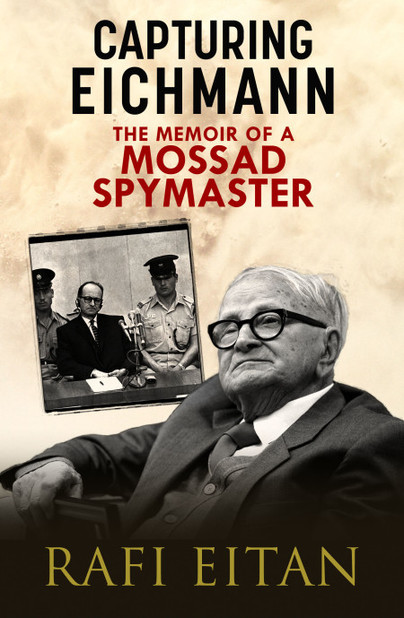
Argentina, 1960. A car speeds through the streets of Buenos Aires. Inside are four Israeli secret agents and their prisoner: one of the most notorious war criminals of Nazi Germany. The Mossad operatives need to get this man, Adolf Eichmann, back to Israel to be tried for his crimes. Holding Eichmann’s head in his lap is the leader of this ambitious mission, Rafi Eitan, whom Israeli Prime Minister Benjamin Netanyahu later described as ‘one of the heroes of Israeli intelligence’.
In this fast-paced and detailed memoir, Rafi Eitan tells the story of his remarkable life and career as an elite soldier and spymaster. He describes how as a teenager, he smuggled Jewish refugees into Palestine as part of the Palmach unit and how, as a spy in the newly established Mossad, he swam through sewers to blow up a British radar station, earning the name ‘Rafi the Stinker’. He goes on to describe in detail his involvement in the extraordinary hunt for the Nazi war criminal Adolf Eichmann. Eitan's espionage career eventually ended over his involvement in the controversial Jonathan Pollard espionage affair, which sparked intense debate over Israel’s relations with the US.
Packed with new insights into Eitan's role at the heart of Israeli military and intelligence organisations, this is a gripping read and essential reading for anyone interested in espionage history and the daring operation to capture Adolf Eichmann.
Dr. Benjamin Church, Jr. (1734–1778) was a respected medical man and civic leader in colonial Boston who was accused of being an agent for the British in the 1770s, providing compromising intelligence about the plans of the provincial leadership in Massachusetts as well as important information from the meetings of the First Continental Congress in Philadelphia. Despite his eminence as a surgeon—he conducted an autopsy on one of the victims of the Boston Massacre and his own correspondence and the numbers of references to him from contemporaries, no known image of him exists and many aspects of his life remain obscure. What we do know is that George Washington accused him of being a traitor to the colonial cause and had him arrested and tried; after being jailed in Connecticut, during which he continued to profess his innocence, he was allowed to leave America on a British vessel in 1778, but it foundered in the Atlantic with all hands lost. The question of whether Dr. Benjamin Church was working for the British has never been conclusively demonstrated, and remains among the mysteries of the American Revolution.
In Dr. Benjamin Church, Spy: A Case of Espionage on the Eve of the American Revolution, noted authority John A. Nagy has scoured original documents to establish the best case against Church, identifying previously unacknowledged correspondence and reports as containing references to the doctor and his activities, and noting an incriminating letter in the possession of Library of Congress that is a coded communication composed by Church to his British contact. Nagy shows that at the cusp of the revolution, when the possibility—let alone the outcome—of an American colonial rebellion was far from assured, Church sought to align himself with whom he thought would emerge victorious—the British crown—and thus line his pockets with money that he desperately needed. A fascinating investigation into a centuries-old intrigue, this well-researched volume is an important contribution to American Revolution scholarship.
John A. Nagy, scholar-in-residence at Saint Francis University, Pennsylvania and expert on eighteenth-century espionage, is author of Invisible Ink: Spycraft of the American Revolution and Spies in the Continental Capital: Espionage Across Pennsylvania During the American Revolution, also available from Westholme Publishing
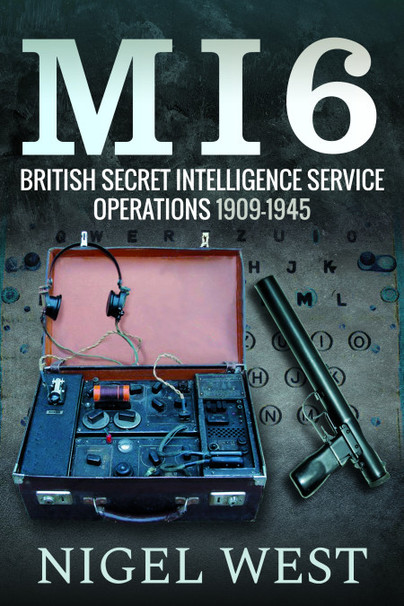
Written by the renowned expert Nigel West, this book exposes the operations of Britain’s overseas intelligence-gathering organisation, the famed Secret Intelligence Service, MI6, and traces its origins back to its inception in 1909. In this meticulously researched account, its activities and structure are described in detail, using original secret service documents.
The main body of the book concerns MI6’s operations during the Second World War, and includes some remarkable successes and failures, including how MI6 financed a glamorous confidant of the German secret service; how a suspected French traitor was murdered by mistake; how Franco’s military advisors were bribed to keep Spain out of the war; how members of the Swedish secret police were blackmailed into helping the British war effort; how a sabotage operation in neutral Tangiers enabled the Allied landings in North Africa to proceed undetected; and how Britain’s generals ignored the first ULTRA decrypts because MI6 said that the information had come from ‘a well-placed source called BONIFACE’.
In this new edition, operations undertaken by almost all of MI6’s overseas stations are recounted in extraordinary detail. They will fascinate both the professional intelligence officer and the general reader.
The book includes organisational charts to illustrate MI6’s internal structure and its wartime network of overseas stations. Backed by numerous interviews with intelligence officers and their agents, this engaging inside story throws light on many wartime incidents that had previously remained unexplained.
For the first two weeks of the Easter Offensive of 1972, the 571st Military Intelligence Detachment provided the only pertinent collateral intelligence available to American forces. Twice daily, the Detachment provided intelligence to the USS Buchanan (DDG-14), US Navy SEALS and Special Forces units including tactical and strategic forecasts of enemy movements, information that was otherwise unavailable to U.S. units and advisors in-country. In the weeks before the offensive, vital agent reports and verbal warnings by the 571st MI Detachment had been ignored by all the major commands; they were only heeded, and then only very reluctantly, once the Offensive began. This refusal to listen to the intelligence explains why no Army or USMC organizations were on-call to recover prisoners discovered or U.S. personnel downed behind enemy lines, as in the BAT-21 incident, as the last two Combat Recon Platoons in Vietnam had been disbanded six weeks before the offensive began.
The lessons and experiences of Operation Lam Son 719 in the previous year were ignored, especially with regard to the NVA’s tactical use of tanks and artillery. In his memoir, Bob Baker, the only intelligence analyst with the 571st MI Detachment in 1972, reveals these and other heroics and blunders during a key moment in the Vietnam War.
NEWS |
Let me start by acknowledging the Traditional Custodians of the lands on which we meet, and pay respect to their Elders past, present and emerging.
I'd like to acknowledge the Attorney-General, the Hon Mark Dreyfus KC, Director-General of National Intelligence Andrew Shearer, CEO of the Australian Criminal Intelligence Commission Heather Cook, and Secretary of Attorney-General's Katherine Jones. And also, I've spied the Minister for Police and Emergency Services, Mick Gentleman from the ACT.
Distinguished guests, ladies and gentlemen.
I'd also like to take this opportunity to quickly acknowledge the men and women of the Australian Federal Police and my organisation, the Australian Security Intelligence Organisation, for the tireless, hard work that they do to protect all of us. So thank you team. You're doing a great job.
The internet is a transformative information source… and the world’s most potent incubator of extremism.
The head of Israeli military intelligence resigned on Monday because of Hamas’ Oct. 7 attack, becoming the first senior figure to step down over his role in the stunning failure to anticipate or quickly respond to the deadliest assault in Israel’s history.
Maj. Gen. Aharon Haliva’s decision could set the stage for more resignations among top Israeli security officials. Hamas militants blasted through Israel’s border defenses on Oct. 7, rampaging through communities unchallenged for hours and killing 1,200 people, most of them civilians, while taking roughly 250 hostages into Gaza.
The attack set off the war against Hamas in Gaza, now in its seventh month.
“The intelligence directorate under my command did not live up to the task we were entrusted with. I carry that black day with me ever since, day after day, night after night. I will carry the horrible pain of the war with me forever,” Haliva wrote in his resignation letter, which was provided by the military.
ASPI Strategic Policing and Law Enforcement expert John Coyne says Australia is “no easy target” for espionage after two Indian spies were expelled for connections to espionage.
Australian authorities expelled two Indian intelligence operatives in 2020 for being members of a ‘nest of spies’ that attempted to steal sensitive information about defence technology, airport security, and trade relationships.
“Espionage is an enduring threat,” he told Sky News Australia.
“It is a significant threat as per the Director General ASIO’s threat assessment earlier this year and it is a growing threat his agency is facing.
“I think also in terms of Australians looking at this the actual operation itself, the ability of ASIO to detect, classify, look across the breadth of that activity, then go through and disrupt that nest of spies really shows that Australia is no soft target for espionage.”
The bird flu outbreak in US cattle has put governments on high alert as they grapple with its potential to contaminate meat and dairy supplies, infect other mammals and transmit to humans.
The surge in cases is testing improvements in disease management since the Covid-19 pandemic, notably in dealing with the threat of zoonotic conditions that can pass from animals to humans.
While scientists say the current evidence does not suggest a high pandemic risk, they are calling for urgent investigations into the virus, its spread into cows and its possible mutations.
“Most likely and hopefully, the outbreak in the US dairy herd can be contained and controlled and this will be a limited one-off event without international consequence,” said Paul Digard, a virology professor at the UK’s Edinburgh university. “It’s too early to say, though.”
The US Centers for Disease Control and Prevention on Friday recommended that farm workers in contact with sick birds or livestock should wear personal protective equipment, as well as avoid exposure to sick or dead animals infected with the H5N1 strain of bird flu.
ARTICLES |
On October 25, 1962, at the height of the Cuban missile crisis, Adlai Stevenson, the U.S. ambassador to the UN, confronted his Soviet counterpart, Valerian Zorin, in the chamber of the Security Council. Live on television, Stevenson grilled Zorin about whether the Soviet Union had deployed nuclear-capable missiles to Cuba. “Yes or no?” Stevenson demanded. As Zorin waffled, Stevenson went in for the kill: “I am prepared to wait for an answer until hell freezes over if that’s your decision. And I’m also prepared to present the evidence in this room.”
In a slick video marking the National Security Education Day, China’s top spy agency has a stern message for Chinese people: foreign spies are everywhere.
As ominous music plays, a broad-faced, beady-eyed man disguises himself as a street fashion photographer, a lab technician, a businessman and a food delivery driver – he even sets up an online honey trap – to glean sensitive state secrets in various places and industries.
“In the sea of people, you may have never noticed him. His identity is changeable and his whereabouts are hard to find,” a narrator says. “They are everywhere, cunning… and sneaky, and they may be right here in our lives.”
Eventually, Chinese police catch the spy in a dramatic ambush after state security authorities receive multiple tip-offs from the public.
“They can disguise as anyone. But among the crowds you and I together are protecting national security,” the narrator concludes. “We 1.4 billion people are 1.4 billion lines of defense.”
Russian thinking about artificial intelligence (AI) development is consistent with that of other major powers that are seeking to respond to an evolving combat environment characterized by growing complexity and rapid technological change. Russia has made several pronouncements on the importance of AI in combat, yet it is often difficult to estimate whether the country’s Ministry of Defense (MOD) actually has utilized AI-enabled systems and weapons, including on the Ukrainian battlefield. Western sanctions and export controls also have the potential to increase the headwinds that Russia faces in its ability to meet its AI objectives.
Presently, the Russian military establishment is investing in AI research, development, testing, and evaluation (RDT&E) seen as most relevant today and in future combat. These investments are shaped both by the understanding of where such emphasis is placed among likely competitors, such as the United States and NATO, and where resources should be allocated based on the ongoing complicated combat in Ukraine.
Beneath the ocean waves, over 700,000 nautical miles of undersea cables link the far reaches of the world. These cable networks transmit government and private messages between continents in seconds, thereby forming the information backbone of modern society. The ubiquity of connectivity has rendered this cable infrastructure a largely invisible part of daily life, but instances of natural and human interference with cables has underscored their fragility. Due to their singular importance, cables have become attractive military targets. In February 2024, Houthi rebels severed three undersea cables in the Red Sea, disrupting 25 per cent of Europe and South Asia’s internet traffic, and visibly demonstrating the far-reaching effects of even small-scale cable attacks.
Since cables are so important for the national security of the United States and its allies, both Russia and China are actively developing the means to interfere with them. Yet there is nothing new about cable vulnerability. The United States cut undersea cables used by Spain in the Spanish-American War of 1898, while the British cut German cables in the lead up to both the First and Second World Wars. Even with the advent of radio and satellite communications, cables have remained a core element of international telecommunications because of their high capacity.
REPORT |
This study aims to identify and collect information on future cybersecurity threats that could affect the Union’s infrastructure and services, and its ability to keep European society and citizens digitally secure.
The European Union Agency for Cybersecurity (ENISA) is the Union's agency dedicated to achieving a high common level of cybersecurity across Europe.
ENISA contributes to EU cyber policy, enhances the trustworthiness of ICT products, services and processes with cybersecurity certification schemes, cooperates with Member States and EU bodies, and helps Europe prepare for the cyber challenges of tomorrow.
Nearly all internet traffic travels through a vast network of fiber optic cables, which not only facilitate billions of daily communications but also shape the distribution of wealth, knowledge, and power. This undersea infrastructure has become a focal point in the ongoing geopolitical tensions between the US and China as they compete for control over valuable data networks.
Undersea cables play a critical role in global communication and geopolitical power dynamics.
Nearly 99% of international data is transmitted through these cables, making them vital for internet connectivity and international finance, as they carry an estimated $10 trillion in transactions daily. The Asia-America Gateway, the longest underwater cable linking Southern California to landing points in Asia Pacific like Hawaii, China, and Brunei, exemplifies the vast network that connects various global economic hubs, highlighting the strategic importance of these cables.
The geopolitics of undersea cables is marked by a hybrid Cold War, particularly between the US and China, where control over these cables translates to economic power and intelligence advantages. Research Fellow Alex Capri, in this paper, discusses the bifurcation of cable networks into American and Chinese spheres of influence, with the US leveraging techno-diplomacy to dissuade foreign governments and telecoms from partnering with Chinese firms like HMN Technologies, formerly Huawei Marine. This techno-diplomacy is part of a broader trend of strategic competition in technologies ranging from semiconductors to quantum science.
OPINION |
Microsoft has a shocking level of control over IT within the US federal government – so much so that former senior White House cyber policy director AJ Grotto thinks it's fair to call Redmond's recent security failures a national security issue.
Grotto this week spoke with The Register in an interview you can watch below, in which he told us that exacting even slight concessions from Microsoft has been a major fight for the Feds.
"If you go back to the SolarWinds episode from a few years ago … [Microsoft] was essentially up-selling logging capability to federal agencies" instead of making it the default, Grotto said. "As a result, it was really hard for agencies to identify their exposure to the SolarWinds breach."
Grotto told us Microsoft had to be "dragged kicking and screaming" to provide logging capabilities to the government by default, and given the fact the mega-corp banked around $20 billion in revenue from security services last year, the concession was minimal at best.
Everyone knows illicit drug use in Australia is worsening, but wouldn’t it be helpful if we had precise numbers for gauging the scale of the problem? How useful it would be if we could measure consumption, perhaps even knowing just how much of each substance was being used in what locations and how patterns were changing.
In fact, we do have those figures, through analysis of wastewater; we’re just not paying enough attention to them. They show our current means of minimising harm from drug use isn’t working. We must look beyond treating it as a mainly law enforcement problem.
The Australian Criminal Intelligence Commission released its 21st National Wastewater Drug Monitoring Program report last month. It found that ‘more than 16.5 tonnes of methylamphetamine, cocaine, heroin and MDMA combined was consumed between August 2022 and August 2023 representing a 17 per cent increase in consumption of these drugs from the previous year’.
TALKS, WEBINARS & PRESENTATIONS |
John Sullivan to discuss the emerging role of AI in law enforcement. AI tools remain the bleeding edge in most industries and professions. Law enforcement, Intelligence and protection pros are sorting the milieu of AI developers looking to corner the market.
Any time we discuss AI, we reach into our bag of hosts to tap Brad Hutchings. Brad is a thought leader about AI and how to deploy and develop tools meant to aid humans in their work. Is AI capable of reliably improving the performance of professionals? Or is the tool too nescient to create accurate professional products? Finding out is what this episode is about.
Jason Leopold, a senior reporter with Bloomberg News, has literally been getting under the skin of government bureaucracies for decades. His weapon: The Freedom of Information Act, enacted by Congress in the mid-1960s because the feds, well, had an insidious propensity to bury embarrassing, or even illegal, acts under layers of official secrecy. Over the years the law has been strengthened—not that it’s stopped the government from continuing its bad behavior.
Back to the Resource Hub / Back to Links
The subjects, thoughts, opinions, and information made available in AIPIO Acumen reflect the authors' views, not those of the AIPIO.