
Back to the Resource Hub / Back to Links
The links below are organised by the month in which they are published
BOOKS |
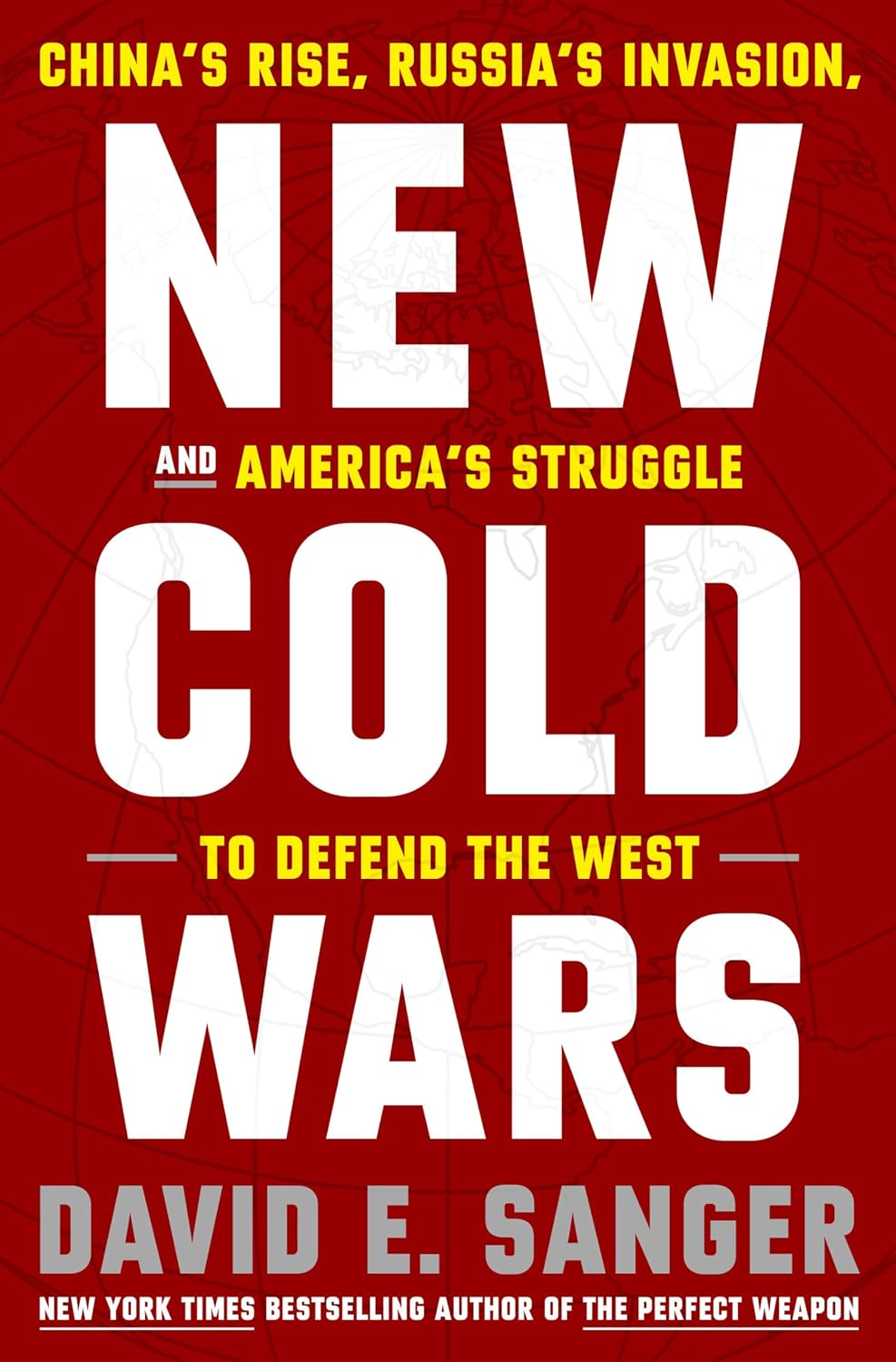
For years, the United States was confident that the newly democratic Russia and increasingly wealthy China could be lured into a Western-led order that promised prosperity and relative peace—so long as they agreed to Washington’s terms. By the time America emerged from the age of terrorism, it was clear that this had been a fantasy.
Now the three powers are engaged in a high-stakes struggle for military, economic, political, and technological supremacy, with nations around the world pressured to take sides. Yet all three are discovering that they are maneuvering for influence in a far more turbulent world than they imagined.
Based on a remarkable array of interviews with top officials from five presidential administrations, U.S. intelligence agencies, foreign governments, and tech companies, Sanger unfolds a riveting narrative spun around the era’s critical questions: Will the mistakes Putin made in his invasion of Ukraine prove his undoing and will he reach for his nuclear arsenal—or will the West’s famously short attention span signal Kyiv’s doom? Will Xi invade Taiwan? Will both men deepen their partnership to undercut America’s dominance? And can a politically dysfunctional America still lead the world?
Taking readers from the battlefields of Ukraine—where trench warfare and cyberwarfare are interwoven—to the Taiwan headquarters where the world’s most advanced computer chips are produced and on to tense debates in the White House Situation Room, New Cold Wars is a remarkable first-draft history chronicling America’s return to superpower conflict, the choices that lie ahead, and what is at stake for the United States and the world.
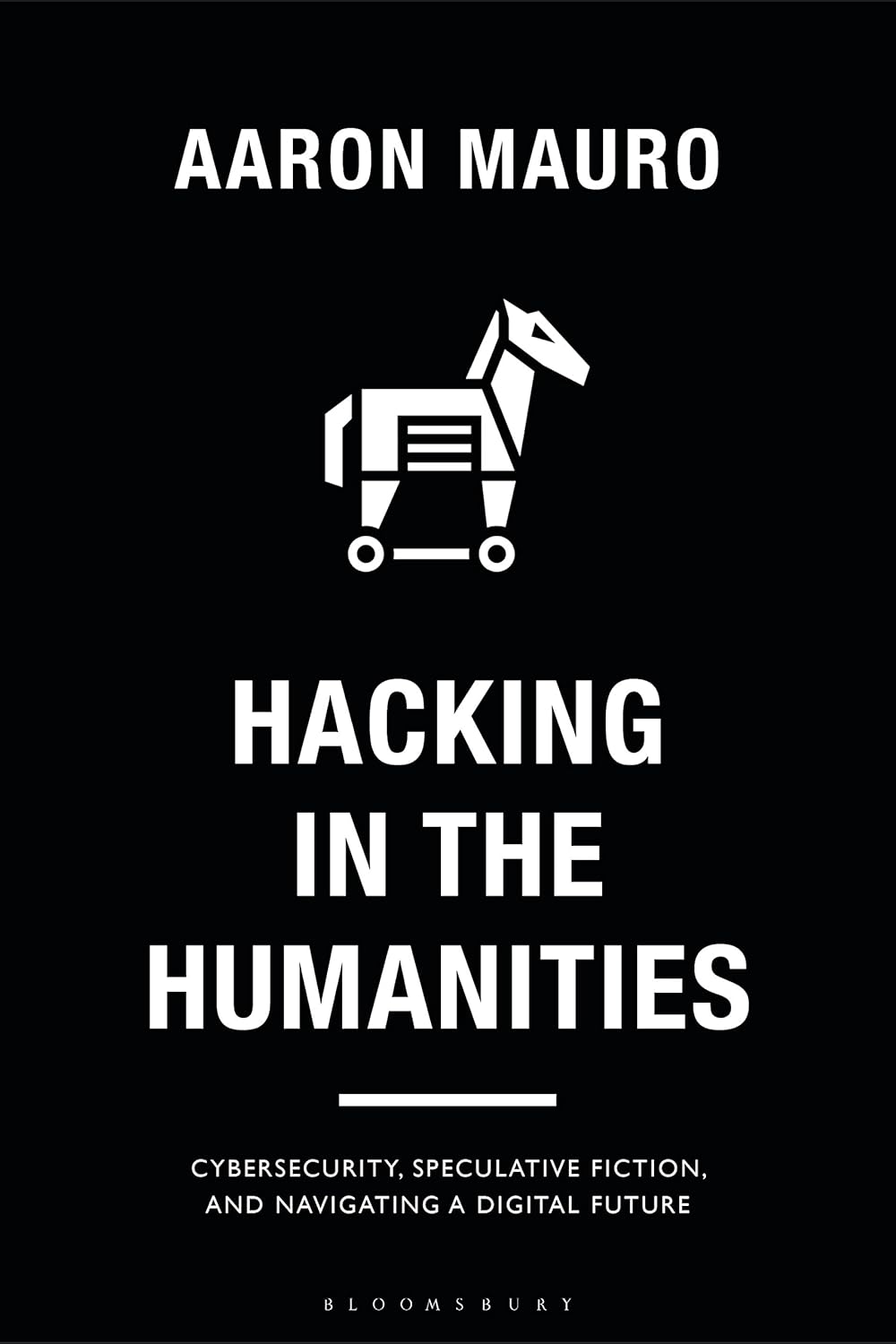
What would it take to hack a human? How exploitable are we? In the cybersecurity industry, professionals know that the weakest component of any system sits between the chair and the keyboard. This book looks to speculative fiction, cyberpunk and the digital humanities to bring a human — and humanistic — perspective to the issue of cybersecurity. It argues that through these stories we are able to predict the future political, cultural, and social realities emerging from technological change. Making the case for a security-minded humanities education, this book examines pressing issues of data security, privacy, social engineering and more, illustrating how the humanities offer the critical, technical, and ethical insights needed to oppose the normalization of surveillance, disinformation, and coercion. Within this counter-cultural approach to technology, this book offers a model of activism to intervene and meaningfully resist government and corporate oversight online. In doing so, it argues for a wider notion of literacy, which includes the ability to write and fight the computer code that shapes our lives.
Aaron Mauro's Hacking in the Humanities explores the intersection of cybersecurity, speculative fiction, and digital humanities, offering a unique perspective on how technology shapes political, cultural, and social realities. The book argues that speculative fiction and cyberpunk narratives provide valuable insights into the vulnerabilities of digital systems and the human element in cybersecurity. Mauro advocates for a security-minded humanities education, emphasizing the need for critical, technical, and ethical literacy to counter surveillance, disinformation, and coercion. Through discussions on topics like biohacking, cryptographic agility, and network sovereignty, the book presents a model of activism that resists corporate and governmental oversight in the digital age. If you're interested in the philosophical and practical implications of cybersecurity within the humanities, this book offers a compelling framework.
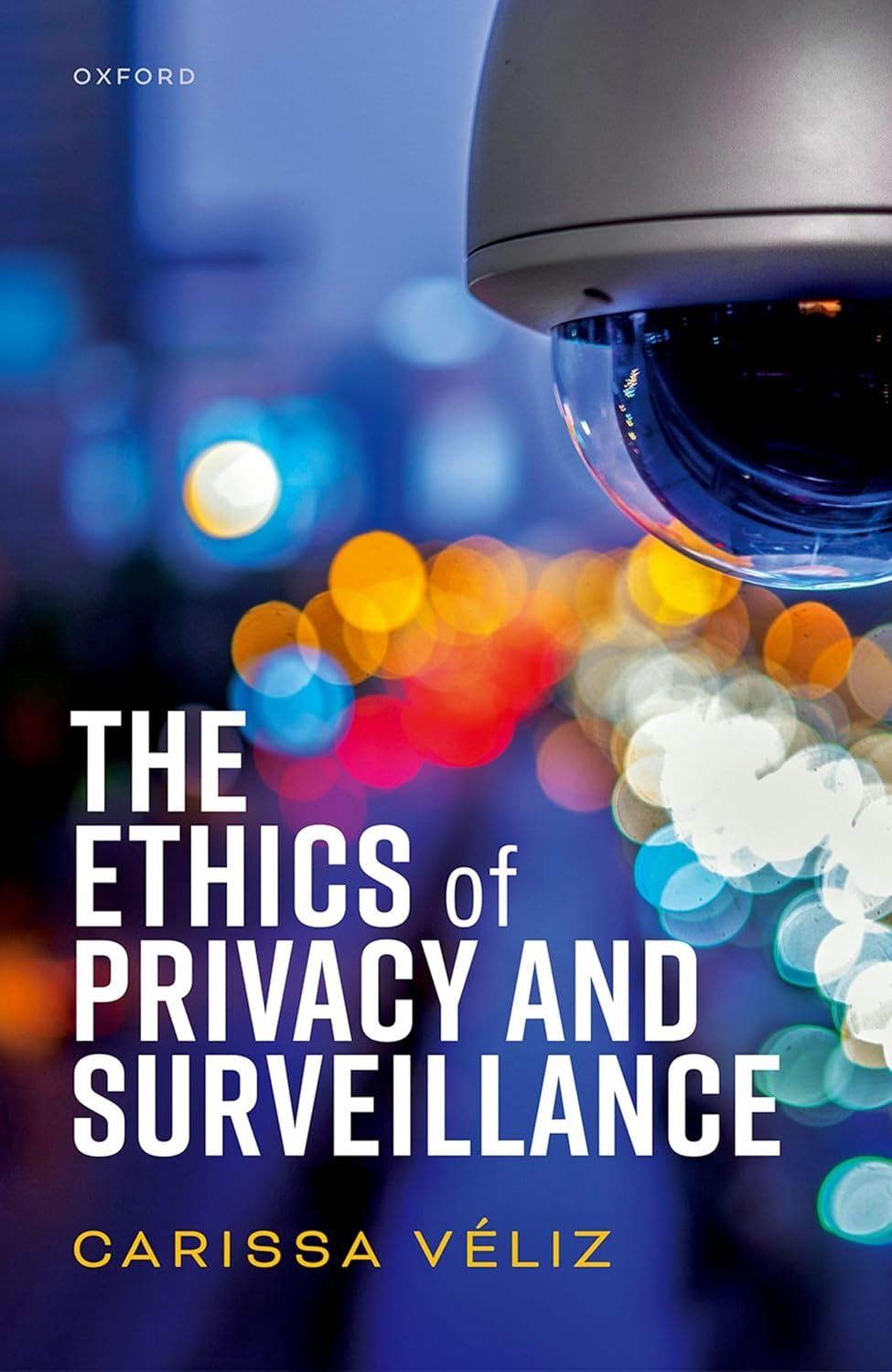 The Ethics of Privacy and Surveillance (Oxford Philosophical Monographs) by Carissa Véliz
 Privacy matters because it shields us from possible abuses of power. Human beings need privacy just as much as they need community. Our need for socialization brings with it risks and burdens which in turn give rise to the need for spaces and time away from others. To impose surveillance upon someone is an act of domination. The foundations of democracy quiver under surveillance.
Given how important privacy is for individual and collective wellbeing, it is striking that it has not enjoyed a more central place in philosophy. The philosophical literature on privacy and surveillance is still very limited compared to that on justice, autonomy, or equality-and yet the former plays a role in protecting all three values. Perhaps philosophers haven't attended much to privacy because for most of the past two centuries there have been strong enough privacy norms in place and not enough invasive technologies. Privacy worked for most people most of the time, which made thinking about it unnecessary. It's when things stop working that the philosopher's attention is most easily caught-the owl of Minerva spreading its wings only with impending dusk.
With the spread of machine learning, a kind of AI that often uses vast amounts of personal data, and a whole industry dedicated to the trade of personal data becoming one of the most popular business models of the 21st century, it's time for philosophy to look more closely at privacy.
This book is intended to contribute to a better understanding of privacy from a philosophical point of view-what it is, what is at stake in its loss, and how it relates to other rights and values. The five parts that compose this book respond to five basic questions about privacy: Where does privacy come from? What is privacy? Why does privacy matter? What should we do about privacy? Where are we now?
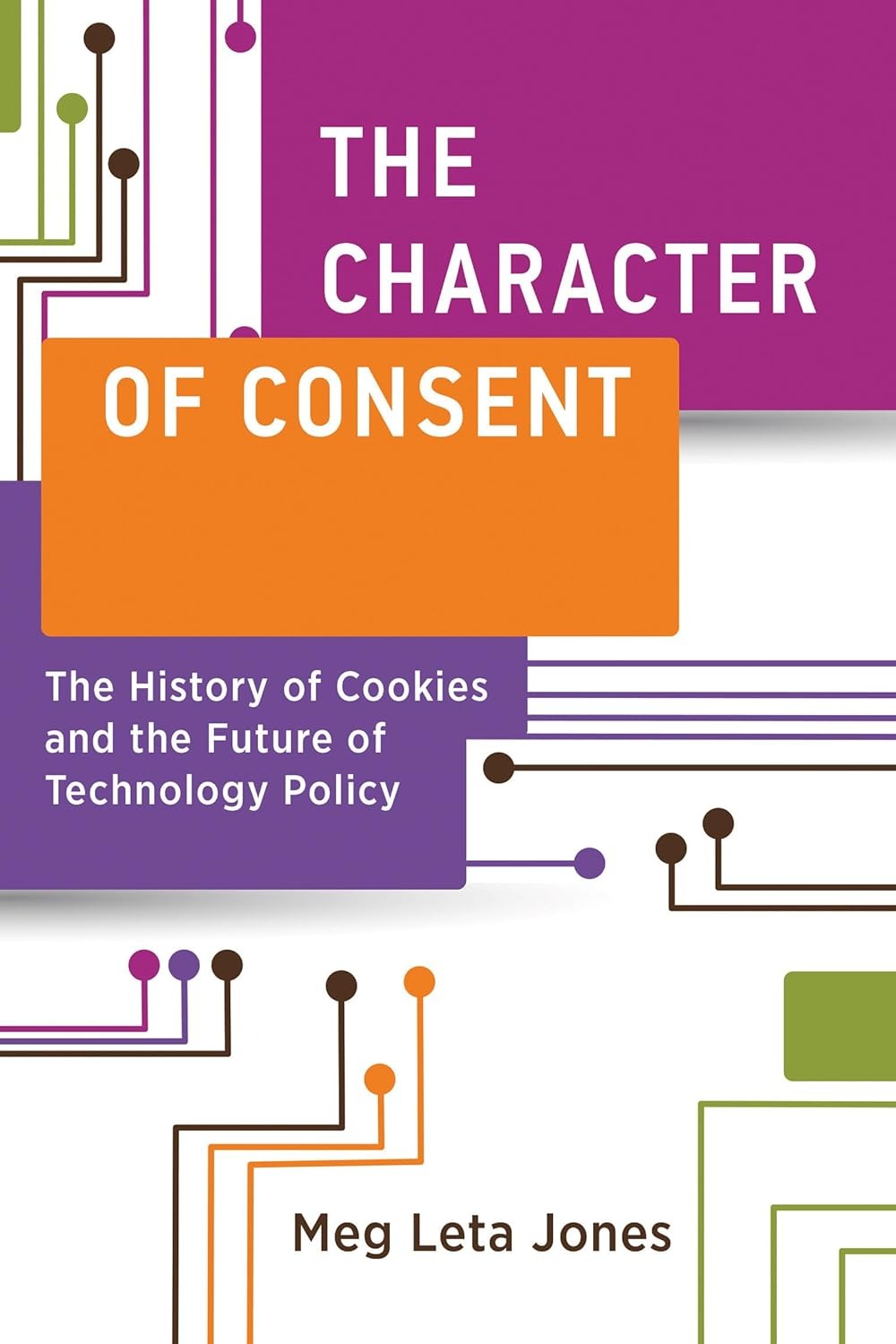
The rich, untold origin story of the ubiquitous web cookie—what’s wrong with it, why it’s being retired, and how we can do better.
Consent pop-ups continually ask us to download cookies to our computers, but is this all-too-familiar form of privacy protection effective? No, Meg Leta Jones explains in The Character of Consent, rather than promote functionality, privacy, and decentralization, cookie technology has instead made the internet invasive, limited, and clunky. Good thing, then, that the cookie is set for retirement in 2024. In this eye-opening book, Jones tells the little-known story of this broken consent arrangement, tracing it back to the major transnational conflicts around digital consent over the last twenty-five years. What she finds is that the policy controversy is not, in fact, an information crisis—it’s an identity crisis.
Instead of asking how people consent, Jones asks who exactly is consenting and to what. Packed into those cookie pop-ups, she explains, are three distinct areas of law with three different characters who can consent. Within (mainly European) data protection law, the data subject consents. Within communication privacy law, the user consents. And within consumer protection law, the privacy consumer consents. These areas of law have very different histories, motivations, institutional structures, expertise, and strategies, so consent—and the characters who can consent—plays a unique role in those areas of law. The Character of Consent gives each computer character its due, taking us back to their origin stories within the legal history of computing. By doing so, Jones provides alternative ways of understanding the core issues within the consent dilemma. More importantly, she offers bold new approaches to creating and adopting better tech policies in the future.
NEWS |
The US cybersecurity agency CISA, the FBI, EPA, and the DoE issued an alert to warn organizations of cyberattacks targeting the country’s oil and natural gas sector.
The observed attacks, the government agencies say, leverage basic intrusion techniques, but poor cyber hygiene within critical infrastructure organizations could lead to disruptions and even physical damage.
“CISA is increasingly aware of unsophisticated cyber actor(s) targeting ICS/SCADA systems within U.S. critical Infrastructure sectors (Oil and Natural Gas), specifically in Energy and Transportation Systems,” the cybersecurity agency notes.
The unsophisticated threat actors CISA is referring to are likely hacktivist groups – or hackers claiming to be hacktivists. In recent years, many such groups have targeted SCADA and other ICS that were left exposed to the internet and either completely unprotected or accessible with default passwords.
The US House of Representatives intensified its legislative push against Beijing, advancing a slate of China-related bills targeting industrial espionage, export controls, national security threats and alleged human rights abuses.
At the same time, lawmakers moved to deepen US ties with Taiwan and protect Falun Gong practitioners.
In a show of bipartisan consensus on China-related legislation, all bills were passed by voice vote. The bills had stalled in the Senate during the last Congress and must now win passage there, before they can head to the White House for enactment into law.
The renewed momentum comes as US-China tensions rise over tariffs imposed by President Donald Trump and the two nations’ accelerating competition for technological dominance.
US energy officials are reassessing the risk posed by Chinese-made devices that play a critical role in renewable energy infrastructure after unexplained communication equipment was found inside some of them, two people familiar with the matter said.
President Trump and Secretary of State Marco Rubio have orchestrated a vast restructuring of the National Security Council, reducing its size and transferring many of its powers to the State and Defense departments.
ARTICLES |
On paper, the first candidate looked perfect. Thomas was from rural Tennessee and had studied computer science at the University of Missouri. His résumé said he’d been a professional programmer for eight years, and he’d breezed through a preliminary coding test. All of this was excellent news for Thomas’ prospective boss, Simon Wijckmans, founder of the web security startup C.Side. The 27-year-old Belgian was based in London but was looking for ambitious, fully remote coders.
When the existence of Operation Paperclip was first revealed to the American public in 1946, the general consensus in the country was that it was a bad idea. Prominent figures, including former First Lady Eleanor Roosevelt, were vociferous in their disapproval. The United States had, after all, just fought a world war against the Nazis. They were the bad guys.
For the architects of Operation Paperclip, it wasn’t so cut-and-dried. In the larger terms of US national defense, the criteria for who could be classified as “the enemy” was quickly changing. Even before the fall of Berlin, American intelligence agents had begun quietly tracking down and recruiting Nazi scientists and engineers with expertise in electronics, medicine, aerospace, rocketry, chemistry, and other wartime technologies — expertise that could give the Western powers a greater edge in the burgeoning Cold War. In all, more than 1,600 Nazis were given safe haven in the United States so their skills and knowledge could be exploited to maintain American military superiority.
After The New York Times and Newsweek broke the news about Paperclip in 1946, government officials assured the American public that the individuals recruited in the operation were the “good Nazis,” insisting that none of them had been complicit in the atrocities committed by Hitler’s regime. In reality, however, there were a number of known war criminals among them, including some who had conducted human experiments, used slave labor, and even overseen the systematic murder of thousands.
Prime Minister Anthony Albanese’s decision to return policy responsibility for the Australian Security Intelligence Organisation and the Australian Federal Police to the Department of Home Affairs is more than a machinery-of-government change; it’s a long-term strategic recalibration in response to a rapidly intensifying threat landscape.
The move, previously advocated by ASPI executive director Justin Bassi, lays the foundation for a more integrated and future-ready national security system that can address the complex interplay between societal resilience and statecraft. In doing so, it matches the threats that confront Australia and effectively puts an end to the perception that Home Affairs is owned by one side of politics. In national security, a bipartisan approach to governing architecture is vital for public confidence, even where policies may divide.
The reform responds to a clear signal sent by the director-general of security’s 2025 Annual Threat Assessment: that several of the organisation’s ‘heads of security’ are flashing red, and more could soon follow. The convergence of foreign interference, cyber intrusions, espionage, terrorism and transnational crime demands a whole-of-nation response. These are no longer discrete risks to be managed by siloed agencies; they are networked threats that exploit cracks between institutions and jurisdictions.
The recruitment of women into the Special Operations Executive (SOE) during the Second World War marked a significant yet complex shift in British intelligence. While wartime necessity expanded opportunities for women in espionage, their recruitment remained shaped by entrenched gender biases. Women were scrutinised more heavily than their male counterparts, expected to meet higher linguistic and cultural standards, and often assessed based on their perceived ability to ‘pass’ unnoticed in occupied France. Drawing on primary sources, including archival material from the Imperial War Museum – and engaging with historiographical insights, this article examines the intersection of gender and operational necessity in SOE recruitment. It argues that while the SOE adapted to the demands of war by integrating women into covert roles, their inclusion remained constrained by societal expectations. Ultimately, while the SOE offered women unprecedented opportunities in military intelligence, their recruitment and assessment reflected broader societal constraints, highlighting both the evolving possibilities and persistent limitations of women’s roles in wartime espionage.
REPORT |
Welcome to the 2025 Space Threat Assessment by the Aerospace Security Project. This resource for policymakers and the public leverages open-source information to assess key developments in foreign counterspace weapons. Drawing on eight years of collected data and analyses, this report describes trends in the development, testing, and use of counterspace weapons and enables readers to develop a deeper understanding of threats to U.S. national security interests in space. Since the publication of the 2024 Space Threat Assessment, it may seem at first glance like there have been few headline-grabbing counterspace developments. But a closer look reveals that the past year has been anything but uneventful.
Rather than entirely new developments, the past year mostly witnessed a continuation of the worrisome trends discussed in prior reports, notably widespread jamming and spoofing of GPS signals in and around conflict zones, including near and in Russia and throughout the Middle East. Chinese and Russian satellites in both low Earth orbit and geostationary Earth orbit continue to display more and more advanced maneuvering capabilities, demonstrating operator proficiency and tactics, techniques, and procedures that can be used for space warfighting and alarming U.S. and allied officials. No information publicly surfaced revealing how close Russia might be to launching a nuclear anti-satellite capability, though the United States and its international partners remain concerned that Russia could decide to deploy such a weapon.
The United States is confronting an increasingly complex national security threat environment. In addition to traditional military modernization, developments in artificial intelligence (AI), biotechnology, quantum sciences, microelectronics, space, cyber, and unmanned systems are rapidly transforming the nature of conflict and the global threat landscape. Our adversaries are deepening cooperation, often lending military, diplomatic, and economic support to each other’s conflicts and operations, to circumvent U.S. instruments of power. Transnational criminal organizations and terrorist groups are exploiting geostrategic conditions to evade authorities.
Advanced technology also is enabling foreign intelligence services to target our personnel and activities in new ways. The rapid pace of innovation will only accelerate in the coming years, continually generating means for our adversaries to threaten U.S. interests.
OPINION |
The annual 2025 RSA Conference is fast approaching and as we prepare for the biggest event impacting cybersecurity professionals, I couldn’t fail to notice how the key themes over the past few years, including this year, really resonate with what we are seeing across the cybersecurity industry.
The key theme for this year’s event is “Many Voices. One Community”. And there really are many voices at RSA with 531 sessions, 600 exhibitors and more than 40,000 delegates. But this is a great anchor theme and one that is very close to my heart because it emphasizes the importance of sharing, collaboration, and unity within the cybersecurity sector.
Of course, like any major event, there’ll be lots of hype, noise and a flurry of announcements to sift through, but the reality is that big conferences, like RSA, really help to move the needle and drive the industry forward. Naturally, there will be all the major vendors who already have an established presence, but it is worth exploring the smaller booths – the startups – who will undoubtedly be showcasing new innovative ideas that could become tomorrow’s big idea.
That isn’t to say that the larger vendors don’t have the wherewithal to innovate, but they often fall into the ‘Innovator’s Dilemma.’ This happens when successful vendors focus too heavily on sustaining core products that serve their existing customer base, while neglecting disruptive innovations and technologies that initially target niche markets but eventually redefine whole industries. This is often because the cost to innovate is too high, compared to maintaining a focus on existing customers and your core business. Here smaller organizations can be more agile because they don’t yet have a large installed customer base to keep happy or an established market presence to address and maintain.
In his confirmation hearing on 15 January 2025, CIA Director John Ratcliffe was clear: China presents a ‘once-in-a-generation challenge’. This call to arms was reinforced just a few months later by Tulsi Gabbard, the new director of national intelligence (DNI), when she set out the intelligence community’s assessment that ‘China is our most capable strategic competitor’.
Ratcliffe’s appointment as director of the CIA, Gabbard as the DNI and Kash Patel as director of the FBI are seen by some as evidence of United States President Donald Trump’s fraught history with what he has called the ‘deep state’. These traditionally non-partisan posts are now held by individuals who share Trump’s view that government insiders have allegedly conspired against him. Notably, however, the appointments also provide Trump with an opportunity to make China the ‘organising principle’ for intelligence, and they signal an intention to impose a reorganisation of the intelligence community from the top down.
TALKS, WEBINARS & PRESENTATIONS |
Is Australia doing enough to make intelligence useful for policymakers, parliamentarians, and cabinet ministers?
How can Australia build an intelligence workforce with a diverse range of skills, interests and backgrounds, and reflective of our society?
How should Australia balance its intelligence independence with alliance integration?
In this episode Chris Taylor and Miah Hammond-Errey join Rory Medcalf to delve into the 2024 Independent Intelligence Review, discussing the role of intelligence in an uncertain world, the relationship between intelligence and policy, and the impact of technology on intelligence.
A top team of former government ministers and military and security chiefs have taken part in a wargame that simulates a Russian attack on the UK for a new podcast series by Sky News and Tortoise Media.
Among the line-up, Sir Ben Wallace, a former Conservative defence secretary, plays the prime minister; Jack Straw, a former senior Labour politician, resumes his old job as foreign secretary; Amber Rudd steps back into her former role as home secretary and Jim Murphy, a secretary of state for Scotland under Gordon Brown, takes the position of chancellor.
Back to the Resource Hub / Back to Links
The subjects, thoughts, opinions, and information made available in AIPIO Acumen reflect the authors' views, not those of the AIPIO.