
Back to the Resource Hub / Back to Links
The links below are organised by the month in which they are published
BOOKS |
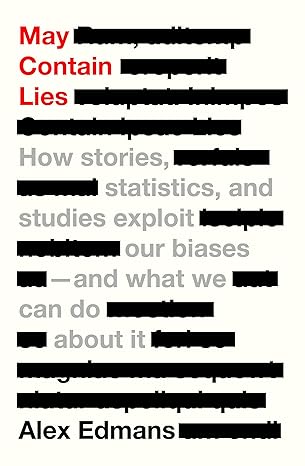
Our lives are minefields of misinformation. It ripples through our social media feeds, our daily headlines, and the pronouncements of politicians, executives, and authors. Stories, statistics, and studies are everywhere, allowing people to find evidence to support whatever position they want. Many of these sources are flawed, yet by playing on our emotions and preying on our biases, they can gain widespread acceptance, warp our views, and distort our decisions.
In this eye-opening book, renowned economist Alex Edmans teaches us how to separate fact from fiction. Using colorful examples—from a wellness guru’s tragic but fabricated backstory to the blunders that led to the Deepwater Horizon disaster to the diet that ensnared millions yet hastened its founder’s death—Edmans highlights the biases that cause us to mistake statements for facts, facts for data, data for evidence, and evidence for proof.
Armed with the knowledge of what to guard against, he then provides a practical guide to combat this tide of misinformation. Going beyond simply checking the facts and explaining individual statistics, Edmans explores the relationships between statistics—the science of cause and effect—ultimately training us to think smarter, sharper, and more critically. May Contain Lies is an essential read for anyone who wants to make better sense of the world and better decisions.
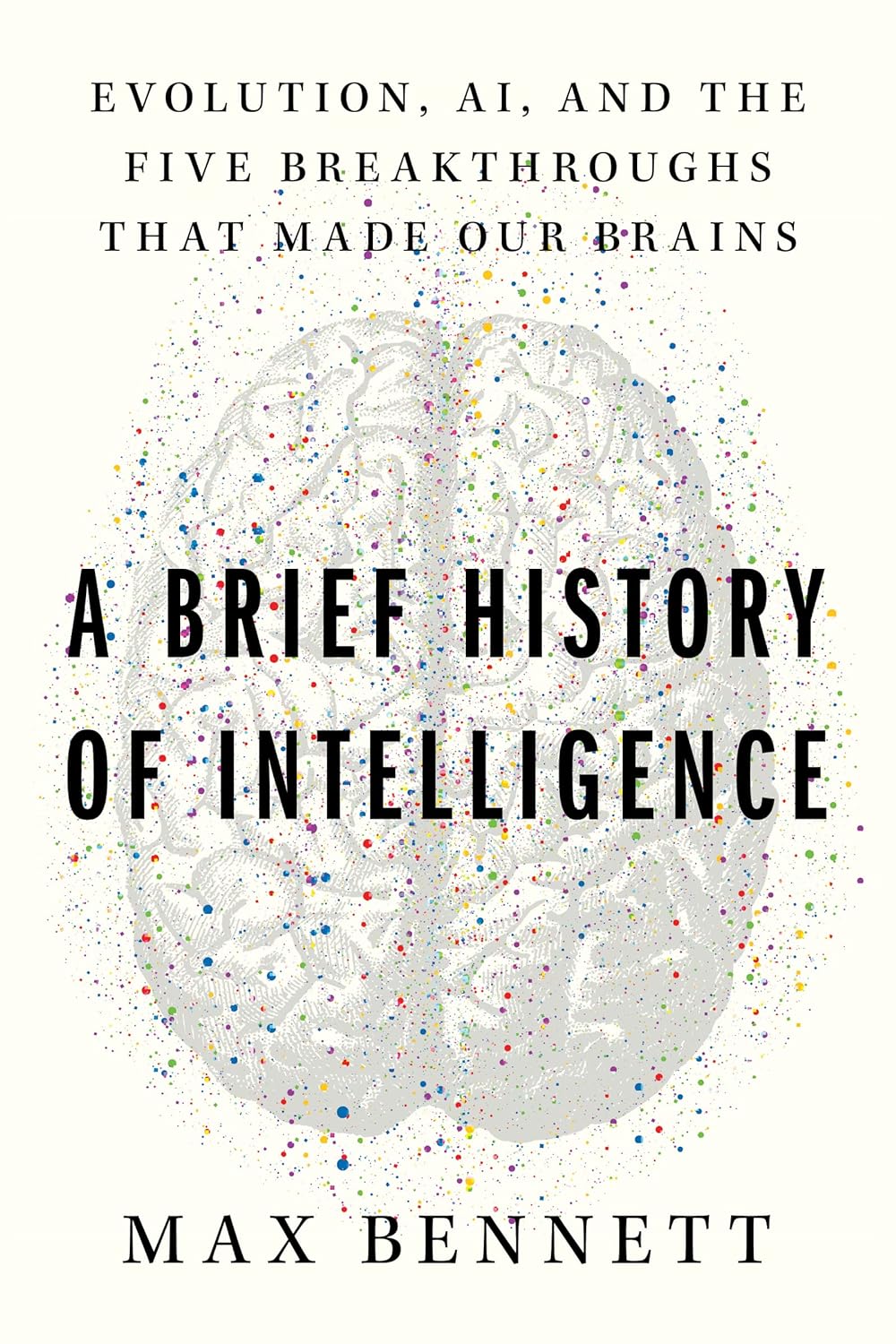
In the last decade, capabilities of artificial intelligence that had long been the realm of science fiction have, for the first time, become our reality. AI is now able to produce original art, identify tumors in pictures, and even steer our cars. And yet, large gaps remain in what modern AI systems can achieve—indeed, human brains still easily perform intellectual feats that we can’t replicate in AI systems. How is it possible that AI can beat a grandmaster at chess but can’t effectively load a dishwasher? As AI entrepreneur Max Bennett compellingly argues, finding the answer requires diving into the billion-year history of how the human brain evolved; a history filled with countless half-starts, calamities, and clever innovations. Not only do our brains have a story to tell—the future of AI may depend on it.
Now, in A Brief History of Intelligence, Bennett bridges the gap between neuroscience and AI to tell the brain’s evolutionary story, revealing how understanding that story can help shape the next generation of AI breakthroughs. Deploying a fresh perspective and working with the support of many top minds in neuroscience, Bennett consolidates this immense history into an approachable new framework, identifying the “Five Breakthroughs” that mark the brain’s most important evolutionary leaps forward. Each breakthrough brings new insight into the biggest mysteries of human intelligence. Containing fascinating corollaries to developments in AI, A Brief History of Intelligence shows where current AI systems have matched or surpassed our brains, as well as where AI systems still fall short. Simply put, until AI systems successfully replicate each part of our brain’s long journey, AI systems will fail to exhibit human-like intelligence.
Endorsed and lauded by many of the top neuroscientists in the field today, Bennett’s work synthesizes the most relevant scientific knowledge and cutting-edge research into an easy-to-understand and riveting evolutionary story. With sweeping scope and stunning insights, A Brief History of Intelligence proves that understanding the arc of our brain’s history can unlock the tools for successfully navigating our technological future.
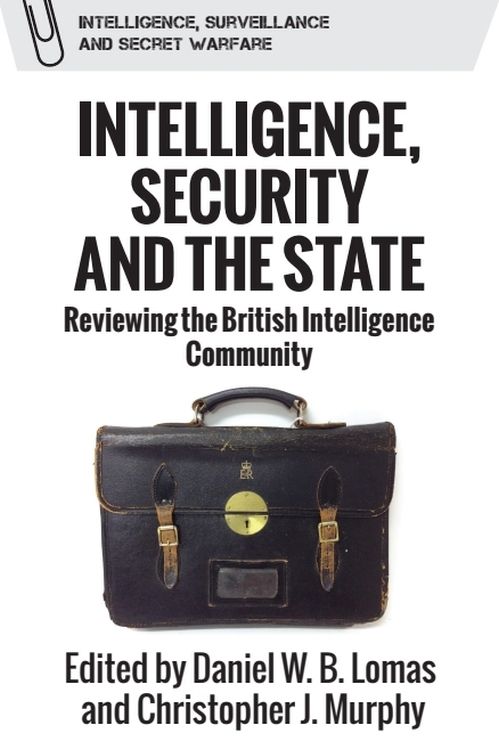 Intelligence, Security and the State Reviewing the British Intelligence Community, edited by Daniel W.B. Lomas, Christopher J. Murphy
 Offers a unique insight into the history and politics of British intelligence: 20 chapters each explore specific reviews of the UK intelligence community, providing an overview of the development of British intelligence. Each chapter reproduces significant extracts from these reviews, with introductory essays drawing on archival documents and the latest academic research to provide wider context. Covers a period of British intelligence history from the origins of the modern-day community in 1909 through to the fallout from the Iraq War. Essential reading for students and academics looking at the machinery of government, UK intelligence, and comparative studies of intelligence agencies
The modern-day UK intelligence and security community is the product of over a century of reviews going back to Edwardian spy scares, through two World Wars, and a Cold War. Written by intelligence experts, Intelligence, Security and the State provides an insight into the development of UK intelligence through a selection of the many intelligence reviews that have taken place during this period. How and why these reviews were commissioned and their impact, if any, is analysed in detail. The reviews cover the origins and early development of the community, alongside the political, operational, and financial oversight of British intelligence. Each of the declassified reviews, reproduced here for the first time, are introduced by short essays giving a wider understanding of the UK intelligence community. The book offers a detailed insight into the machinery of government in the UK and British intelligence as a whole.
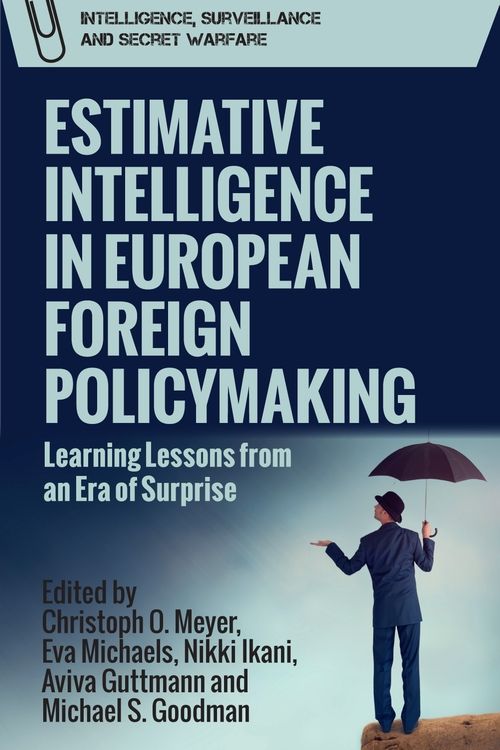
The first comparative study of estimative intelligence and strategic surprise in a European context, complementing and testing insights from previous studies centred on the United States. This is an extensive empirical analysis of open-source material and interviews in relation to three cases of major surprise: Arab uprisings, ISIS’ rise to power in Syria and Iraq, and the Russian annexation of Crimea. New theoretical insights into the causes of surprises and performance problems going beyond the debate about intelligence versus policy failures with contributions from former senior officials from the UK, Germany and the EU. Identifies main causes of surprise among intelligence analysts and external experts challenging previous findings and accounts
This book provides the first assessment of the performance of three leading European polities in providing estimative intelligence during an era of surprise. It develops a new framework for conducting postmortems guided by a normative model of anticipatory foreign policy. The comparative analysis focuses on how the UK, the EU and Germany handled three cases of major surprises: the Arab uprisings, the rise to power of the Islamic State (ISIS), and the Russian annexation of Crimea. It considers not just government intelligence assessments, but also diplomatic reporting and expert open sources and how these assessments were received by organisational leaders. The book tests and develops new theories about the causes of strategic surprises, going beyond a common focus on intelligence versus policy failures to identify challenges and factors that cut across both communities. With the help of former senior officials, the book identifies lessons yet to be learnt by European polities to better anticipate and prepare for future surprises.
NEWS |
Climate change is driving an enormous increase in the cost of insurance with premiums massively outpacing price rises for nearly all other goods and services, making it unaffordable for many Australians.
In 2022, Australians claimed more than seven billion dollars on their home insurance – almost double the previous record – after a string of major floods across the east of the country.
In response, home insurance premium rose by at least 14% on average, the biggest rise in a decade.
In the major capital cities, rising insurance costs over recent decades have massively outpaced broader price rises.
In Brisbane, insurance costs have increased by more than five times the Consumer Price Index (CPI), and in Melbourne, the city least impacted by climate change, by nearly three times.
The handoff was quick and seamless, a coffee cup containing the DNA of a suspected Russian spy swapped for an identical one in a hallway exchange between a CIA operative and an FBI agent.
The move was textbook spycraft, but everything else about the scenario was extraordinary: The handoff went down within the bowels of CIA headquarters, and the suspected mole was one of the agency’s own – but so was the man tasked with catching him.
The target was Harold ‘Jim’ Nicholson, a charismatic career spy and devoted single dad who’d been working for the CIA for 16 years. He’d end up serving even more time than that in prison.
The CIA colleague who’d swiped the coffee cup from his desk was John Maguire, a former Baltimore cop who’d carved out a counterrorism niche within the spy agency.
Maguire had been recalled from overseas by CIA superiors – banished to HR as punishment, he’d thought, for rejecting a posting in Pakistan in autumn 1995 – before being called into a secret meeting at Langley, asked if he’d accept an unidentified job, then whisked to an off-site location.
A white beluga, long suspected of being a Russian spy, may have been involved in a secret Kremlin mission in the Arctic, a documentary has claimed.
The whale, nicknamed Hvaldimir - a blend of the Norwegian word for whale, "hval", and Russian President Vladimir Putin's first name - was found dead in southern Norway’s Risavika Bay in September.
Hvaldimir, who stood at an impressive 14ft and weighed a staggering 2,700lbs had to be whisked out of the water with a crane.
But the infamous whale's death didn't put a halt to the mysteries surrounding its ties with Russia.
It is now thought the beluga may have been guarding Kremlin property in the Arctic, according to a new BBC documentary.
Hvaldimir first gained international attention in April 2019 when he was spotted near the Norwegian island of Ingoya wearing a harness equipped with a mount for a camera.
Donald Trump has long viewed the nation’s spy services with suspicion, accusing them of trying to undermine his first term and campaigns. Now that he’s returning to the White House, Trump’s promises to overhaul the U.S. intelligence agencies put him on a collision course with one of most secretive and powerful parts of government.
For the CIA and other intelligence agencies, the start of Trump’s second administration is a way to reset an often challenging relationship with a leader who has in the past dismissed them as the deepest of the deep state — Trump’s label for the thousands of career federal employees that carry out the work of government regardless of who is president.
For Trump, the return to power offers an opportunity to follow through on promises to clean house of officials that he believes have tried to challenge his leadership and criticize his actions.
ARTICLES |
Human Intelligence (HUMINT) sources may be questioned multiple times. However, criminal and military interrogation research focuses on single-instance interrogations. The current study employed a role-playing paradigm to examine the effect of interrogation approach on various elicitation-relevant outcomes and information gain across repeated questioning sessions using a direct approach and the Scharff Technique. In the study scenario, participants (N = 68) were given information on an extremist group planning a bombing, were given an information management dilemma, and were subsequently questioned. Participants in the Scharff Technique condition were questioned using the Scharff Technique at Time 1 and direct questioning at Time 2. Direct Approach condition participants received direct questioning at both times. All participants provided a greater information contribution at Time 2 compared to Time 1, regardless of assigned condition. Compared to participants in the Direct Approach condition, participants in the Scharff Technique condition perceived Time 1 interrogators as more knowledgeable and Time 2 interrogators as less knowledgeable. This suggests a backfire effect when switching from the Scharff technique to direct questioning. Interrogators should carefully consider the decision to employ the Scharff technique if it may be followed up with more traditional questioning approaches.
For years, it's been an inconvenient truth within the cybersecurity industry that the network security devices sold to protect customers from spies and cybercriminals are, themselves, often the machines those intruders hack to gain access to their targets. Again and again, vulnerabilities in “perimeter” devices like firewalls and VPN appliances have become footholds for sophisticated hackers trying to break into the very systems those appliances were designed to safeguard.
Now one cybersecurity vendor is revealing how intensely—and for how long—it has battled with one group of hackers that have sought to exploit its products to their own advantage. For more than five years, the UK cybersecurity firm Sophos engaged in a cat-and-mouse game with one loosely connected team of adversaries who targeted its firewalls. The company went so far as to track down and monitor the specific devices on which the hackers were testing their intrusion techniques, surveil the hackers at work, and ultimately trace that focused, years-long exploitation effort to a single network of vulnerability researchers in Chengdu, China.
The ongoing Undercover Policing Inquiry (UCPI) is largely a response to a stream of national media scandals that exposed the illegal and unethical behaviour of undercover police officers in two secretive units. The testimony of those who were the targets of undercover operations has further exposed the human costs stemming from the personalised and highly invasive surveillance undertaken by anonymous state agents. In this article, we reflect upon the existing research on covert policing and identify new areas for conceptual and methodological engagement, with a view to better understanding the harms that these secretive operations can generate. Attending to the inherent and inescapable intimacy of covert policing offers a much-needed opportunity to explore the effects of a unique state practice that can radically alter the lives of individual surveillance subjects, and which tests our conventional understandings of the legitimacy and limits of force, coercion and police power.
The ASIO has zero tolerance for fraudulent or corrupt behaviour and treats both suspected and actual fraud and corruption seriously. In line with ASIO’s Corporate Plan, ‘ASIO protects Australia and Australians from threats to their security’. We do not just do what is legal, we do what is right.
ASIO’s fraud and corruption control framework has been designed to enhance and support the integrity of the Organisation. Fraud and corruption have the potential to undermine the integrity and reputation of the Organisation, reduce the resources available for delivering on ASIO’s key priorities, and place public safety at risk.
REPORT |
The Washington Post reported that the hackers intercepted calls and texts of Trump team adviser
Chinese state-affiliated hackers intercepted audio from the phone calls of US political figures including an unnamed campaign adviser of Republican presidential candidate Donald Trump, The Washington Post newspaper reported. The Federal Bureau of Investigation (FBI) and the US Cybersecurity and Infrastructure Security Agency said on Friday they were investigating unauthorised access to commercial telecommunications infrastructure by people associated with China. Trump’s campaign and the FBI did not immediately respond to a request for comment.
The Post also reported the hackers were able to access unencrypted communications, such as text messages, of the individual. Reuters reported that Chinese hackers also targeted phones used by people affiliated with the campaign of Democratic presidential candidate Kamala Harris. Trump and his running mate, J.D. Vance, were targeted, various media outlets reported.
By 2040, organized crime may thrive like never before, exploiting climate crises, geopolitical conflicts, and technological advancements. Our latest report reveals a chilling forecast where criminal networks operate as shadow governments, shielded by authoritarian regimes and empowered by rapid technological evolution.
This “fifth wave” of organized crime, as coined by author Phil Williams, will capitalize on scarcity markets, leveraging disruptions in essential resources like water, minerals, and energy caused by climate change. Criminal networks are expected to infiltrate legitimate markets, blurring lines between lawful and illicit activities and using scarcity as a driving force for growth.
The report suggests that by leveraging emerging tools such as artificial intelligence, autonomous vehicles, and 5G technology, criminal organizations will achieve new levels of sophistication, making it difficult for law enforcement to counter their reach and resilience. Meanwhile, geopolitical tensions are likely to exacerbate the situation, as some authoritarian regimes utilize criminal networks as extensions of state power, offering them safe havens and strategic support in exchange for destabilizing activities abroad.
OPINION |
Since the 2022 election, commentators and reporters have debated whether the wave of new independents was part of a broader movement or just the reflection of a moment.
Elections in the ACT and on the northern beaches of Sydney suggest a movement is on foot.
Canberrans elected two independents, whose vote swelled at the expense of both major parties and the Greens. In the NSW state electorate of Pittwater, the community (or “teal”) independent Jacqui Scruby was victorious in what was, until recently, a safe Liberal seat.
The shift is part of a decades-long decline in the major party vote. At the 1990 federal, election just 9 per cent voted for a minor party or independent. In 2022 the figure was 32 per cent, not far short of the primary votes for Labor and the Liberal-National Coalition.
With the Labor government in the ACT approaching a quarter-century of rule (sharing power with the Greens for most of that time), proportional representation allowed Canberrans to elect a counter-veiling force without replacing the government with the Liberal opposition.
While the two independents will not hold balance of power, as parliamentarians they can influence parliamentary debate, propose legislation and question the executive.
Gradual deconstruction of the once epic Department of Home Affairs has continued in earnest after a key review into the Australian Criminal Intelligence Commission (ACIC) recommended the elite federal organised crime-busting agency lead the production of intelligence about the impact of serious and organised crime on the border.
The long-awaited report, compiled by former Defence Signals Directorate chief and respected intelligence experts Stephen Merchant and Greg Wilson, says ACIC needs to become a top-flight intelligence-collection, analysis and distribution agency that feeds into other forces and agencies.
Merchant found that the lack of clarity in the commission’s role and priorities, plus its complex and outdated legislation and governance arrangements have limited its effectiveness in performing its core function as an intelligence agency and diminished the value of the strategic intelligence it provides to partners.
The problem isn’t so much that ACIC’s capability has diminished, rather, many other police forces, like the states, now also have broadly similar statutory authority, including so-called ‘star chamber’ powers that can compel the production of evidence and seize assets until they are proven to be legitimate.
TALKS, WEBINARS & PRESENTATIONS |
Here on SpyCast, we’ve made an active effort to bring you up to date and relevant conversations on what’s been called the “new frontier” of intelligence – OSINT. While the rise of open-source intelligence over the past decade has certainly been supported by the intelligence community, it has perhaps been most championed by independent and passionate actors in the private sector.
In this episode, we bring you a conversation with Eliot Higgins, founder of the groundbreaking investigative journalism website Bellingcat – An “intelligence agency for the people.” You’ve undoubtedly heard us talk about Bellingcat on the show before, but never like this. Straight from its founding father, tune in to learn more about the fascinating work of Bellingcat and the many journalists that contribute to it.
In the third video edition of The Sydney Dialogue Summit Sessions, Jason Healey, Senior Research Scholar at the School of International and Public Affairs at Columbia University, sits down with Admiral Michael Rogers (Ret’d), Senior Advisor at Trusted Future, to discuss all things intelligence.
Jason was a founding member of both the Office of the National Cyber Director at the White House and the first cyber command in the world, the Joint Task Force for Computer Network Defense, while Michael is a former Commander of the US Cyber Command and Director of the US National Security Agency.
The conversation explores how Michael’s career began as a surface warfare officer and how he made the transition into the world of intelligence, as well as how signals intelligence has changed over time and whether it will stay the same in the decades ahead.
With Australia no longer having a 10‑year window of strategic warning time ahead of major conflict, they also talk about intelligence and warning. Jason asks Michael how intelligence can provide better warning and whether the job is becoming more difficult as the world becomes more complex.
Jason and Michael were both panellists at The Sydney Dialogue, ASPI’s premier policy summit for critical, emerging and cyber technologies, held on September 2 and 3. This special episode is the third in a series of podcasts filmed on the sidelines of the conference, which will be released in the coming weeks.
Back to the Resource Hub / Back to Links
The subjects, thoughts, opinions, and information made available in AIPIO Acumen reflect the authors' views, not those of the AIPIO.