
Back to the Resource Hub / Back to Links
The links below are organised by the month in which they are published
BOOKS |
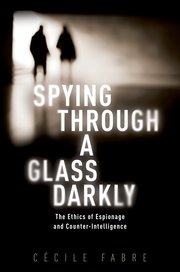
Cécile Fabre’s Spying Through a Glass Darkly: The Ethics of Espionage and Counter-Intelligence is a groundbreaking work of applied moral and political philosophy that tackles the long-neglected ethical dimensions of intelligence operations. Drawing from historical examples and philosophical reasoning, Fabre argues that espionage and counter-intelligence can be morally justified—and in some cases, morally required—when they serve to prevent or respond to violations of fundamental human rights.
The book opens with biblical and historical references, from Moses’s reconnaissance of Canaan to Cold War spycraft and modern cyber operations, establishing espionage as a timeless and essential element of statecraft. Despite its ubiquity, Fabre notes a surprising lack of serious philosophical inquiry into the ethics of spying. Her central thesis is twofold: first, that intelligence activities are morally permissible only when they meet the criteria of necessity, effectiveness, and proportionality; and second, that when these conditions are met, such activities may become morally obligatory.
Fabre scrutinizes a wide range of intelligence practices—deception, treason, recruitment, blackmail, hacking, and mass surveillance—through the lens of rights-based ethics. She asks whether it is ever morally acceptable to manipulate or betray others in the pursuit of national security, and whether economic espionage or cyber-intrusions can be justified in defense of public welfare. Her analysis is rigorous yet accessible, blending normative theory with real-world dilemmas faced by intelligence professionals.
A particularly compelling section addresses the “accountability conundrum”: how can democratic societies ethically oversee secretive institutions whose very effectiveness depends on concealment? Fabre suggests that ethical intelligence work requires not only institutional checks and balances but also the cultivation of moral awareness among operatives and citizens alike.
Throughout the book, Fabre maintains a delicate balance—neither romanticizing espionage nor condemning it outright. Instead, she offers a nuanced framework for evaluating when and how intelligence activities can align with liberal democratic values. Her work is especially relevant in an era of expanding surveillance, privatized intelligence, and blurred lines between war and peace.
For scholars, practitioners, and ethically engaged citizens, Spying Through a Glass Darkly provides a vital philosophical foundation for navigating the moral terrain of modern intelligence. It’s a call to think deeply about the hidden mechanisms of power—and the ethical costs of protecting it.

Topics and Approaches to Studying Intelligence, edited by Andrew Macpherson and Glenn P. Hastedt, is a timely and expansive academic volume that reflects the dynamic evolution of intelligence studies as a multidisciplinary field. Published in 2024 by Vernon Press, the book brings together leading scholars to explore the theoretical, methodological, and institutional dimensions of intelligence work, offering fresh insights into both traditional and emerging areas of inquiry.
The editors frame the book around the idea that intelligence studies are undergoing a period of significant expansion—not just in terms of geopolitical relevance, but also in academic rigor and diversity of perspectives. The chapters are organized to highlight key debates, methodological innovations, and underexplored topics that are reshaping how intelligence is understood and taught.
One major theme is the broadening of analytic tradecraft, with contributors examining both qualitative and quantitative methods used in intelligence analysis. This includes structured analytic techniques, predictive modeling, and decision-making frameworks that enhance the reliability of intelligence assessments.
Another focal point is the role of alliances and private-sector intelligence, where the book explores how non-state actors and corporate entities are increasingly involved in intelligence collection and analysis. This shift raises questions about legitimacy, oversight, and the blurring of lines between public and private intelligence domains.
The volume also delves into gendered practices within intelligence agencies, offering a sociological lens on occupational closure, representation, and the cultural dynamics that shape intelligence work. These chapters challenge traditional narratives and advocate for more inclusive approaches to intelligence scholarship.
Further topics include accreditation and pedagogy in intelligence education, the ethics of intelligence disclosure for diplomacy, and the complexities of nuclear-related intelligence sharing, particularly through institutions like the IAEA. These discussions underscore the importance of institutional design, transparency, and international cooperation in shaping effective and ethical intelligence systems.
Overall, Topics and Approaches to Studying Intelligence serves as both a foundational text and a forward-looking guide for scholars, practitioners, and students. It encourages critical reflection on the nature of intelligence itself—what it means to know, predict, and act in the face of uncertainty—and how academic inquiry can contribute to more informed and responsible intelligence practices.
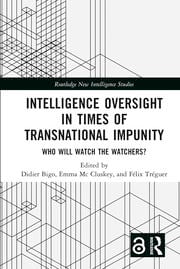
A provocative and interdisciplinary examination of how intelligence oversight functions—or fails—in Western democracies amid growing transnational cooperation and impunity.
The book challenges conventional approaches in intelligence studies, which often treat oversight as a technical or procedural safeguard. Instead, the editors and contributors argue that oversight mechanisms frequently legitimize secret state violence rather than constrain it. Drawing from political sociology, law, and history, the volume reframes oversight as a system that can enable impunity, especially when intelligence agencies operate across borders and within loosely regulated transnational networks.
One of the central themes is the concept of raison d’état—the idea that state survival justifies extraordinary measures, even those that violate legal and moral norms. This principle, the book argues, underpins many intelligence practices and is often invoked to shield agencies from scrutiny. Intelligence scandals, rather than curbing power, tend to reinforce it. Agencies portray themselves as stabilizers during crises, using public fear to expand their mandates and evade accountability.
The book also explores how secrecy, organizational loyalty, and mission-driven culture create environments where oversight is not only resisted but actively undermined. For example, Ronja Kniep’s chapter illustrates how Germany’s BND reacted defensively to legal challenges, dismissing claimants as “litigation fools” and mocking international oversight efforts.
Across case studies from the UK, US, France, and broader Europe, the contributors show how oversight bodies are often co-opted or sidelined. Legal frameworks are manipulated, and human rights mechanisms are either ignored or rendered ineffective. Yet, the book doesn’t stop at critique—it also highlights emerging legal innovations and civil society efforts aimed at closing oversight gaps. These include transnational advocacy networks and judicial interventions inspired by anti-torture campaigns.
Ultimately, Intelligence Oversight in Times of Transnational Impunity is a call to rethink how democratic societies monitor their most secretive institutions. It urges scholars, policymakers, and citizens to confront the uncomfortable reality that oversight, as currently practiced, may serve more to protect intelligence agencies than to restrain them. The book is essential reading for anyone interested in the intersection of security, law, and democratic accountability.
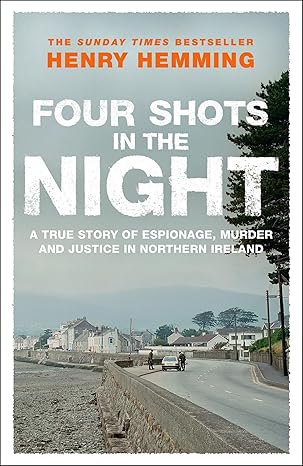 Four Shots in the Night: A True Story of Stakeknife, Murder and Justice in Northern Ireland by Henry Hemming
A gripping and deeply researched account of one of the most controversial intelligence operations during the Troubles—a period of sectarian conflict in Northern Ireland. At its heart is the 1986 murder of Frank Hegarty, an IRA member turned British informant, whose body was found in broad daylight with tape over his eyes and four bullets in his head.
Hemming reconstructs the events surrounding Hegarty’s death, revealing a tangled web of espionage, betrayal, and state complicity. Hegarty had been recruited by British intelligence to infiltrate the IRA and report on arms movements. His handler was part of the Force Research Unit (FRU), a covert British Army group tasked with running agents inside paramilitary organizations. Hegarty’s intelligence led to the discovery of hidden IRA weapons caches in the Republic of Ireland, but this success came at a cost: his exposure and eventual assassination.
The book’s most explosive claim centers on Freddie Scappaticci, code-named “Stakeknife,” a high-ranking IRA enforcer who secretly worked for British intelligence. Scappaticci led the IRA’s internal security unit—the feared “Nutting Squad”—responsible for identifying and executing informants. Hemming suggests that Scappaticci may have been the very man who ordered or carried out Hegarty’s killing, raising disturbing questions about how far British intelligence was willing to go to protect its assets and manipulate outcomes.
Hemming also explores the political backdrop, including the Anglo-Irish Agreement signed by Margaret Thatcher, which aimed to improve security cooperation between Britain and Ireland. He speculates that Hegarty’s handlers may have deliberately leaked his intelligence to Irish authorities to demonstrate the agreement’s effectiveness—even if it meant sacrificing their own agent.
Using archival material, interviews, and findings from a recent police investigation, Hemming paints a vivid picture of Derry’s tight-knit, secretive community and the broader intelligence war that shaped the endgame of the Troubles. The book challenges the conventional narrative that peace came solely through diplomacy, suggesting instead that spies and informants played a decisive, if morally ambiguous, role.
Four Shots in the Night is both a page-turner and a sobering meditation on justice, loyalty, and the hidden costs of counterinsurgency. It raises urgent questions about accountability and the ethical boundaries of state power in times of conflict.
NEWS |
The Economist found that the dismissal of the officer, who managed hundreds of analysts and other personnel, has alarmed many current intelligence staff. Losing security clearance is a "career ender", said former CIA officer Larry Pfeiffer, whose clearance was also revoked. Many officers rely on their clearance after retirement so they can work in consulting positions.
In April, Gabbard’s assistant reportedly pressured analysts to adjust their assessments of the Tren de Aragua gang to align with Trump’s policies. In June, the president also criticised leaks of intelligence estimates from the US Defense Intelligence Agency that contradicted his claims about the destruction of Iranian nuclear facilities.
"Many of the 37 targeted officials had worked on Russia only tangentially and a long time ago. Mr Nguyen was the chief data scientist at the National Security Agency (NSA), America’s signals-intelligence service. Weeks earlier insiders had told The Economist that he was 'the most thoughtful person on AI in the federal government'. That agency’s director, General Tim Haugh, and its top lawyer, April Doss, were fired in April and July respectively. Others appear to be on the list for no other reason than their criticism of Mr Trump."
As authorities continue to hunt for the gunman accused of killing two police officers in rural Victoria, a leading expert warns regional Australia has become fertile ground for the growing sovereign citizen movement and other extreme ideological groups. Police were executing a search warrant in the High Country town of Porepunkah when Dezi Freeman allegedly fatally shot a detective and a senior constable, before absconding into the bush.
Authorities have confirmed the suspect, who remains at large, is known to police as a self-proclaimed sovereign citizen. In general terms, sovereign citizens believe government is illegitimate and that individuals are not subject to federal, state, or local laws. They often espouse anti-government views and refuse to pay taxes, parking fines and rates.
While the history of the movement in Australia dates back to the 1970s, researchers and law enforcement agencies say there has been a sharp rise since the COVID pandemic.
Australia’s legislative watchdog for intrusive spying and policing powers has called out deficiencies in safeguards for “special cybercrime powers used by the Australian Federal Police and Australian Criminal Intelligence Commission” in a wake-up call for how cops crack down and obtain evidence relating to digital criminality.
As the line between state-backed interference, theft and coercion in the digital real continues to become increasingly blurred – the expulsion of Iranian diplomats from Australia accused of using criminal networks to pursue local social unrest being a case in point – the role of federal law enforcement in national security operations has again come under the spotlight.
“The Monitor found the powers, that allow agencies to takeover online accounts, disrupt data and conduct broad network surveillance are needed but that the current system for issuing warrants is not fit for the demands of modern, covert, highly intrusive and technology-dependent police powers,” the Independent National Security Legislation Monitor (INSLM) said in a statement this week.
The statement issued by INSLM Jake Blight effectively puts law enforcement agencies using the extensive intrusive cyber powers on notice that they will either have to seek to authorisation for their activities clarified under law or potentially face legal challenges to their current activities.
It’s no small academic point either given recent revelation that for-hire criminal networks have been harnessed to conduct attacks on ethnic and faith communities in an effort to mask the true origin of hostile actions.
The ransomware ecosystem continues to splinter, with new gangs proliferating in the wake of law enforcement takedowns that have scattered affiliates and prompted criminal rebrands.
Observers have raised alarms about the explosion of new groups this year. MalwareBytes tracked 41 newcomers between July 2024 and June 2025, with more than 60 total ransomware gangs operating at once for the first time since they began tracking the data.
Researchers at the company attributed an increase in overall ransomware attacks to the growth in active groups, which has doubled over the last three years.
ARTICLES |
The study of strategic warning has focused on deception success. Scholars have argued that deception often succeeds because targets suffer cognitive and bureaucratic pathologies. This paper offers an alternative approach that emphasizes the resilience to deception of intelligence organizations. It proposes that deceiving a rival intelligence organization is a challenging task that requires significant planning, resources, and coordination. The same incrementalist routines that foster resistance to authentic warning indicators also serve as a bulwark against deception. I illustrate this logic by exploring the complexity of several successful Allied deception operations during the Second World War that are often misconstrued as consisting of brilliant ruses. Rival intelligence agencies subjected even these broad deception efforts to great scrutiny. Simpler deception operations failed. Even where deception succeeded, it is not easy to tell whether deception could have been unmasked given data available to decision makers at the time. I propose that successful deception will become even more difficult to execute in the future.
Russia’s invasion of Ukraine in February 2022 was accompanied by a major intelligence failure. Russia’s intelligence machinery failed strategically and tactically, leaving leaders surprised and forces lost. Why? This article argues that to understand the failures of 2022 we should consider the strategic culture of Russian intelligence. It explores elements of this culture, particularly the maintenance of a ‘besieged fortress’ mindset. It argues that key features of Russian intelligence, such as its reluctance to provide unwelcome news to political leaders, are rooted in this culture. This is something that Russia will struggle to resolve – even as it rather successfully adapts other elements of its military and intelligence – its roots are deep.
Large scale drug production and distribution organizations (DTOs) are businesses. As such they face many of the same challenges faced by legal businesses, such as the creation of new drugs, supply chain issues, and identifying new markets. The legal business world is finding creative ways to meet those challenges utilizing artificial intelligence (AI). This discussion uses a horizon scan methodology to suggest how current and anticipated applications of AI in the legal business world might be adapted by large-scale illicit drug trafficking organizations. The focus in this discussion is on its potential application for the largest organizations that control the mass production and transnational distribution of illicit drugs.
Transnational drug production and distribution organizations are businesses. Successful drug organizations adopt the strategies employed by legal businesses (Wainwright Citation2016). These include such things as managing employees, using public relations to tamp down public opposition, setting up franchises, and ordering online. Quinones (Citation2015) likened one operation to businesses that deliver pizza, including just-in-time home delivery and follow-up calls to measure customer satisfaction. If legal businesses improve their operations by adopting AI, it is only a matter of time until illicit drug operations are likely to follow their lead. This paper suggests what that might look like, but first it is helpful to have a brief description of AI.
The professional intelligence officer’s toolkit includes a range of heuristics, methods, tools, and techniques for intelligence production. Many of these are borrowed from other disciplines, underpinning the richness of modern intelligence tradecraft. However, this tradecraft — especially analytic tradecraft — has tended to emphasise methods, tools, and techniques, over heuristics that often arise from hard-won experience. To add further complexity, these four terms are often blurred or used interchangeably, but they carry distinct meanings.
Heuristics are informal cognitive shortcuts or ‘rules of thumb’ analysts use to simplify complex problems and make judgments quickly, but they are prone to cognitive biases. Methods offer more systematic approaches or overarching frameworks used to structure the entire analytic process from start to finish. They provide discipline and consistency, ensuring the intelligence production process itself is sound and defensible. Tools are instruments or platforms (manual or digital) that support or enable intelligence production by managing data, visualising patterns, or running models. For example, i2 Analyst’s Notebook for visualisation, or statistical software for trend modelling. Tools extend human capacity by processing large volumes of data or presenting it in digestible form. Finally, techniques offer specific procedural steps or processes applied within intelligence production; for example, the many available structured analytic techniques (SAT).
at Russia will struggle to resolve – even as it rather successfully adapts other elements of its military and intelligence – its roots are deep.
REPORT |
The New Zealand Security Intelligence Service has warned the country is facing one of the most challenging national security environments in recent times. The NZSIS has just released its third annual Security Threat Environment report which outlines its assessment of violent extremism, foreign interference and espionage in New Zealand.
Director-General of Security Andrew Hampton said these threats need to be taken much more seriously than they are currently. “Our threat environment is deteriorating and that has a direct impact on our safety and security. “Increasing levels of polarisation and grievance are driving support for violent extremist ideologies and foreign states are more willing to target New Zealand organisations and communities in order to achieve their aims.
“These threats are worthy of greater attention. We are seeing active cases of young and vulnerable people being radicalised online, there are foreign states seeking to interfere with our democratic rights, and there is almost certainly undetected espionage activity targeting valuable intellectual property crucial to our future prosperity.”
The Security Threat Environment report is written as an unclassified document by NZSIS analysts based on trends and investigations observed over the past 18 months. Real life case studies are used to highlight what the NZSIS has been managing, and threat information is paired with security advice for managing risk.
None of the concerning behaviours or activities described in this assessment should be accepted or tolerated, said Mr Hampton.
“If you see any of the activities described, it is important that you let us know through the NZSIS website.
“But there is a lot more people and organisations could be doing in the prevention space by looking out for early warning signs of violent extremism or by being more risk aware when it comes to foreign interference and espionage.
“It is a mistake to assume the NZSIS will automatically pick up on concerning activities. We are not all-seeing and all-knowing, and in a democratic society like ours nor should we be. In many cases the public will notice a threat before we do.
“We publish this assessment with the aim of spurring mature conversations within government, organisations and communities about how these threats might manifest in our environments, and how we can work together to identify and manage risk.”
While it’s commonly understood that conflict-affected landscapes can often act as safe havens for transnational organised crime, little attention is paid to the central role that state actors play. In those areas, criminal networks can operate with impunity, frequently feeding into the conflict and subsistence economy. Those groups exploit law-enforcement gaps and complex territorial control patterns to capitalise on the prevailing disorder. However, in some cases, they find ways to integrate into the wartime economy through close collaboration with state authorities. A recent example of this is the late Assad regime’s dependence on the illegal drug trade, specifically the large-scale production and export of Captagon.
In the Indo-Pacific, Myanmar is emerging as a haven for transnational organised crime outfits. This industry has now grown to such a scale that it poses a significant international threat to countries well beyond the footprint of other elements of the Burmese crisis. Transnational organised crime syndicates now operate and construct large and complex scam centres (Kyar Phyant) and are actively involved in fraud-based scamming, money laundering and human trafficking. Those activities result in substantial costs, not only for the individuals trafficked and those scammed, but also for the social and economic development of the region.
OPINION |
A report released by the Australian Security Intelligence Organization (ASIO) on August 1 measured that foreign espionage is costing the country at least US$8 billion annually. During a speech launching the report in Adelaide, the head of the domestic intelligence and national security agency, Mike Burgess, also declared that his organization had disrupted 24 “major espionage and foreign interference” operations in the last three years.
Unsurprisingly, Burgess named China, Russia, and Iran as the three main countries involved in espionage operations in Australia. Yet he highlighted that a number of other countries are also engaged in spying within Australia. “Nation states are spying at unprecedented levels, with unprecedented sophistication,” the ASIO chief noted, adding that the agency “is seeing more Australians targeted – more aggressively – than ever before.”
The cybersecurity community received a sobering reminder of AI's destructive potential when UK engineering firm Arup fell victim to a sophisticated deepfake attack, losing $25 million to criminals who impersonated company executives in a video call. This incident represents more than an isolated case—it signals the emergence of a new category of precision-targeted fraud that combines psychological manipulation with technological sophistication.
The scale of deepfake-enabled fraud is accelerating at an alarming rate. Financial losses from AI-generated executive impersonations exceeded $200 million in just the first quarter of 2025, with fraudsters now capable of creating convincing voice clones using as little as 20-30 seconds of audio. The accessibility of this technology has democratized sophisticated fraud operations, with voice cloning services readily available on dark web marketplaces and Telegram channels
TALKS, WEBINARS & PRESENTATIONS |
Have you uncovered clues that your family member may have been a spy for the federal government? This session will provide a brief history of the Office of Strategic Services (1942–1947), which is the predecessor of the Central Intelligence Agency, and an overview of the finding aids and records available at the National Archives at College Park to determine if your relative was part of the vast web of spies, informants, or other clandestine agents acting on behalf of the United States.
The Hoover History Lab held a new book talk with Stuart A. Reid: The Lumumba Plot: the Secret History of the CIA and a Cold War Assassination (Knopf, 2023) on October 17, 2023 from 12:00pm - 2:00pm.
United States-African relations have multiple dimensions, and quite a bit of history. One aspect involves coups. Almost immediately after Congo became independent from Belgium in 1960, the CIA station in Leopoldville, the capital, received an order from Washington that Congo’s new leader, Patrice Lumumba, should be removed. Congolese rebels, backed by the CIA, assassinated him. Joseph Mobutu, originally a Lumumba loyalist, eventually seized power, also with U.S. backing. Mobutu’s misrule lasted decades, and wreaked devastation. Stuart Reid has uncovered new documents and new aspects to this episode, which formed part of a larger story of the U.S. in the Cold War in what was then called the Third World
Back to the Resource Hub / Back to Links
The subjects, thoughts, opinions, and information made available in AIPIO Acumen reflect the authors' views, not those of the AIPIO.